New Delhi: The escalation between Iran and Israel has pivoted toward energy infrastructure after attacks on a massive gas field and a primary LNG terminal have sparked global concerns over a major supply crisis.
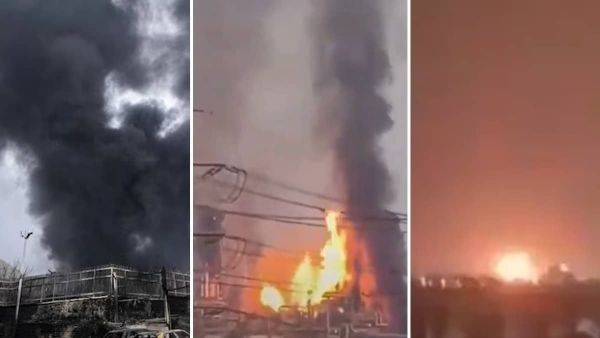
Marking a dangerous escalation in the Israel-Iran conflict, a missile strike caused severe damage to Ras Laffan Industrial City, a critical global LNG hub, sending shockwaves across middle eastern and global energy markets.
QatarEnergy Statement on Missile Attacks on Ras Laffan Industrial City
— QatarEnergy (@qatarenergy) March 18, 2026
QatarEnergy confirms that Ras Laffan Industrial City this evening has been the subject of missile attacks.
Emergency response teams were deployed immediately to contain the resulting fires, as extensive…
South Pars attacked
The incident followed after the Iranian state media on Wednesday stated that Israel targeted Iran’s South Pars natural gas field- part of the world’s largest gas resource and a pillar of the country’s energy supplies.
South Pars, the gas field under the Gulf is the world’s largest and is shared by Iran and Qatar, and is called South Pars on the Iranian side and the North Field on the Qatari side.
Facilities associated with the gas field near Asaluyeh on Iran’s Gulf coastline were on fire, state media reported. This development arrives as the region remains on high alert, with a near-constant cycle of warnings, interceptions, and retaliatory strikes now a daily occurrence.
QatarEnergy’s Ras Laffan Industrial City to the north of Doha, Qatar's main site for the production of liquefied natural gas and gas-to-liquid, as well as the largest export terminal for LNG in the world, has been heavily targeted tonight by ballistic missiles fired by Iran.… pic.twitter.com/Ax9WaOjDAK
— OSINTdefender (@sentdefender) March 18, 2026
What happened to Ras Laffan?
Representing a significant intensification of the conflict, Qatar confirmed that Iranian missile strikes caused severe damage to Ras Laffan Industrial City, a critical global LNG hub, thereby damaging parts of the site.
Notably, by targeting Ras Laffan, Tehran has moved the frontline from the battlefield to the boardroom. This is no longer a war of territorial gain, but a war of global energy strangulation.
With 20% of the world's LNG now in the crosshairs, the 'risk premium' on oil is rapidly turning into a structural threat to the global economy.
Footage claiming to show a fire and the moment of impact of an Iranian ballistic missile attack on the Ras Laffan gas facility in Qatar. https://t.co/u2GBR0nymk pic.twitter.com/B5KIzuitRw
— Ariel Oseran أريئل أوسيران (@ariel_oseran) March 18, 2026
QatarEnergy also confirmed that Ras Laffan had been struck by missiles, causing "significant damage". The company added that emergency teams were immediately deployed to control the fires and that all personnel were safe, with no casualties reported.
"QatarEnergy confirms that Ras Laffan Industrial City this evening has been the subject of missile attacks. Emergency response teams were deployed immediately to contain the resulting fires, as extensive damage has been caused. All personnel have been accounted for and no casualties have been reported at this time," QatarEnergy wrote on X.
The attack comes hours after Iran's stern earning of targeting oil and gas facilities across the gulf naming key sites in Qatar, Saudi Arabia, and the UAE, including Mesaieed Petrochemical Complex, Ras Laffan Refinery, Jubail Petrochemical Complex and Al Hosn Gas Field as potential targets.
Qatar condemns attack
The Qatari Foreign Ministry, meanwhile, condemning the attack warned that such attacks constitute "dangerous escalation, a flagrant violation of the State's sovereignty, and a direct threat to its national security and the stability of the region."
JUST IN: QATAR ENERGY INFRASTRUCTURE HIT
— Sulaiman Ahmed (@ShaykhSulaiman) March 18, 2026
Source: @MyLordBebo pic.twitter.com/focwSctxfS
The state of Qatar in a statement expressed its strong condemnation and denunciation of the brazen Iranian targeting that struck Ras Laffan industrial city, causing fires that resulted in serious damage to the facility, and considers this aggression a dangerous escalation and a flagrant violation of the state's sovereignty, as well as a direct threat to its national security and the stability of the region.
Meanwhile, civil defense teams confirmed that the fire at Ras Laffan had been brought under preliminary control, preventing a potentially catastrophic outcome at a facility vital to global energy supplies.
Why Laffan is imp?
Ras Laffan plays a crucial role in global energy markets, handling roughly 20% of the world’s LNG supply, with shipments feeding Europe, Asia and beyond. Parts of the facility had already been shut down after earlier attacks.
Fire at Ras Laffan refinery in northern Qatar following an Iranian strike pic.twitter.com/4AenppK1Dq
— Faytuks Network (@FaytuksNetwork) March 18, 2026
Reports indicate that Iran had already warned it could target oil and gas facilities across the Gulf in retaliation for earlier strikes on its own infrastructure. That threat has now materialised.
Iran President condemns attack
Iranian President Masoud Pezeshkian also warned that targeting Iran’s energy infrastructure could lead to uncontrollable consequences.
“These aggressive acts will not achieve any gains for the Zionist–American enemy and its supporters,” writes Pezeshkian on X after Israel strikes Iran’s South Fars gas field. “On the contrary, they will complicate the situation and may lead to uncontrollable repercussions whose effects extend to engulf the entire world.”
Energy markets reeling?
Global energy markets are reeling as the conflict shifts toward systemic economic warfare.
With the Strait of Hormuz effectively closed and critical hubs like Ras Laffan and South Pars under fire, Brent crude has surged past $110 per barrel. Analysts warn that a prolonged disruption to these "energy lifelines" could trigger a 2022-style inflation shock, destabilizing economies from Europe to Asia.
New battlefield?
Amid the conflict, it is evident that the conflict has shifted toward energy infrastructure.
In response, Iran has pivoted from military targets to attacking the economic lifelines of its rivals- oil fields and refineries- triggering what officials call an "economic war."
Because the Gulf is the heart of the global energy system, even minor interference in the Strait of Hormuz has immediate consequences, as per analysts. Markets have already reacted, with oil surging past $110 a barrel.
While current price hikes are driven by a "risk premium," continued strikes on hubs like Ras Laffan could move the crisis from a temporary spike to a structural shortage, threatening global electricity and industrial stability.
Timeline of conflict
The Iran-Israel conflict reached a boiling point on February 28, 2026, when a massive US-Israeli air campaign, Operation Epic Fury, killed Iran’s leadership, including Supreme Leader Ali Khamenei.
Over the following three weeks, the war spiraled from military suppression to ‘global economic warfare.’
By mid-March, the focus shifted to the energy sector as Israel struck Iran's massive South Pars gas field, prompting Tehran to retaliate with devastating strikes on Qatar’s Ras Laffan LNG hub and energy sites in Saudi Arabia and the UAE.
With the Strait of Hormuz effectively closed and oil prices surging past $110 per barrel, the escalation has transformed from a regional regime-change effort into a systemic threat to the world’s energy supply.
-
PM greets people on Chaitra Navratri, prays for welfare of all citizens

-
LPG Supply Crisis Impacts Community Kitchens in Guwahati
-
BJP Announces Candidates for Upcoming Assembly By-Elections
-
The Great Heist: How Thieves Dug a 125-Foot Tunnel for a Bank Robbery in India

-
Bexley fire RECAP: 60 firefighters battle blaze at derelict London buildings