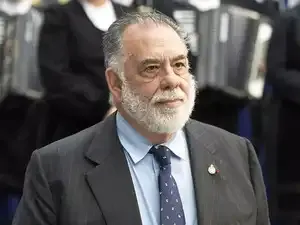
Quote of the Day: A powerful Quote of the Day often goes beyond its original setting and speaks directly to the way we live, think, and create today. In the world of cinema, few voices carry as much weight as that of Francis Ford Coppola, a filmmaker known for redefining storytelling on the big screen. His reflections on creativity and originality continue to resonate in an era dominated by remakes and sequels. That’s precisely why today’s quote feels so relevant; it challenges both creators and audiences to rethink what meaningful storytelling truly looks like.
Quote of the Day Today March 20
The Quote of the Day today by Francis Ford Coppola is: “I think a sequel is a waste of money and time. I think movies should illuminate new stories.”
Francis Ford Coppola was born on April 7, 1939, in Detroit, Michigan, and grew up in a creative household shaped by music and performance. His father, Carmine Coppola, was a composer and flutist, which exposed him to the arts from an early age. After earning a degree in drama from Hofstra University, Coppola pursued filmmaking at the University of California, Los Angeles, where he began honing his craft, as per information sourced from Britannica.
His early years in the film industry were marked by modest beginnings, working with low-budget filmmaker Roger Corman. During this time, Coppola gained hands-on experience in writing, directing, and editing. His first directorial effort, Dementia 13 (1963), showcased his willingness to experiment, even with limited resources. Gradually, he transitioned into more ambitious projects, including You’re a Big Boy Now (1966), which earned him recognition and opened doors in Hollywood.
Rise to Influence and Iconic Achievements
Coppola’s career reached extraordinary heights in the 1970s, a decade that defined his legacy. His breakthrough came with The Godfather (1972), a film that not only became a massive box-office success but also earned critical acclaim for its storytelling and emotional depth. It remains one of the most celebrated films in cinematic history. He followed this success with The Conversation (1974), a thought-provoking exploration of surveillance and human isolation.
In the same year, Coppola achieved a rare feat with The Godfather: Part II (1974), a sequel that matched—and for many, surpassed—the original. It won multiple Academy Awards, including Best Picture and Best Director, cementing Coppola’s place as one of Hollywood’s most influential filmmakers. His ambitious war epic Apocalypse Now (1979) further demonstrated his willingness to push creative boundaries, despite a famously troubled production.
Beyond directing, Coppola also sought to challenge the traditional Hollywood system by establishing his own studio, Zoetrope Studios, aiming to give filmmakers greater creative freedom. Although the venture faced financial setbacks, it reflected his commitment to innovation and artistic independence, as per information sourced from Britannica.
Meaning of the Quote of the Day
At first glance, Coppola’s quote may sound dismissive of sequels, but it carries a deeper message about creativity. When he says that sequels can be a “waste of money and time,” he is not simply criticizing the concept itself—after all, he directed one of the most acclaimed sequels ever. Instead, he is pointing to the industry’s over-reliance on familiar formulas.
The idea that movies should “illuminate new stories” highlights the importance of originality. For Coppola, storytelling is not just about entertainment; it is about exploration, discovery, and pushing boundaries. New stories bring fresh perspectives, challenge audiences, and reflect the evolving realities of society. When filmmakers continuously revisit the same narratives, they risk losing the essence of creativity that makes cinema powerful.
In today’s entertainment landscape, where franchises and sequels dominate box offices, Coppola’s words feel particularly relevant. They serve as a reminder that innovation often comes from taking risks—telling stories that haven’t been told before, or telling them in ways that surprise and inspire.
More broadly, the quote extends beyond filmmaking. It can be applied to life itself. Repeating the same patterns, whether in personal choices or professional pursuits, may feel safe, but it rarely leads to growth. True progress comes from stepping into the unknown, embracing new ideas, and being willing to create something original.
Other Iconic Quotes by Francis Ford Coppola
Beyond today’s Quote of the Day, Coppola has shared many reflections on art, life, and creativity that continue to inspire:
“We teach our boys to firebomb villages, but we won't let them write fuck on the side of their planes because it's obscene.”
“Art depends on luck and talent.”
“I don't think there's any artist of any value who doesn't doubt what they're doing."
“The secret of life is to say yes all the time, because when you're old, you don't want to say, 'I wish I'd done this, I wish I had done that.”
“Anything built on a grand scale or with intense passion invites chaos.”
“I loved it; I was living a dream.”
“The notebook was my anchor through all of it.”
As a Quote of the Day, his statement about sequels challenges not just filmmakers but anyone striving to create or innovate. It urges us to move beyond repetition and embrace originality, reminding us that the most powerful stories, on screen and in life, are often the ones that dare to be new.
Quote of the Day Today March 20
The Quote of the Day today by Francis Ford Coppola is: “I think a sequel is a waste of money and time. I think movies should illuminate new stories.”
Early Life and Career of Francis Ford Coppola
Francis Ford Coppola was born on April 7, 1939, in Detroit, Michigan, and grew up in a creative household shaped by music and performance. His father, Carmine Coppola, was a composer and flutist, which exposed him to the arts from an early age. After earning a degree in drama from Hofstra University, Coppola pursued filmmaking at the University of California, Los Angeles, where he began honing his craft, as per information sourced from Britannica.
His early years in the film industry were marked by modest beginnings, working with low-budget filmmaker Roger Corman. During this time, Coppola gained hands-on experience in writing, directing, and editing. His first directorial effort, Dementia 13 (1963), showcased his willingness to experiment, even with limited resources. Gradually, he transitioned into more ambitious projects, including You’re a Big Boy Now (1966), which earned him recognition and opened doors in Hollywood.
Rise to Influence and Iconic Achievements
Coppola’s career reached extraordinary heights in the 1970s, a decade that defined his legacy. His breakthrough came with The Godfather (1972), a film that not only became a massive box-office success but also earned critical acclaim for its storytelling and emotional depth. It remains one of the most celebrated films in cinematic history. He followed this success with The Conversation (1974), a thought-provoking exploration of surveillance and human isolation.
In the same year, Coppola achieved a rare feat with The Godfather: Part II (1974), a sequel that matched—and for many, surpassed—the original. It won multiple Academy Awards, including Best Picture and Best Director, cementing Coppola’s place as one of Hollywood’s most influential filmmakers. His ambitious war epic Apocalypse Now (1979) further demonstrated his willingness to push creative boundaries, despite a famously troubled production.
Beyond directing, Coppola also sought to challenge the traditional Hollywood system by establishing his own studio, Zoetrope Studios, aiming to give filmmakers greater creative freedom. Although the venture faced financial setbacks, it reflected his commitment to innovation and artistic independence, as per information sourced from Britannica.
Meaning of the Quote of the Day
At first glance, Coppola’s quote may sound dismissive of sequels, but it carries a deeper message about creativity. When he says that sequels can be a “waste of money and time,” he is not simply criticizing the concept itself—after all, he directed one of the most acclaimed sequels ever. Instead, he is pointing to the industry’s over-reliance on familiar formulas.
The idea that movies should “illuminate new stories” highlights the importance of originality. For Coppola, storytelling is not just about entertainment; it is about exploration, discovery, and pushing boundaries. New stories bring fresh perspectives, challenge audiences, and reflect the evolving realities of society. When filmmakers continuously revisit the same narratives, they risk losing the essence of creativity that makes cinema powerful.
In today’s entertainment landscape, where franchises and sequels dominate box offices, Coppola’s words feel particularly relevant. They serve as a reminder that innovation often comes from taking risks—telling stories that haven’t been told before, or telling them in ways that surprise and inspire.
More broadly, the quote extends beyond filmmaking. It can be applied to life itself. Repeating the same patterns, whether in personal choices or professional pursuits, may feel safe, but it rarely leads to growth. True progress comes from stepping into the unknown, embracing new ideas, and being willing to create something original.
Other Iconic Quotes by Francis Ford Coppola
Beyond today’s Quote of the Day, Coppola has shared many reflections on art, life, and creativity that continue to inspire:
“We teach our boys to firebomb villages, but we won't let them write fuck on the side of their planes because it's obscene.”
“Art depends on luck and talent.”
“I don't think there's any artist of any value who doesn't doubt what they're doing."
“The secret of life is to say yes all the time, because when you're old, you don't want to say, 'I wish I'd done this, I wish I had done that.”
“Anything built on a grand scale or with intense passion invites chaos.”
“I loved it; I was living a dream.”
“The notebook was my anchor through all of it.”
As a Quote of the Day, his statement about sequels challenges not just filmmakers but anyone striving to create or innovate. It urges us to move beyond repetition and embrace originality, reminding us that the most powerful stories, on screen and in life, are often the ones that dare to be new.