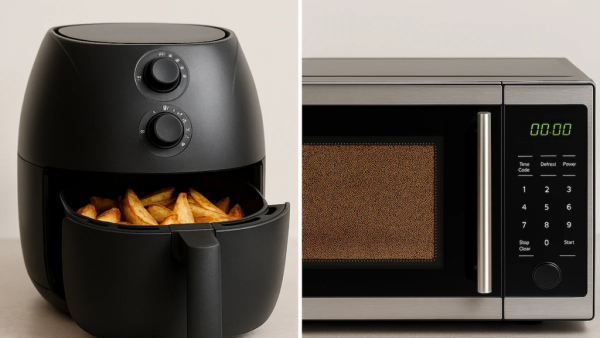
Most of us reach for whatever kitchen appliance is quickest, but how we cook our food can quietly influence how nourishing it remains. As home cooking becomes a mix of convenience and health goals, many people wonder whether the air fryer or microwave is the better choice for keeping nutrients intact. Both appliances heat food rapidly, yet they do so in very different ways. These differences affect not only taste and texture but also how much of the food’s natural goodness survives. Understanding the strengths of each method can help you decide which appliance to use for certain ingredients.
How Microwaves Preserve Nutrients
Microwaves heat food by vibrating water molecules inside the ingredients, which allows them to cook quickly and with minimal added liquid. This shorter cooking time is key. Studies show that microwaving tends to retain water-soluble vitamins such as vitamin C and B-vitamins better than many traditional methods because nutrients have less time to break down.
A more detailed look at nutrient retention comes from the study “Effects of Household Cooking on Mineral Composition and Retention in Widespread Italian Vegetables” published in Nutrients in 2025. This research found that microwaving offered higher mineral retention in certain vegetables, particularly zucchini, compared with grilling and steaming.
In short: microwaving is one of the gentlest everyday cooking options for preserving delicate nutrients that degrade under long heat exposure.
How Air Fryers Affect Nutrients
Air fryers circulate hot air around food, creating crisp edges without needing large amounts of oil. This makes them popular for those trying to cut down on fried food. They are also quicker than an oven, which helps reduce nutrient loss compared with long roasting times.
However, air fryers still use dry heat at relatively high temperatures. Some heat-sensitive nutrients, such as vitamin C or folate, can diminish if the food becomes dry or is cooked for 10 minutes or more. Research comparing cooking methods found that air frying resulted in slightly greater vitamin C loss in broccoli than microwaving, largely due to the longer cooking duration.
That said, air frying does provide one advantage: certain antioxidants and fat-soluble vitamins become more available when exposed to gentle dry heat along with a small amount of oil, making air-fried tomatoes, peppers or carrots potentially richer in compounds like lycopene and beta-carotene.
So Which Method Is Better for Nutrient Retention?
There is no single winner because it depends on the type of nutrient and the type of food.
Microwave cooking excels when:
- You want to preserve water-soluble vitamins (vitamin C, B-vitamins).
- You are cooking vegetables quickly with little or no water.
- You want the highest retention of minerals in ingredients such as zucchini.
Air frying performs better when:
- You are preparing foods that benefit from dry heat, such as carrots, tomatoes and peppers.
- You want to enhance the absorption of fat-soluble antioxidants, helped by a small amount of oil.
- You want a crisp texture with minimal fat.
The Bottom Line
If your goal is to preserve delicate nutrients, the microwave is generally the gentler method, thanks to its fast cooking time and minimal water use. If you are looking to reduce oil while boosting flavor and improving the availability of certain antioxidants, the air fryer brings its own benefits.
Using both methods for different types of food might be the most balanced approach. Quick microwave steaming for greens and air frying for hearty vegetables or crisp textures gives you the best of both worlds.
-
Bank Holidays Next Week: Banks to Remain Closed for 4 Days Due to Ram Navami and Weekend

-
EPS-95 Pension Demand Intensifies: Protest Threat if ₹7,500 Minimum Pension Isn’t Announced by April 2

-
Best FD Rates 2026: Small Finance vs Private vs Government Banks—Where Should You Invest for 1–5 Years?

-
Sahara Refund Portal Update: Claims Up to ₹10 Lakh Now Allowed, Here’s How Investors Can Benefit

-
New HRA Tax Rules 2026: Bigger Savings for Rent-Paying Employees, But With Stricter Disclosure Norms