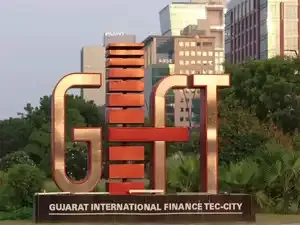
Mumbai: Rising geopolitical tensions in West Asia are prompting some global investors and non-resident Indians to reassess concentrated exposure to Dubai, driving higher enquiries for India's International Financial Services Centre at GIFT City.
While Dubai remains a dominant hub for capital, wealth management and investments, recent volatility has triggered a diversification push, with investors seeking additional jurisdictions offering regulatory stability and proximity to growth markets such as India.
"Geopolitical volatility in West Asia is beginning to reflect in higher enquiries for office space at GIFT City, particularly from institutions and intermediaries evaluating an India-linked base within the IFSC," said Aaryan Shah, associate director, Savvy Group. "We are seeing a gradual shift towards a 'dual-hub' strategy rather than relocation from Dubai. While conversions are still measured, the quality of conversations has improved, with a sharper focus on regulatory certainty and long-term presence."
He added that incentives in the 2026-27 budget and improvements in social infrastructure are supporting investment inflows and improving long-term leasing visibility at India's only IFSC.
(Join our ETNRI WhatsApp channel for all the latest updates)
The budget allows IFSC units a 100% deduction on specified income for 20 consecutive years within a 25-year block, compared with the earlier 10-year window. After this period, business income from IFSC operations will be taxed at 15%, against 35% for overseas companies elsewhere in India.
"Over the past six months, following key infrastructure announcements, GIFT City is increasingly emerging as a key financial hub," said Anuranjan Mohnot, managing director at Lumos Equity Advisors. "The recent geopolitical tensions in the Middle East have further accelerated this shift. Upgrades in social infrastructure, liberalised policies, the entry of foreign universities, a strong talent pool and competitive real estate costs have made it attractive compared to other global hubs."
Property consultants said conversations have picked up in recent weeks, particularly among UAE-based investors evaluating cross-border structures. "We are seeing more inbound queries from clients based in the Gulf who want to hedge geographic risk," said a senior executive at an international property consultancy. "The interest is not about exiting Dubai, but about adding another layer of safety and flexibility."
With its foreign currency-denominated ecosystem, tax incentives and a unified regulator in the International Financial Services Centres Authority, GIFT City is being positioned as a gateway for global capital into India, especially for fund management, leasing and structured finance. The narrative is shifting from efficiency and tax optimisation to include geopolitical risk mitigation, with India seen as a relatively stable macro environment, and GIFT allows investors to plug into that without fully relocating capital, they said. However, stakeholders cautioned against overstating the shift. Dubai's deep liquidity, established legal frameworks and mature ecosystem, anchored by the Dubai International Financial Centre, continue to underpin investor preference, with Indian investors remaining key participants in its property and financial markets.
While Dubai remains a dominant hub for capital, wealth management and investments, recent volatility has triggered a diversification push, with investors seeking additional jurisdictions offering regulatory stability and proximity to growth markets such as India.
"Geopolitical volatility in West Asia is beginning to reflect in higher enquiries for office space at GIFT City, particularly from institutions and intermediaries evaluating an India-linked base within the IFSC," said Aaryan Shah, associate director, Savvy Group. "We are seeing a gradual shift towards a 'dual-hub' strategy rather than relocation from Dubai. While conversions are still measured, the quality of conversations has improved, with a sharper focus on regulatory certainty and long-term presence."
He added that incentives in the 2026-27 budget and improvements in social infrastructure are supporting investment inflows and improving long-term leasing visibility at India's only IFSC.
(Join our ETNRI WhatsApp channel for all the latest updates)
The budget allows IFSC units a 100% deduction on specified income for 20 consecutive years within a 25-year block, compared with the earlier 10-year window. After this period, business income from IFSC operations will be taxed at 15%, against 35% for overseas companies elsewhere in India.
"Over the past six months, following key infrastructure announcements, GIFT City is increasingly emerging as a key financial hub," said Anuranjan Mohnot, managing director at Lumos Equity Advisors. "The recent geopolitical tensions in the Middle East have further accelerated this shift. Upgrades in social infrastructure, liberalised policies, the entry of foreign universities, a strong talent pool and competitive real estate costs have made it attractive compared to other global hubs."
Property consultants said conversations have picked up in recent weeks, particularly among UAE-based investors evaluating cross-border structures. "We are seeing more inbound queries from clients based in the Gulf who want to hedge geographic risk," said a senior executive at an international property consultancy. "The interest is not about exiting Dubai, but about adding another layer of safety and flexibility."
With its foreign currency-denominated ecosystem, tax incentives and a unified regulator in the International Financial Services Centres Authority, GIFT City is being positioned as a gateway for global capital into India, especially for fund management, leasing and structured finance. The narrative is shifting from efficiency and tax optimisation to include geopolitical risk mitigation, with India seen as a relatively stable macro environment, and GIFT allows investors to plug into that without fully relocating capital, they said. However, stakeholders cautioned against overstating the shift. Dubai's deep liquidity, established legal frameworks and mature ecosystem, anchored by the Dubai International Financial Centre, continue to underpin investor preference, with Indian investors remaining key participants in its property and financial markets.