
Health officials must urgently investigate why a packed nightclub may have helped trigger the deadly Kent meningitis outbreak, an Oxford professor has warned, as scientists warned the strain behind the cluster is more deadly - though not new.
Professor Carl Heneghan, Director of Oxford University's Centre of Evidence Based Medicine, said the rapid spread of cases was unusual and called for detailed fieldwork to understand why the infection moved so quickly through a group of young people in Canterbury.
Yesterday (Saturday) the UK Health Security Agency (UKHSA) reported 23 confirmed and 11 suspected cases, bringing the total to 34. The cases include two students who have died.
UKHSA lab analysis suggests the outbreak is being caused by an unusually aggressive strain of the bacteria, though they revealed it is not new. Health officials have also warned there could be "sporadic clusters" of cases across the country over the Easter holidays, as students return home for the holiday break passing on the infection outside Kent. 2,642 vaccines and 9,896 doses of vaccines have been handed out so far in an effort to break the spread.
Dr Lindsey Edwards, microbiologist at King's College London, said the strain belongs to a group known for causing severe illness once it enters the bloodstream.
She said: "The strain involved in this outbreak is known as Sequence Type 485...Because this group has a history of higher virulence, it is more likely to cause serious illness if it reaches the bloodstream or the protective layers around the brain and spinal cord...sometimes moving from early symptoms to life-threatening sepsis in a matter of hours."
Prof Brendan Wren, Professor of Microbial Pathogenesis at the London School of Hygiene and Tropical Medicine, said the current MenB vaccine should provide protection against this strain.
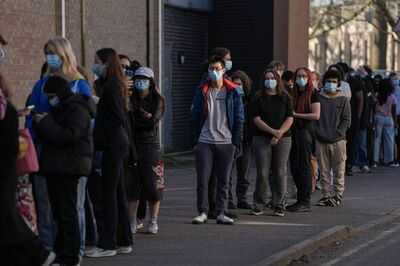
At least ten of those affected are believed to have attended Club Chemistry in Canterbury on the same days earlier this month, raising fears the infection spread rapidly through a single social network. The venue reportedly busier than usual on 5, 6 and 7 March when the outbreak was believed to have started. A nearby nightclub, Tokyo Tea Rooms, had closed temporarily pushing its regulars into Club Chemistry where students reported sharing vapes, drinks and crowding shoulder to shoulder.
Professor Heneghan, an urgent care GP, said the circumstances surrounding the venue should now be examined closely.
He said: "This outbreak is not unprecedented, but it is highly unusual in relation to the speed and the number of people affected. It is key now for health authorities to look at this nightclub. There has been a decline in the number of nightclubs by 30% since 2020 and a marked reduction in venues.
"We have been told that this nightclub was overcrowded. Was this part of the problem, or was it something to do with sharing drinks, sharing vapes?
"These are very important questions to discover about this particular outbreak and we need to know what the UK Health Security Agency is trying to do to help understand this."
He added that vaccine advisers should review the situation urgently once the strain is confirmed to decide whether meningitis B is added to the routine schedule for teenagers. Currently four other strains are given to teens to cover Meningitis A, C, W and Y..
"It is important that the Government vaccine advisers, the JCVI, look at this as a matter of urgency and make a recommendation about giving the meningitis vaccine which was the strain implicated.
He added: "They did this in 2015 after a meningitis W outbreak and the vaccine was introduced for teenagers then."

Kent's director of public health Dr Anjan Ghosh admitted authorities are still trying to understand why the cluster developed so quickly.
He said: "That's a question we're asking as well. Quite frankly, we don't know the answer to that.
"It's been quite unprecedented. So it's very usual to have small sporadic outbreaks of meningitis from time to time. This is highly unusual, and that is going to be looked at, but because right now our priority is to take care of our residents and keep them safe and make sure there are no other deaths, that's top priority first."
He said it was too early to say whether the outbreak had reached its peak.
"Hopefully it's starting to slow down... the normal sequelae of an outbreak of this sort is about four weeks. These are all cases which are relating to that same period of time... it's not like it's spreading and more and more people are getting the infection."
Experts say the incubation period means the first wave may already have passed.
Prof Paul Hunter, Professor in Medicine at the University of East Anglia, said: "The incubation period though a little uncertain ranges from 2 to 10 days so I think we can be fairly certain that the peak from the initial superspreading event will have already passed."
Dr Michael Head, senior research fellow in global health at the University of Southampton, said the data suggests the outbreak may now be slowing."There are still suspected cases under investigation, so likely the confirmed cases numbers will rise. However, given the extent of contact tracing from public health teams, and the widespread publicity, it is plausible that we are seeing the tail end of this outbreak.The strain appears to have good coverage from the MenB vaccination, so this is also reassuring."
Professor Heneghan also cautioned against overstating the situation, warning that strong political language could increase anxiety without helping the response.
He said by describing the outbreak as "unprecedented" earlier this month, Health Secretary Wes Streeting risked fuelling unnecessary alarm when similar localised clusters have occurred before, particularly among students living in close contact.
He added that winter infections may also have played a role.
"In winter there are always more meningitis cases and if there are influenza-like illnesses this can create a back door for opportunistic infections like meningitis to take hold. People should not panic because this is a rare disease...but it is right to stay vigilant."
He said scientists still do not fully understand why some young people become seriously ill while others do not.
"The other thing we crucially need to know is why some children and young adults are more affected than others and this is unknown. Perhaps with better technology and sequencing we can find out more."
-
Slovenia election sees ruling party tied with opposition

-
What Ian Wright was 'screaming' about Gabriel Martinelli during Arsenal Carabao Cup loss

-
Sharks with cocaine in their blood found off Caribbean island

-
The Shocking Incident That Altered a Bollywood Star's Career

-
Killer Ian Huntley to be cremated with no memorial as ashes to be scattered in secret