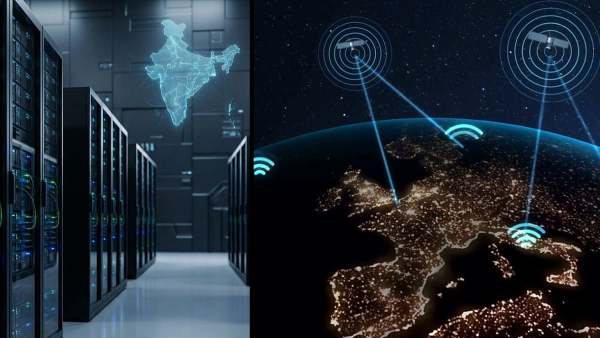
Firms like SpaceX and Blue Origin have proposed orbital data centres to meet AI-driven demand, raising questions over India’s ground-focused strategy. Analysts say space-based computing is not an immediate threat, as India’s data centre capacity is set to surge by 2030. However, concerns remain that India may stay limited to infrastructure, not core tech innovation.
The first two months of 2026 have quietly redefined what a data centre looks like. SpaceX, Starcloud, and Jeff Bezos' Blue Oridin have all filed plans with FCC to put up millions of satellites in space, proposing to operate them as solar-powered orbital data centres designed to "accommodate the explosive growth of data demands driven by AI." All of these filings come with only one message - the cloud is literally going to the clouds.
These filings indicate that data centres of the future, are now going to the clouds, but India has been pushing for data centre expansion on the ground. With global tech leaders now aiming for space, is India's data centre hub vision a far-fetched dream? Industry analysts are divided on this matter.
Data centres will create jobs
Faisal Kawoosa, Tech Analyst and Founder at TechArc, offers a pointed assessment. "Data centre push is good because it is a long-term commitment. You cannot just tomorrow decide to wind it up. Unlike electronics manufacturing where companies can assemble phones in India and anytime wind up and go to any other country, data centres are physical infrastructure. That way, I think it is good that we are building up data centres," he told the .
-
Covid dispatches: An account of how quacks 'treated' patients in absence of doctors in rural Bihar

-
From Aruna Shanbaug to Harish Rana, India's long reckoning with the right to die with dignity

-
Challenges Persist in Fencing the Indo-Bangladesh Border Despite Political Promises

-
Understanding Diabetes: Dietary Tips and Home Remedies

-
Lisa Kudrow shares what she feels about 1990s nostalgia