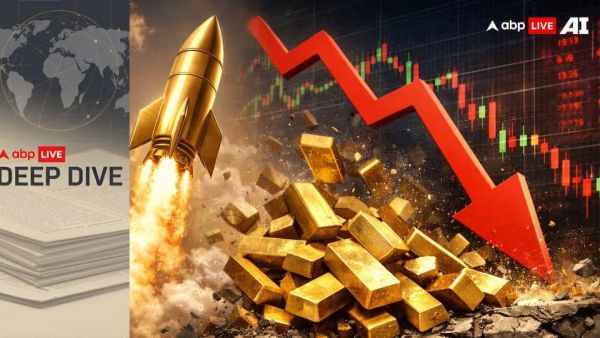
War, rising oil prices, and global uncertainty, historically, have been the perfect cocktail for gold to surge. Yet, in a surprising twist, gold prices have been falling sharply even as geopolitical tensions escalate in West Asia.
According to a Bloomberg report, gold dropped as much as 3.8 per cent to near $4,320.30 an ounce, almost wiping out its gains for the year. The decline comes at a time when conventional wisdom would suggest the opposite.
So what is really happening? This is not just a market anomaly, it reflects a deeper structural shift in how gold behaves in the modern financial system.
The Classic Rule: Gold Rises In Crisis
For decades, gold has been treated as the ultimate safe-haven asset. Whenever uncertainty rises, whether due to war, financial instability, or inflation, investors typically flock to gold to protect their wealth.
The logic is simple: gold is not tied to any government, currency or central bank policy. It is seen as a store of value in times of stress.
But this time, the rulebook appears to have been rewritten.
What The Data Shows: A Sharp And Unusual Selloff
Instead of rallying, gold has been under sustained pressure. Bloomberg data shows that the metal has fallen for eight consecutive sessions and recorded its steepest weekly drop since 1983.
This decline has coincided with rising oil prices, heightened geopolitical tensions and volatility across global markets, conditions that would typically support gold.
This disconnect is what makes the current move so significant.
The Inflation Trap: Oil Prices Are Hurting Gold
One of the biggest drivers behind gold’s fall is the surge in crude oil prices.
Higher oil prices increase inflation expectations. While this might seem positive for gold at first glance, the second-order impact is more important; it reduces the likelihood of interest rate cuts.
Central banks, particularly the US Federal Reserve, tend to keep rates higher for longer when inflation risks rise. This creates a problem for gold.
Gold does not generate income. When interest rates remain elevated, yield-bearing assets like bonds become more attractive, pulling capital away from gold. In essence, oil is indirectly weakening gold by tightening financial conditions.
The Dollar Effect: A Stronger Greenback Hurts Bullion
Another critical factor is the strength of the US dollar.
The Bloomberg Dollar Spot Index has edged higher, signalling renewed demand for the greenback. A stronger dollar typically weighs on gold because it makes the metal more expensive for global buyers.
When gold becomes costlier in local currencies, demand weakens, especially from large importing nations. This inverse relationship between the dollar and gold has once again come into play.
Liquidity Crunch: Why Investors Are Selling Gold
Beyond macroeconomic factors, market behaviour is also driving the decline. Bloomberg’s analysis highlights that gold has faced forced selling as investors liquidate positions to cover losses elsewhere.
In volatile markets, investors often prioritise liquidity over safety. This means even traditionally defensive assets like gold are sold to raise cash. This is particularly evident when multiple asset classes, equities, commodities and currencies, are all under pressure at the same time.
A Structural Shift: Gold Is No Longer Just A ‘Fear Asset’
Perhaps the most important takeaway from this episode is that gold’s role has evolved.
Over the past decade, gold has transitioned from being purely a safe-haven asset to a reserve asset. Central banks, especially in emerging markets and oil-exporting nations, have been major buyers as part of a broader move away from US dollar dependence.
However, the current geopolitical shock has disrupted this trend.
Countries that typically accumulate gold, particularly oil-exporting economies, are now facing revenue uncertainties due to disruptions in global energy flows. When their financial surpluses shrink, their ability to buy gold also declines.
This shift in demand is a key reason why gold is not behaving as expected.
The Momentum Trade Unwind
Another layer to the selloff is the unwinding of momentum trades.
In recent months, gold attracted strong inflows from retail and institutional investors riding the rally. This created a momentum-driven price surge.
But when prices started to turn, these same investors began exiting quickly, amplifying the decline. Large ETF outflows and stop-loss triggers added to the downward pressure.
In such situations, price corrections tend to be sharper than fundamentals alone would suggest.
Silver’s Steeper Fall Adds Context
The weakness is even more pronounced in silver, which has declined more sharply than gold.
Unlike gold, silver has significant industrial demand, from sectors such as electronics, solar energy and electric vehicles. When global growth expectations weaken, industrial demand for silver drops rapidly.
This dual exposure makes silver more vulnerable during periods of economic uncertainty.
What Happens Next? Short-Term Pain, Long-Term Story Intact
Despite the current correction, analysts believe the long-term case for gold remains intact. The structural drivers, including central bank buying, currency concerns and long-term inflation risks, have not disappeared.
However, in the near term, gold is likely to remain sensitive to interest rates, dollar strength and global liquidity conditions.
-
BSEB Inter Result 2026 Declared: Girls Record 86.23% Passing Rate; Outshine Boys

-
BSEB Class 12 Arts Result 2026 Declared: Nishu Kumari Secures 1st Rank, 3 Students Share 2nd Spot

-
'I'm Jealous Of Deepika Padukone, She Gets To Talk & Sleep Next To Ranveer Singh': YouTuber Harsh Beniwal Praises Actor's Dhurandhar 2 Performance

-
Rajeev Khandelwal Gets Candid On Casting Couch Debate: 'You Can't Say You Were Exploited If You Were Looking For An Easy Way Out' | FPJ Exclusive

-
Good Morning Britain paused minutes into show for devastating breaking announcement