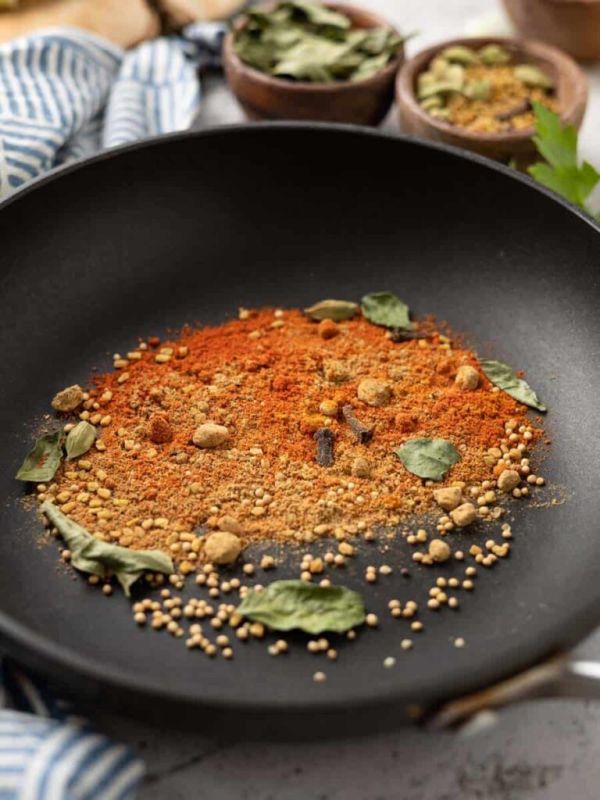
There is a spice blend sitting on the shelves of upmarket European grocery stores and Michelin-starred restaurant kitchens that most Indians have never heard of, and yet, if they smelled it, they would recognize it instantly. Vadouvan, often marketed as “French curry powder” or “French masala,” is one of the most quietly fascinating spice stories of the last few centuries. It is fragrant, complex, built on aromatics, and has its roots so firmly in South Indian, specifically Tamil, culinary tradition that calling it French is, at best, a simplification, and at worst, a convenient erasure of where it actually came from. For Indian readers, vadouvan is not an exotic discovery. It is, in many ways, coming home.
What Vadouvan Actually Is
Vadouvan is a spice blend, sold either as a dry powder or as a wet paste, whose primary character comes from caramelised shallots and garlic, a combination that immediately sets it apart from most dry spice blends and gives it a mellow, slightly sweet, deeply savory depth. Built on this allium base are layers of cumin, coriander, turmeric, mustard seeds, curry leaves (sometimes), fenugreek, cardamom, and cloves, depending on the producer. The blend is characteristically mild, gentle heat, no aggressive chilli presence, and has a fragrance that is warm and inviting rather than sharp or pungent.
The name vadouvan is the French adaptation of the Tamil word vadagam (also written as vadavam, vadaham, or vadouvan depending on region and transliteration). And this is where the story gets interesting.
The Tamil Original: Vadagam
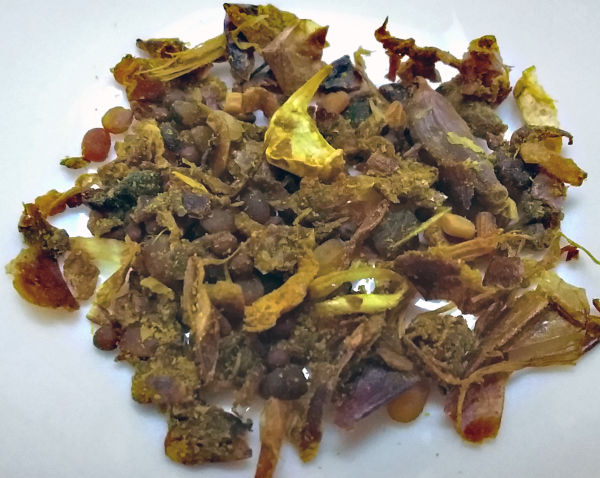
Long before vadouvan appeared on European spice shop shelves, Tamil households across South India were making vadagam, a traditional spice preparation that is, if anything, considerably more complex and more labor-intensive than its French descendant.
Vadagam is made by combining shallots and garlic with curry leaves, rock salt, and a blend of whole and powdered spices, sometimes binding them with castor oil, and then rolling the mixture into balls that are set out to dry in the sun for weeks or even months. The drying process is an extended, patient, almost ceremonial undertaking. Hindu families traditionally fashion the first vadagam ball in the shape of Ganesha, with a red chilli pressed in as a bindi, and hang an iron nail and a bright red chilli with the drying lot as protection against the evil eye. The smell is famously pungent enough that the drying is often done outside or on rooftop terraces, with neighbors notified by both the bustle and the smell.
The resulting vadagam balls blacken and intensify with age, and are used throughout the year to flavor a wide range of dishes. They are, in the words of food researcher Deepa Krishnan of Pâticheri, the product of a “lengthy, intense, patient, life-encompassing process”, a spice preserve rather than simply a spice blend.
Dr. Lourdes Tirouvanziam-Louis, author of The Pondicherry Kitchen, is categorical on the matter: vadavam is neither French nor colonial. “Don’t get these things confused,” she says. “It is Tamil.”
How Vadagam Became Vadouvan
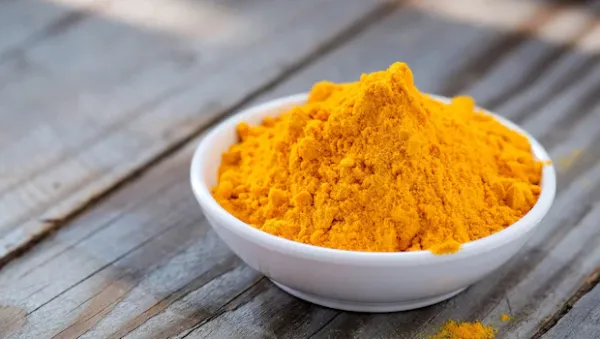
The transformation of vadagam into vadouvan is a story that runs through Pondicherry, the coastal city in southeastern India that was a French colonial territory from 1674 to 1954. The standard narrative, repeated on spice packets and by European chefs, is that the French colonisers encountered Indian spices and created vadouvan as their own more refined version: milder, wetter, and more suited to French palates. Chef Cedric Maupillier of the restaurant Convivial in Washington DC stated in the Washington Post: “Vadouvan originated with French colonization of Pondicherry. The French brought back with them the idea of a curry blend, but one that ended up milder than the Indian version.”
The reality, as researchers like Deepa Krishnan have pointed out, is considerably more complicated. The French, with their own deeply entrenched gastronomic traditions, were notably less interested in absorbing the foods of their South Asian colony than the British or Dutch. Paris did not get its first Indian restaurant until 1975, more than two decades after French rule in Pondicherry ended. It stretches credibility significantly to suggest that the same culture that largely ignored Indian food for three centuries happened to invent one of its signature spice blends.
The more likely story is that Tamil cooks and spice merchants adapted and commercialized the vadagam tradition into a form that could travel, removing the castor oil, replacing sun-drying with oven-drying, and adjusting the spice ratios for export, creating what eventually became the Western product called vadouvan. The credit for the innovation almost certainly belongs to the Tamil makers, not to the French administrators.
Vadouvan was largely forgotten for much of the 20th century and was revived in contemporary fine-dining kitchens in the early 2000s, where chefs appreciated its gentle complexity as an alternative to the more assertive Indian spice blends already in circulation.
How Vadouvan Compares To Garam Masala
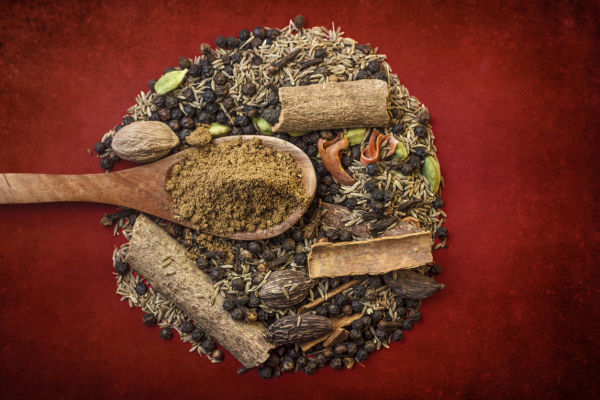
At this point, an Indian reader might reasonably be thinking: this sounds a lot like garam masala with extra onion. And that instinct is not wrong. The two blends share significant DNA.
What They Share:
Both vadouvan and garam masala are warming spice blends that use a similar cast of core spices: cumin, coriander, cardamom, cloves, and sometimes cinnamon. Both are finishing or flavoring blends rather than primary cooking spices, they are added to bring depth and fragrance to a dish rather than as the main structural element of the masala. Both are highly variable in their exact composition, with no single fixed recipe. Both are deeply aromatic, intended to perfume a dish as much as to spice it. And both have roots in South Asian spice traditions that predate European colonialism entirely.
The philosophical similarity is also real: both blends represent the same idea of combining warming, aromatic spices to create something greater than the sum of its parts. The fragrance of a good vadouvan and a good garam masala, when held next to each other, will have a recognizable family resemblance that any Indian nose will immediately register.
Where They Differ:
The most fundamental difference is the allium base. Garam masala is a dry spice blend; It contains no onion, no garlic, no shallots. It is built entirely from dried seeds, pods, bark, and roots. Vadouvan, by contrast, has caramelised shallots and garlic at its core. This allium foundation gives vadouvan a sweetness, a mellow depth, and a slightly wet or paste-like quality that garam masala simply does not have. It also means vadouvan has a shorter shelf life than garam masala; the moisture from the aromatics means it does not keep indefinitely.
The heat level is another significant difference. Garam masala, particularly the North Indian varieties, can carry considerable warmth, from black pepper, long pepper, or a robust amount of spices. Vadouvan is deliberately mild. The chilli presence, when present at all, is minimal. This makes vadouvan more accessible in a European context but considerably less complex from an Indian spice perspective.
The application is also different. Garam masala is typically added at the end of cooking, sprinkled over a finished dish or stirred in at the last moment, because high heat causes its aromatics to turn bitter. Vadouvan is more versatile; it can be added early in cooking, used as a rub, or bloomed in butter or oil at the start of a preparation. Its allium base is already cooked, which makes it more forgiving across a wider range of techniques.
Finally, the geographical origin is different. Garam masala is associated with North Indian and Mughal-influenced cooking, with the word garam meaning warm or hot in Hindi. Vadouvan, in its original vadagam form, is a South Indian, specifically Tamil, preparation. They come from different culinary traditions that happen to share similar spice libraries.
A Quick Vadouvan Recipe
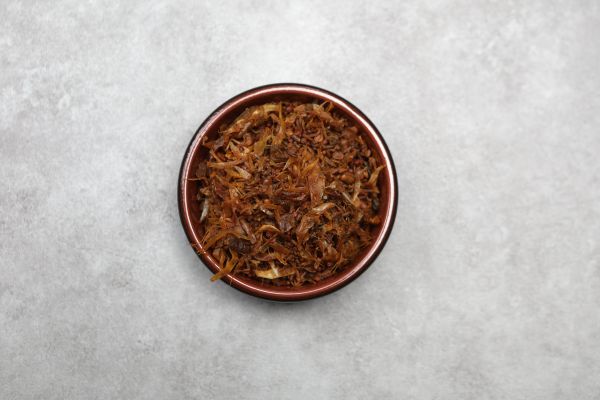
Making a simplified version at home is very doable and gives you a much better product than most commercial versions.
Ingredients
- 3 large shallots, very finely minced
- 4 cloves garlic, very finely minced
- 2 teaspoons oil (groundnut or neutral)
- 1 teaspoon cumin seeds
- 1 teaspoon coriander powder
- ½ teaspoon turmeric
- ½ teaspoon mustard seeds
- ¼ teaspoon fenugreek seeds
- ¼ teaspoon cardamom powder
- ⅛ teaspoon cloves, ground
- 6 to 8 fresh curry leaves, very finely chopped
- Salt to taste
- Optional: a pinch of dried red chilli flakes, a pinch of dried thyme (the European touch)
Method: Heat oil in a heavy pan on a low flame. Add mustard seeds and let them pop, then add fenugreek seeds and cook for thirty seconds. Add the shallots, garlic, and curry leaves. Cook on the lowest possible heat, stirring frequently, for twenty to twenty-five minutes until the mixture is completely soft, golden, and beginning to caramelise. Add all the dry spices and cook for another five minutes until fragrant. Spread onto a baking tray and dry in an oven at 80°C for one to one and a half hours until most of the moisture has evaporated. Cool completely and store in a sealed jar. Use within three weeks.
How to use it: Vadouvan is excellent when bloomed in butter and spooned over roasted vegetables, stirred into a cream-based pasta or risotto, used as a rub for grilled chicken or fish, or mixed into a vinaigrette. In Indian-adjacent cooking, it works beautifully as a finishing spice for dal or as a base flavoring for a mild prawn curry.
A Familiar Idea
The story of vadouvan is the story of a spice blend that left Tamil Nadu, spent a few centuries acquiring a French passport, got famous under a name most of its originators would not recognize, and is now slowly finding its way back to the kitchens it came from. For Indian cooks, vadouvan is worth understanding not as an exotic import but as a familiar idea expressed differently, a cousin rather than a stranger. The shallots are what make it its own thing, and the shallots, it turns out, were always there in the original.
-
Real Madrid vs Atletico Madrid Live Streaming: When And Where To Watch La Liga In India?

-
Vinicius' Brace Helps Real Madrid Clinch Pulsating 3-2 Victory Over Atletico In Crucial La Liga Clash

-
Manchester City Dominate Arsenal To Win Carabao Cup, Make Statement In Premier League Title Race

-
Indian Grand Master Koneru Humpy Pulls Out Of FIDE Tournament, Cites 'Personal Safety' Concerns

-
Atletico Madrid's Antoine Griezmann On The Brink Of Joining MLS Side Orlando City