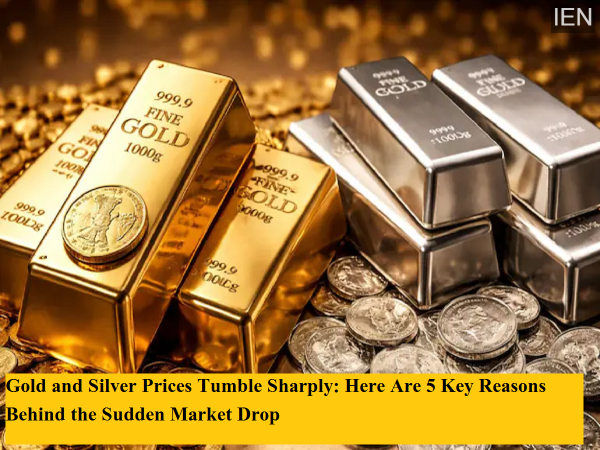
A sharp decline in precious metal prices has surprised investors, as gold and silver witnessed a significant fall despite ongoing global tensions. According to recent market data , both metals dropped heavily on Monday, raising concerns and questions among traders and investors alike.
Massive Fall in Gold and Silver Prices
After months of steady gains, gold and silver prices saw a sudden correction. On the Multi Commodity Exchange (MCX):
- Gold futures dropped by over ₹10,000 during the day
- Silver futures plunged by more than ₹21,000
- Compared to Friday’s closing, gold fell nearly ₹15,000
- Silver recorded a steep decline of around ₹27,000
Gold was trading near ₹1,34,000 per 10 grams, while silver hovered around ₹2,05,000 per kilogram during afternoon trade. This sharp fall came as a surprise because precious metals are typically considered safe-haven assets during geopolitical uncertainty.
Why Did Gold and Silver Prices Crash?
Despite rising global tensions, multiple factors contributed to this unexpected drop. Here are the five major reasons:
1. Rising Geopolitical Uncertainty in West Asia
Tensions involving Iran and the United States have escalated, with warnings of possible attacks on critical infrastructure. While such situations usually push gold prices higher, the uncertainty has instead triggered volatility and profit booking in the market.
2. Threat to Hormuz Strait Supply Route
Iran’s warning about potentially closing the Strait of Hormuz—a key global oil supply route—has added to market instability. This has created panic across multiple asset classes, including commodities.
3. Elevated Crude Oil Prices
Global crude oil prices have surged above $110 per barrel. Higher energy costs increase inflationary pressure, which can indirectly impact demand for precious metals and influence investor sentiment.
4. Weakness in Global Equity Markets
Stock markets in the US and Asia are showing signs of weakness. Falling equities often lead to shifts in investment strategies, causing temporary sell-offs even in traditionally safe assets like gold and silver.
5. Interest Rate Uncertainty
Investors are closely watching the US Federal Reserve’s next move. Expectations of higher interest rates reduce the appeal of non-yielding assets like gold and silver, leading to downward pressure on prices.
Global Market Signals Add to Pressure
International trends also reflect the same sentiment:
- Spot gold prices dropped to around $4,372 per ounce
- US gold futures declined by over 4%
- Prices have been falling लगातार for several trading sessions
- Gold is now near its lowest levels since early January
This indicates that the correction is not limited to domestic markets but is part of a broader global trend.
Sell-Off Across Asset Classes
Market experts believe that the current situation reflects widespread selling across asset classes. From equities to bonds and commodities, investors are adjusting portfolios amid rising global risks.
Analysts suggest that even safe-haven assets like gold can see sharp declines during periods of extreme uncertainty, especially after a strong rally.
What Should Investors Do Now?
Experts advise investors to remain calm and avoid panic-driven decisions. Key takeaways include:
- This correction may be temporary after a strong rally
- Long-term outlook for gold and silver remains intact
- Market volatility may continue due to global factors
- Focus on long-term investment strategies
Final Thoughts
The recent crash in gold and silver prices highlights how global economic factors, geopolitical tensions, and interest rate expectations can influence even the safest investment options.
While the short-term trend may remain volatile, experts believe this could be a phase of market correction rather than a complete reversal. Investors are advised to stay informed and make decisions based on long-term goals rather than short-term fluctuations.
-
SSC JE Paper 1 answer key out now: Check steps, direct link and last date to download response sheet
-
Delhi Govt Ties Up with IIT Madras to Study 'Smog-Eating' Coatings On Road to Tackle Air Pollution
-
Bhabiji Ghar Par Hain! Fun On The Run On OTT: When And Where To Watch Aasif Sheikh, Rohitashv Gour, Shubhangi Atre’s Comedy Film Online

-
Chapped Lips Can Be Worrisome In Scorching Summers; Here Are Some Home Remedies That Can Help In Natural Healing
-
Summer Heat Can Cause Dandruff, Here Are The Best Ways To Prevent It