One of the most significant advantages of DME is its compatibility with existing LPG infrastructure.
On Monday, the PM laid out his government's efforts to ensure that petroleum, diesel and gas supply isn't significantly affected by the US-Israel war against Iran and Tehran's response to severely restrict passage of cargo through the Strait of Hormuz. He added that such efforts included blending 'close to 20% ethanol in petrol' along with expanding RE, nuclear power and compressed biogas capacity.
Even with a planned 25% increase in domestic LPG output from refineries, India is still expected to face nearly a 50% shortfall that must be met through imports. This means that India's cooking fuel security and several small-scale industrial operations remain closely tied to stability of global supply chains, an increasingly uncertain situation during periods of conflict.
While ethanol blending has been prioritised, and All India Distillers' Association (AIDA) has offered to supply ethanol blends exceeding 20% with petrol, GoI could also look at another solution to reduce the current energy burden: blending dimethyl ether (DME), a clean-burning fuel that can function as a substitute for LPG.
DME has been adopted in several countries, particularly China, where large-scale production and application demonstrate its practicality. China has installed DME production capacity of around 20 mn MT, and uses it for cooking fuel, industrial heating and transportation applications. Success of this model highlights feasibility of integrating DME into mainstream energy systems.
One of the most significant advantages of DME is its compatibility with existing LPG infrastructure. According to Bureau of Indian Standards (BIS), DME can be safely blended with LPG up to 20%, allowing it to be used across sectors without requiring major changes to current systems.
This blending capability means that transition can begin gradually, reducing dependence on imported LPG, while maintaining continuity in supply and usage. The standard for DME-blending in India has been developed in line with international benchmarks such as ISO 16861:2015, ensuring that safety and performance parameters remain consistent with global best practices.
Another major advantage is the minimal infrastructure adjustment required for blending. DME can be introduced into LPG bulk storage tanks through controlled mixing or recirculation processes, without requiring extensive new infrastructure. This allows existing LPG storage and distribution networks to be utilised effectively. Even LPG tankers can be adapted to transport DME with minor safety modifications like additional safety valves.
From an industrial standpoint, adopting DME could also help stabilise sectors that heavily depend on LPG. Industries such as food processing, bakery manufacturing, glass production, ceramics and aerosol manufacturing rely on LPG as a cleaner alternative to coal or firewood. Similarly, small businesses - roadside eateries, restaurants, dhabas - depend on LPG for daily operations. Any disruption in LPG supply affects employment, production and livelihoods across large segments of the economy. DME offers a pathway to protect these sectors from energy shortages.
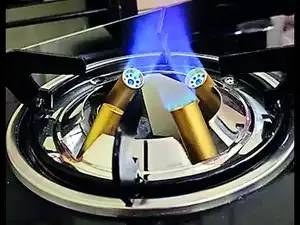
While standalone use of DME may require some modification to burners and stoves to optimise thermal efficiency, research institutions have already begun developing compatible equipment designs. This means that technological barriers to adoption are relatively limited and manageable.
In strategic terms, DME adoption aligns with the broader concept of a 'methanol economy', which promotes alternative fuels derived from domestic resources. This approach places DME within a broader national strategy aimed at building a more resilient and self-reliant energy system that Narendra Modi reiterated in Parliament on Monday.
Even with a planned 25% increase in domestic LPG output from refineries, India is still expected to face nearly a 50% shortfall that must be met through imports. This means that India's cooking fuel security and several small-scale industrial operations remain closely tied to stability of global supply chains, an increasingly uncertain situation during periods of conflict.
While ethanol blending has been prioritised, and All India Distillers' Association (AIDA) has offered to supply ethanol blends exceeding 20% with petrol, GoI could also look at another solution to reduce the current energy burden: blending dimethyl ether (DME), a clean-burning fuel that can function as a substitute for LPG.
DME has been adopted in several countries, particularly China, where large-scale production and application demonstrate its practicality. China has installed DME production capacity of around 20 mn MT, and uses it for cooking fuel, industrial heating and transportation applications. Success of this model highlights feasibility of integrating DME into mainstream energy systems.
One of the most significant advantages of DME is its compatibility with existing LPG infrastructure. According to Bureau of Indian Standards (BIS), DME can be safely blended with LPG up to 20%, allowing it to be used across sectors without requiring major changes to current systems.
This blending capability means that transition can begin gradually, reducing dependence on imported LPG, while maintaining continuity in supply and usage. The standard for DME-blending in India has been developed in line with international benchmarks such as ISO 16861:2015, ensuring that safety and performance parameters remain consistent with global best practices.
Another major advantage is the minimal infrastructure adjustment required for blending. DME can be introduced into LPG bulk storage tanks through controlled mixing or recirculation processes, without requiring extensive new infrastructure. This allows existing LPG storage and distribution networks to be utilised effectively. Even LPG tankers can be adapted to transport DME with minor safety modifications like additional safety valves.
From an industrial standpoint, adopting DME could also help stabilise sectors that heavily depend on LPG. Industries such as food processing, bakery manufacturing, glass production, ceramics and aerosol manufacturing rely on LPG as a cleaner alternative to coal or firewood. Similarly, small businesses - roadside eateries, restaurants, dhabas - depend on LPG for daily operations. Any disruption in LPG supply affects employment, production and livelihoods across large segments of the economy. DME offers a pathway to protect these sectors from energy shortages.
While standalone use of DME may require some modification to burners and stoves to optimise thermal efficiency, research institutions have already begun developing compatible equipment designs. This means that technological barriers to adoption are relatively limited and manageable.
In strategic terms, DME adoption aligns with the broader concept of a 'methanol economy', which promotes alternative fuels derived from domestic resources. This approach places DME within a broader national strategy aimed at building a more resilient and self-reliant energy system that Narendra Modi reiterated in Parliament on Monday.
(Disclaimer: The opinions expressed in this column are that of the writer. The facts and opinions expressed here do not reflect the views of www.economictimes.com.)