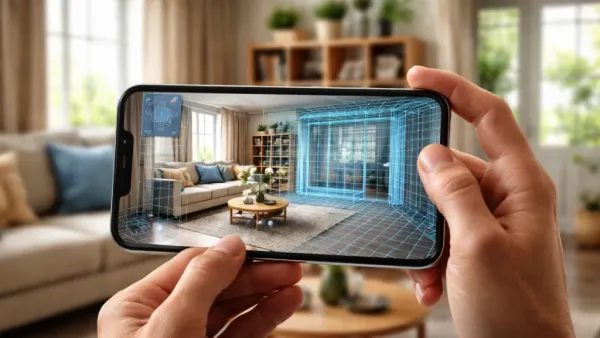
What if you could redesign your home without lifting a hammer-and know exactly how it would look before spending a single dollar?
For decades, DIY home renovation has been a mix of intuition, rough measurements, and a fair amount of guesswork. You measure a wall, sketch a layout, buy furniture-and hope everything fits and looks right. Sometimes it works. Often, it doesn’t. The process feels less like design and more like trial and error, where even small miscalculations can lead to costly consequences.
Today, however, that paradigm is shifting. Thanks to LiDAR scanners and augmented reality (AR) built directly into modern iPhones and iPads-and apps like Live Home 3D that make this technology accessible-home design is evolving from a guessing game into a precise, data-driven experience. What once required professional tools and architectural expertise is now available to anyone with a mobile device.
The Problem With Traditional Home Planning
If you’ve ever tried to plan a room layout manually, you’ve likely encountered the limitations firsthand. A measuring tape gives you numbers, but it doesn’t give you understanding. Translating those numbers into a mental image requires strong spatial reasoning, and even then, the results are often unreliable.
You might measure your living room carefully, only to discover later that the sofa blocks natural movement. Or you might plan a new partition wall that looks perfect on paper but feels overwhelming once built. These issues stem from a fundamental gap: humans struggle to convert flat measurements into fully realized three-dimensional spaces.
In essence, traditional DIY renovation forces you to imagine a future that you cannot truly see. And that uncertainty is where mistakes-and expenses-begin.
LiDAR: Turning Space Into Data
LiDAR changes this equation entirely. Instead of relying on manual measurements, your device actively scans the environment using light pulses, calculating distances with remarkable precision. It’s similar to how bats navigate using sound, but here, light replaces echo, and the result is far more detailed.
As you move through a room, the sensor continuously captures spatial information-walls, corners, depth, and geometry-building a highly accurate representation of the environment. What you get is not just a rough outline, but a structured dataset that defines your space in three dimensions.
This data forms the foundation for something far more powerful than a simple scan.
The Rise of the “Digital Twin”
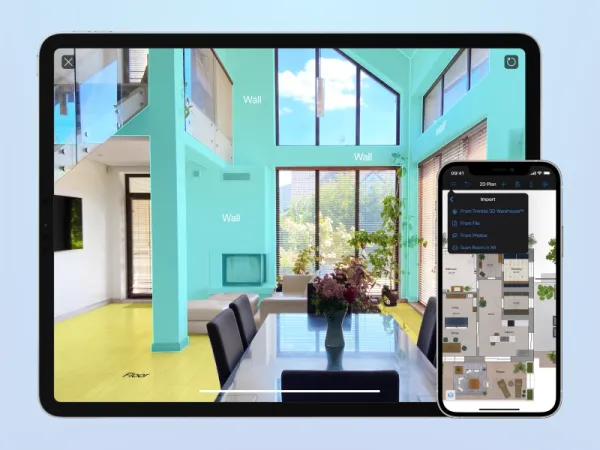
Once captured, LiDAR data can be transformed into a digital twin-a virtual replica of your room that mirrors real-world dimensions and proportions. This is where the real shift happens.
A digital twin is not just a visual model; it is an interactive environment. You can modify it, experiment within it, and test ideas without any physical consequences. It’s like having a sandbox version of your home where every design decision can be explored safely.
Instead of wondering whether a layout will work, you can see it. Instead of guessing how a change might feel, you can experience it. The design process becomes iterative, flexible, and-most importantly-predictable.
Real-Time Room Scanning With Modern Apps
The real breakthrough lies in how seamlessly this technology is integrated into consumer applications. Tools like Live Home 3D take complex spatial data and turn it into an intuitive workflow.
Using the Room Scanner feature, the process becomes almost effortless. You simply walk around your space with your iPhone or iPad, and the app captures the structure in real time. Walls are detected automatically, dimensions are calculated instantly, and within moments, a complete floor plan appears on your screen-both in 2D and 3D.
What used to take hours of measuring and drafting is now completed in minutes. More importantly, it’s done with a level of accuracy that manual methods struggle to achieve.
Augmented Reality: From Visualization to Experience
If LiDAR gives you the model, augmented reality brings it to life.
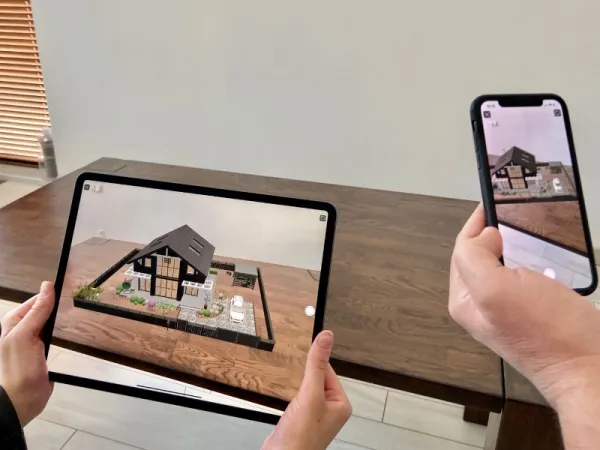
AR overlays your digital design onto the physical world, allowing you to see virtual elements as if they already exist in your space. Through your device’s camera, furniture, walls, and design changes appear anchored to real surfaces, maintaining correct scale and perspective.
This transforms the design process from abstract thinking into direct experience. You’re no longer imagining how a new layout might look-you’re walking through it. You can move around, change angles, and evaluate how everything fits together in real time.
It’s the difference between reading a blueprint and stepping inside the finished building.
A New Decision-Making Model
This combination of LiDAR and AR fundamentally changes how renovation decisions are made. The old workflow relied on approximation and hope, while the new one is grounded in validation and clarity.
Instead of committing to a purchase or construction step based on intuition, you can test ideas beforehand. You can see whether a piece of furniture disrupts the flow of a room or enhances it. You can evaluate whether a structural change improves spatial balance or creates new constraints.
The result is a process that minimizes risk. Mistakes are caught early-before they become expensive realities.
Practical Applications in Everyday Projects
The impact of this technology becomes especially clear when applied to real-world scenarios.
Take furniture planning, for example. Rather than measuring dimensions and trying to visualize proportions, you can place a virtual object directly into your scanned room. Walking around it in AR gives you an immediate sense of scale, spacing, and usability.
In remodeling projects, the benefits are even more pronounced. Whether you’re considering removing a wall or adding a new partition, you can simulate the change within your digital twin. This allows you to evaluate how the modification affects light, movement, and overall layout before making any irreversible decisions.
Interior design also becomes more dynamic. Instead of committing to a single concept, you can experiment with multiple styles, rearranging elements until the space feels right. Lighting, often one of the most difficult aspects to predict, can be adjusted and tested virtually, helping you understand how atmosphere and functionality interact.
Why Apple Devices Make it Seamless
While LiDAR and AR are powerful concepts, their real-world usability depends heavily on implementation. Apple’s ecosystem stands out because of its tight integration between hardware and software.
Modern iPhones and iPad Pros are equipped with dedicated LiDAR sensors, optimized processing capabilities, and advanced AR frameworks. This combination allows for real-time scanning and rendering without the need for external equipment or complex setups.
The experience feels natural because the technology operates in the background. You’re not managing sensors or calibrating systems-you’re simply interacting with your space in a more intelligent way.
Bridging Technology and Creativity with Live Home 3D
What makes applications like Live Home 3D particularly effective is their ability to translate raw data into meaningful design workflows.
The app doesn’t just generate a model; it gives you tools to work with it. You can switch between 2D floor plans and immersive 3D views, add furniture and structural elements, and explore your design in augmented reality. Each feature builds on the previous one, creating a cohesive environment where ideas can evolve naturally.
In this sense, the app acts as a bridge between technical capability and creative expression. It removes the barriers that once separated professionals from enthusiasts, making high-level design accessible to anyone willing to explore.
Confidence Replaces Uncertainty
Perhaps the most significant impact of LiDAR and AR is psychological. Traditional DIY projects are often accompanied by doubt. You question your measurements, your layout, and your decisions.
With a digital twin and AR visualization, that uncertainty fades. You’re no longer relying on imagination-you’re relying on observation. You’ve already seen the outcome, tested the layout, and confirmed the fit.
This shift builds confidence, and with confidence comes better decisions. Projects move forward more smoothly, with fewer surprises and more predictable results.
Current Limitations and Future Potential
Like any emerging technology, LiDAR and AR are not without limitations. Extremely cluttered environments can affect scan clarity, and smaller details may require manual refinement. Lighting conditions can also influence how AR elements appear.
However, these limitations are steadily diminishing. Advances in sensor technology and software algorithms are improving accuracy and usability with each iteration. What feels cutting-edge today will soon become standard.
Looking ahead, the concept of a digital twin may extend beyond design into broader aspects of home management. From energy efficiency simulations to integration with smart home systems, the potential applications are vast.
From Imagination to Simulation
DIY home renovation is undergoing a fundamental transformation. What was once an exercise in imagination is becoming an exercise in simulation.
LiDAR provides precision. Augmented reality provides the context. And tools like Live Home 3D bring everything together into a unified, accessible workflow.
The result is a new way of thinking about your space-one where ideas can be tested, refined, and experienced before they are built.
So the next time you consider redesigning your home, it’s worth asking a simple question: why rely on guesswork when you can see the outcome in advance?
-
Salman Khan's Diet Choices: Does He Eat Beef?

-
Fundraising Efforts Underway for Family Affected by Tragic House Fire

-
Grass Fire Prompts Evacuation Alert in Broomfield Drone Park Area

-
Discover the Benefits of Solar Geysers for Your Home

-
Jurgen Klopp dismisses Real Madrid rumours as Liverpool return confirmed