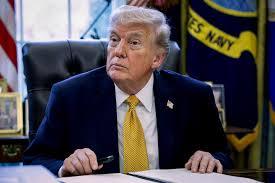
The White House has developed a national framework to control how artificial intelligence will be regulated within the United States. The plan, which has been linked to an executive order that President Donald Trump signed last December, will establish a unified approach to AI regulation. This will prevent individual states from developing their own laws on AI.
The national framework is based on a minimalist approach to AI regulation. This approach attempts to balance rapid development with public concerns. This is important to allow the US to stay at the forefront of AI development, especially against China.
The national framework has proposed six objectives that Congress needs to achieve.
The first objective is to assist parents in controlling their children’s online activities. This comes at a time when AI determines what people are exposed to.
A Roadmap for AI Infrastructure and Regulation
Secondly, it focuses on data centers. Data centers power AI systems. They also require large amounts of power and space. The administration wants to speed up the permitting process and also wants data centers to have their own power. This would speed up the development of AI.
Thirdly, the framework targets AI- scams. Scams have become more sophisticated with the help of deepfake videos and voice cloning. The framework wants Congress to strengthen laws against these.
Fourthly, the framework tries to find a balance in intellectual property. AI needs large amounts of data to train. This data comes from real-world content. The administration wants laws that protect content creators yet also help AI learn.
Lastly, the framework tries to find a balance in content control. It warns against government pressure on companies to censor content based on political beliefs. This would be a form of forced censorship.
Sixth, the plan does not propose a single, overarching AI regulator. Instead, it advocates a sectoral approach. This means that existing regulators, like those for healthcare or finance, will handle AI regulation in their sectors.
Perhaps one of the most contentious aspects of the plan is its position regarding state laws. The plan calls on Congress to bar states from developing their own guidelines regarding the construction of AI models.
A Unified AI Framework: Efficiency or Erosion of State Oversight?
While supporters of the plan argue that this will prevent a multiplicity of conflicting laws, critics see it as a ploy to undermine state-level oversight. In the last few years, state governments have been at the forefront of regulating issues like deepfakes and hiring biases.
The context of the plan must be considered. Today, AI has a hand in many aspects of our lives. It affects hiring, healthcare, online content, as well as our personal lives. Yet, there remains no federal law regulating its use.
This has created a situation where some states have their own laws in place, while others have yet to do so. The White House claims that this will slow down progress and affect US competitiveness.
The supporters of the framework agree that it will be beneficial to have a single system for companies to implement their AI technology. They also believe that it will give the US a competitive advantage in the market.
The framework has been criticized for not having proper security measures in place. Some people compare it to the development of social media technology. They claim that it is similar to how that technology developed without proper security measures initially.
The White House AI Policy Framework
There is a sense of urgency to implement this framework. There is a sense of caution as well. The benefits of AI technology are obvious. However, there are some risks involved that are not yet fully understood.
The White House is looking to work with Congress to make this framework a law. This may not be easy to achieve. Congress is under pressure to meet deadlines. It is difficult to pass legislation in Congress during an election year.
Still, the release of this framework is a big step. It signals how the US might approach AI in the coming years. The effectiveness of the policy will, of course, depend on how Congress chooses to finalize the law.
The message, at least, is clear. The administration wants a national system, flexible, and able to promote growth, as well as manage the risks. The question is, of course, how to do it right.
-
Unlock powerful smartphone performance with the Huawei Mate 80 Pro

-
After Praising Dhurandhar 2, Ram Gopal Varma Teams Up With Aditya Dhar For Syndicate: Report

-
Rapper Badshah Ties the Knot with Isha Rikhi: A Look at Their Wedding

-
Government Issues Order to WhatsApp Regarding Digital Scams: Device IDs to Be Blocked; These 5 Safety Features Will Keep Users Safe..

-
Rajasthan Board Class 10 Results 2026 Announced: Girls Excel Again