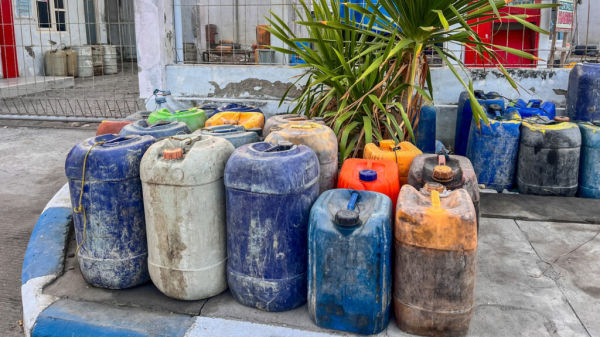
Most people who store gasoline at home are primarily thinking about one big thing: Keeping it fresh and stable for time to come. They research the right container material and size, pick up recommended fuel stabilizers, and make a mental note not to let it sit too long. That’s not wrong, but it is, at best, only the second problem you should really worry about.
The first is whether you survive storing it at all. The vapor from just one cup of gasoline is equivalent to roughly 5 pounds of dynamite. Such a destructive power can not only damage your property, it can also kill you. This means that safely storing gasoline should always be a priority, and that there are many gasoline storage mistakes you must be aware of.
What makes this particularly dangerous is how familiar gasoline is to most people. Because we interact with it almost every day — at the pump, in the garage, with the lawnmower — it becomes so routine, you stop thinking about it entirely, and that is exactly what leads to complacency. Here are five of the worst places to store gasoline you need to know about.
Inside your home (bedroom, closet, kitchen, basement)
Storing gasoline inside your home’s living area is likely the single most dangerous place you can think of. The worst part is, people do it more often than you’d think. The U.S. Consumer Product Safety Commission (CPSC) strongly advises consumers to avoid storing gasoline anywhere in the house. Gasoline vapors are three to four times heavier than air, and they don’t dissipate easily. This means that they crawl along the floor and seek ignition sources.
In one incident reported by the New York Timesseven members of a California family were badly burned when gasoline stored in a plastic container in a bedroom ignited. In a different case, four Los Angeles residents were killed when the pilot light from a stove ignited gas vapors seeping from three gas cans in the kitchen. It’s not just fire you should worry about, either.
Storing gas in your home is a health hazard, and exposure to the fumes is associated with certain health risks. These can range from mild irritation to your skin or eyes and in some cases death. This is just one of the many potential gasoline health risks. Moreover, storing gasoline in basements is generally prohibited because vapors can build up, creating a serious hazard.
Inside your car (trunk or passenger cabin)
Tossing a can of gasoline onto the car’s rear seats or trunk seems easy and logical. However, something like this should never serve as a long-term solution. CPSC strongly advocates for container labeling that includes a warning against storage in automobile trunks. The idea behind this is, in the event of a rear-end collision, it can be catastrophic.
However, this is only part of the risk. As we all know, during the summer, the temperatures inside a parked car can reach scorching levels. This is partly why you should never leave your laptop in the car, but it’s not just laptops. Anything flammable or anything with a lithium-ion battery is not designed to withstand such temperatures. With fuel containers, there is the added risk of pressure build-up inside the canister, which can lead to deforming or even explosions.
Also, you should never fill your container when it’s inside the vehicle due to risks associated with static electricity. The same story goes for the trunk, a truck’s bed, or trailer. Make sure to fully lower the can to the ground in order to eliminate chances of static electricity igniting gasoline fumes.
Near heat sources, appliances, or ignition points
Even if you store gasoline in a proper location, its immediate surroundings can still make it as dangerous as storing it inside your house. First of all, gasoline must be stored at room temperature. This is because heat can cause excess pressure and release of fuel vapors out of the can. Even half a glass of gasoline can create enough vapor volume to fill out an entire garage.
Moreover, gasoline should always be stored far away from heat sources like hot water heaters, space heaters, or furnaces. Although these are not likely to ignite the fuel, long exposure of materials not designed to withstand heat can result in melting of the containers. This is similar to why Hyundai and Kia recalled more than 300,000 cars. When it comes to direct ignition sources like pilot lights, make sure to create at least a 50 feet distance between the gas and the source.
You should also be aware that many things can be an ignition source, including cigarettes, welding machines, and many other tools you can often find in a typical garage. Lastly, EV charging stations deserve a mention. You should avoid storing gasoline where any battery-operated components are being charged because of the dangers of creating a spark.
In unventilated or enclosed spaces
Many storage facilities we use are sealed sheds and windowless storage rooms, and they are shielded from the elements, typically making them safe, dry, and out of sight. However, although this works when you want to store tires long-term, it is not a good idea for gasoline. If you do decide to store gasoline in such spaces, you are essentially trapping fuel vapors with nowhere to escape.
This can lead to dangerous concentrations of vapors which can be ignited even from a small spark, such as a light switch. Moreover, even if you are lucky enough to not ignite the vapors, they still pose a massive health hazard once you enter the enclosed space. This problem is further compounded with improper canisters and the volume of stored fuel.
Even if you have a small window or decide to crack open the door, that’s not enough, usually. According to OSHA standards, ventilation “is considered adequate if it is sufficient to prevent accumulation of significant quantities of vapor-air mixtures in concentration over one-fourth of the lower flammable limit.” In practice, this means a complete change of air at least six times per hour.
Outdoors or near other chemicals
Since all of the previous bad places to store fuel are indoors, one could assume that leaving your gas cans outside solves all problems, but it’s never that simple. Like we already mentioned, gasoline should be stored at room temperatures. If left outside during summer, high temperatures can lead to pressure buildup. If left outside during winter, low temperatures can accelerate the degradation of fuel. If it is extremely cold, moisture condensation inside the container can even freeze and make your fuel practically unusable when it gets warmer.
As you might be aware, gas can freeze in your fuel tank, so storing it outside in the winter is never a good option. The next major problem with improper gasoline storage is what you place it next to. Most people are limited on storage space, meaning that they will often store tires, pool chemicals, cleaning products, or garden supplies all in the same place.
However, this can also be a massive problem because fuel should never be stored near an oxidizing agent. For instance, pool chlorine is an oxidizing agent, meaning that storing your pool chemicals and gasoline next to each other can lead to a dangerous chemical reaction. So, even if you use a decently-ventilated storage space and there are no possibilities of sparks, it is still dangerous.