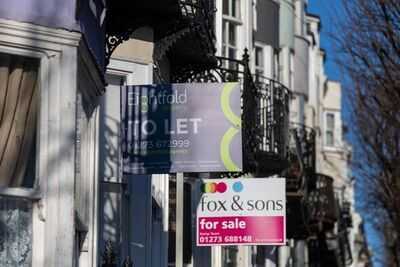
Buying a house isn't just about finding somewhere to live - it's also an investment. Most home-owners hope the value of their property will rise over time. But the housing market can vary significantly from region to region. In some places, prices have soared and in others, they have actually fallen.
Official house price data has revealed where property values have gone up most. And the figures also reveal where rents have risen, which might be good news for landlords but less welcome for tenants. London has a reputation for being an expensive place to live but, perhaps surprisingly, the data shows that this is not the region where prices are rising fastest.
Region and annual price growth (%)
1 North East 6.8%
2 North West 4.1%
3 Yorkshire and The Humber 3.7%
4 East Midlands 2.7%
5 England 2.2%
6 West Midlands Region 2.1%
7 South West 1.9%
8 East of England 1.8%
9 South East 1.0%
10 London -1.2%
The North East ranks as the strongest annual house price growth of any UK region, with the North West following and Yorkshire and The Humber close behind. All three northern regions outpaced every southern counterpart by a considerable margin, and each sits above the national average.
London was the only region to record a decline, with prices falling 1.2% year-on-year, an 8 percentage point gap separating it from the North East.

Area or city, and average rent cost
1 Kensington and Chelsea £ 3,632.67
2 Westminster £ 3,252.00
3 Camden £ 2,797.58
4 Hammersmith and Fulham £ 2,733.08
5 Islington £ 2,701.17
6 Hackney £2,550.67
7 Wandsworth £ 2,523.83
8 Lambeth £ 2,417.83
9 Tower Hamlets £ 2,365.17
10 Southwark £ 2,353.17
The concentration of high-cost areas within the capital is notable, as Kensington and Chelsea top the charts, followed by Westminster and Camden. In fact, the ten priciest areas are all in London, showing how far the capital's private rental costs sit above the rest of the country.
Renters in these areas face huge pressure on their bank balance, while landlords operating at these price points may find tenants struggle to pay their rent, leading to disputes or early exits from tenancy agreements.
Alex Cook, Senior Partner and Property Litigation Solicitor at Helix Law said:"High absolute rent levels affect tenants, compress yields for landlords, and make it harder to find and retain reliable occupants".
Area or city, and annual change (%) in private rent costs
1 Newport 18.61%
2 Broxbourne 13.91%
3 Nuneaton and Bedworth 13.35%
4 Slough 12.32%
5 Barking and Dagenham 12.22%
6 Rossendale 11.93%
7 West Lancashire 11.71%
8 Rhondda Cynon Taf 11.59%
9 Newcastle upon Tyne 11.33%
10 Tameside 10.92%
Newport had the biggest annual increase of any UK area, putting a real strain on tenants in the Welsh city. Barking and Dagenham is the only London borough to feature.
Notably, none of the areas in this table appear in the top 10 for absolute rent levels, highlighting a key distinction: the places where rents are rising fastest are not the same as the places where rents are already highest.
It is no secret that privately buying or renting a home has become rapidly expensive in the UK, and mortgage rates are much higher than they were in the past.
Property litigation solicitors warn that this means there are more likely to be disputes between tenants and landlords.
Mr Cook said: "Looking ahead to 2026, the private rental market shows little sign of easing for either landlords or tenants. Renters in high-cost urban areas face ongoing affordability pressure, while those in fast-rising markets outside London are dealing with renewal increases that can run well into double digits.
"For many, relocation is the only realistic option, though finding cheaper alternatives is increasingly difficult."
-
10 killed, several injured in bus-truck collision in MP's Chhindwara; CM announces Rs 4 lakh ex-gratia

-
NS&I boss sacked over bereaved families' savings scandal

-
Bengal: Kolendranath Mandi joins BJP ahead of polls

-
Bihar Dy CM warns COs, assures services will stay normal

-
Gujarat: Security arrangements underway ahead of PM Modi's visit