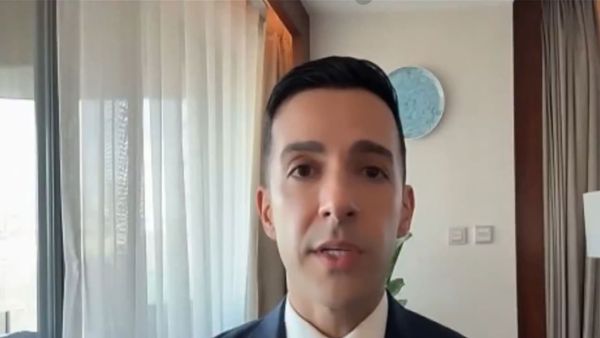
Crisis Group's Ali Vaez warns Iran holds the upper hand in the West Asia deadlock, threatening to close the Strait of Hormuz and Bab al-Mandab. Tehran is undeterred by US threats and may escalate by targeting critical Gulf infrastructure.
As tensions in West Asia reach a critical juncture, Ali Vaez, the Iran Project Director and Senior Adviser to the President at the Crisis Group, has provided a stark assessment of the current military and diplomatic deadlock. The situation remains volatile as Washington signals a desire for talks while Tehran continues to maintain a defiant stance.

Iran's Strategic Leverage
In an interview with ANI, Vaez highlighted the strategic leverage Iran believes it holds over the international community. "The Iranians believe they have the upper hand by holding the global economy hostage through the potential closure of the Strait of Hormuz, creating a situation without an easy solution for President Trump. If he escalates, they could kill more Americans and involve the Houthis in Yemen to close the Bab al-Mandab, cutting access to the Red Sea. Such moves would send markets into turmoil," he explained.
Potential for Wider Regional Catastrophe
The potential for a wider regional catastrophe remains a primary concern, with Tehran showing a willingness to expand the scope of its targets. Vaez warned that "Iran may escalate further by targeting critical Gulf infrastructure such as desalination plants." He further noted that the Iranian leadership is "not deterred by President Trump's threats and believes they can outlast the US and Israel." Underscoring the lack of progress toward peace, Vaez pointed out that "one month into the conflict, they continue launching missiles and drones, showing no interest in a diplomatic solution." This ongoing aggression persists despite the severe economic risks associated with a direct military confrontation between the two powers.
US Hesitation and Economic Risks
Discussing the rationale behind the current pause in US military action, Vaez suggested that economic stability is a major factor in the White House's deliberations. "I think the President has been hesitating because he understands that markets are deeply concerned about the consequences of further escalation in this conflict," he stated.
A 'Nightmare Scenario' of Mutual Destruction
The expert noted that the threats exchanged between the nations have created a "nightmare scenario" for the world. President Trump "had threatened to destroy Iran's energy infrastructure and electrical grid, while Iran warned it would retaliate by targeting energy facilities in Gulf states and attacking Israel's grid." According to Vaez, such an escalation "would not just cause a temporary dip in exports but a serious reduction in production for months or even years."
Long-Term Damage to Global Supply
The devastating impact of the conflict is already evident in the region's energy output. "Already, 17% of Qatar's natural gas production capacity has been lost, with recovery expected to take three to five years," Vaez highlighted, pointing to the long-term damage already inflicted on global supply. (ANI)
(Except for the headline, this story has not been edited by Asianet Newsable English staff and is published from a syndicated feed.)-
Aquarius, Capricorn, Pisces Horoscope Today – 28th March 2026: Experience Career Growth & Financial Opportunities

-
Libra, Scorpio, Sagittarius Horoscope Today – 28th March 2026: Career Breakthroughs, Financial Gains & Emotional Clarity

-
SpaceX's listing stirs up social media hype, ticker bets

-
SoftBank secures $40 billion loan to fund further OpenAI investment

-
Quote of the day by Julia Roberts: 'I believe that two people are connected at the heart, and it doesn't matter what you...' - lessons on understanding true love, relationships and destiny by Oscar-winning actress of Erin Brockovich and Steel Magnolias