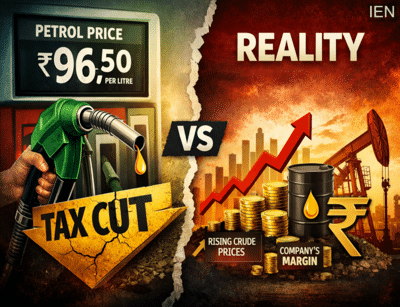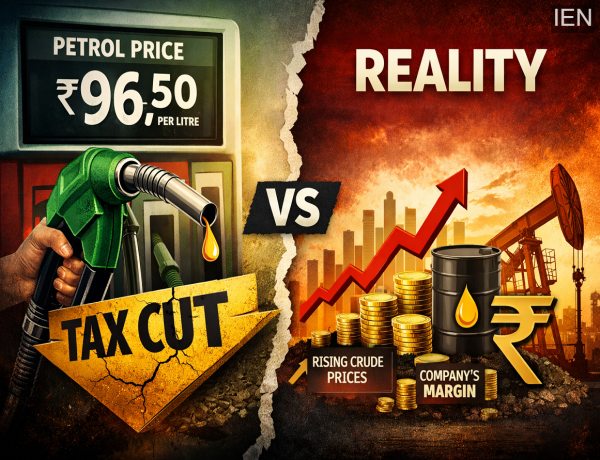
When the government announces a cut in fuel taxes, it is often presented as a big relief for consumers. However, the real impact on petrol and diesel prices is not always as straightforward as it seems. Even after an excise duty reduction, the benefit reaching your pocket may be limited.
What Happens When Excise Duty Is Reduced?
Excise duty is a tax imposed by the government on fuel. When this tax is reduced, ideally, petrol and diesel prices should fall. But in reality, the price you pay at the pump depends on multiple factors—not just tax cuts.
Why Consumers Don’t Always Benefit Fully
The pricing of fuel in India is influenced by oil marketing companies like:
- Indian Oil Corporation
- Bharat Petroleum Corporation Limited
- Hindustan Petroleum Corporation Limited
These companies adjust fuel prices based on various market conditions. So even if excise duty is reduced, companies may:
- Increase margins to offset earlier losses
- Adjust prices due to rising crude oil costs
- Factor in currency fluctuations
As a result, the reduction in retail prices may be smaller than expected.
Role of Global Crude Oil Prices
One of the biggest factors affecting fuel prices is international crude oil rates. If global prices are rising, any tax cut may be absorbed rather than passed on.
For example:
- Rising crude prices → Neutralizes tax cut benefits
- Falling crude prices → Increases chances of consumer relief
Impact of Rupee vs Dollar
Fuel imports are paid in US dollars. So, if the Indian rupee weakens:
- Import costs increase
- Fuel prices remain high despite tax cuts
On the other hand, a stronger rupee can help reduce costs.
Government’s Revenue Balancing Act
The government also uses excise duty as a tool to manage revenue. When taxes are reduced:
- Government earnings fall
- Compensation may happen through other mechanisms
This balancing act can limit how much relief is actually passed to consumers.
The Bigger Picture: It’s Not Just About Tax Cuts
Fuel pricing is a complex system where multiple elements work together:
- Global crude oil prices
- Exchange rate (₹ vs $)
- Oil companies’ pricing strategy
- Government tax structure
Because of this, the impact of excise duty cuts is not always direct or immediate.
Final Take
While excise duty cuts sound like good news, the actual benefit depends on several moving parts. Consumers may see only partial relief, especially if global oil prices or currency pressures offset the tax reduction.
Understanding this mechanism helps explain why fuel prices don’t always drop significantly—even after major announcements.
-
Will PPF, NSC & Sukanya Interest Rates Rise? Big Update Expected Before March 31
-
Gujarat Dy CM inaugurates Patan Bus Port, set to serve over 20,000 passengers

-
Missed Income in ITR? File Updated Return (ITR-U) Before March 31 to Avoid Penalties

-
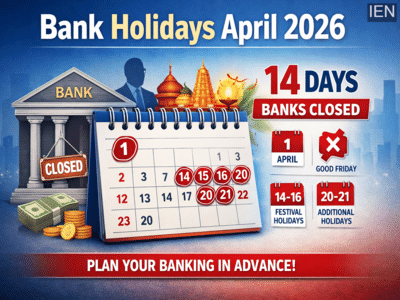
Bank Holidays April 2026: Banks to Remain Closed for 14 Days — Check Full RBI Holiday List
-
Excise Duty Cut on Fuel: Why You May Not Get Full Benefit Despite Tax Reduction