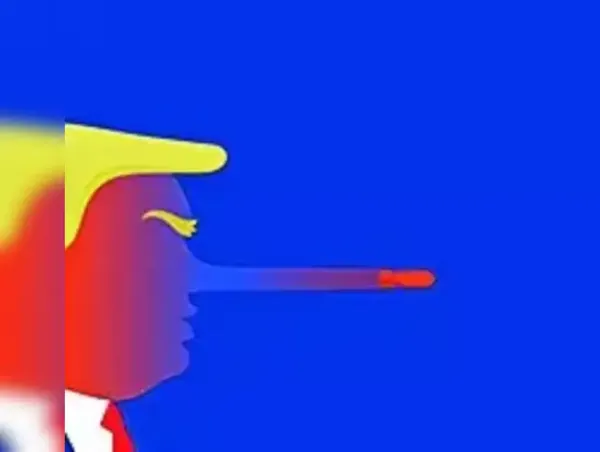
Talk is cheap. Talking about talks and negotiations is way cheaper. Especially when it's being done by Donald Trump. The US president has long treated negotiations less as a process of compromise than as a theatre of perpetual motion, where the emphasis in 'art of the deal' has been, ironically, in 'art', not 'deal'. In his lexicon, 'talks' are not about substance but about the act of talking itself - where definitions shift, lines are redrawn, and rhetorical feints are designed to keep adversaries off balance. This approach, honed in real estate boardrooms and reality TV studios, has been repurposed for geopolitics and may have delivered results before. But in the crucible of the ongoing US-Israel war against Iran, the limits of this style are getting starkly exposed. We have an unprecedented situation where the (Western) world is actually looking to Tehran to check whether what Trump has been saying is true or hysterical hogwash.
Diplomacy thrives on credibility. Allies and adversaries alike must believe that words carry weight - even when they may be stretching the truth. Even if Trump's contention that the Iranians are 'secretly talking' to the US regime is true, fewer people are believing him at this juncture. This isn't propaganda or rhetoric, but utterings that are sounding increasingly delusional. The paradox is that Trump's method, designed to project strength, is now signalling desperation and Lear-like fragility. By treating talks as stand-up monologues, he invites suspicion that substance is not just absent but has been wilfully driven out.
Trump's 'Anything goes as long as I say it' has already undermined the very believability ratings on which deterrence - never mind alliance cohesion - rest. His 'political' understanding of 'talks' - elastic, performative, endlessly reframed - may dazzle anarchists. But in the pretty serious arena of stopping war and waging peace, credibility is hot currency. 'In God We Trust' may be the official motto of the US. But trust is the last thing one associates with the US these days.
Diplomacy thrives on credibility. Allies and adversaries alike must believe that words carry weight - even when they may be stretching the truth. Even if Trump's contention that the Iranians are 'secretly talking' to the US regime is true, fewer people are believing him at this juncture. This isn't propaganda or rhetoric, but utterings that are sounding increasingly delusional. The paradox is that Trump's method, designed to project strength, is now signalling desperation and Lear-like fragility. By treating talks as stand-up monologues, he invites suspicion that substance is not just absent but has been wilfully driven out.
Trump's 'Anything goes as long as I say it' has already undermined the very believability ratings on which deterrence - never mind alliance cohesion - rest. His 'political' understanding of 'talks' - elastic, performative, endlessly reframed - may dazzle anarchists. But in the pretty serious arena of stopping war and waging peace, credibility is hot currency. 'In God We Trust' may be the official motto of the US. But trust is the last thing one associates with the US these days.