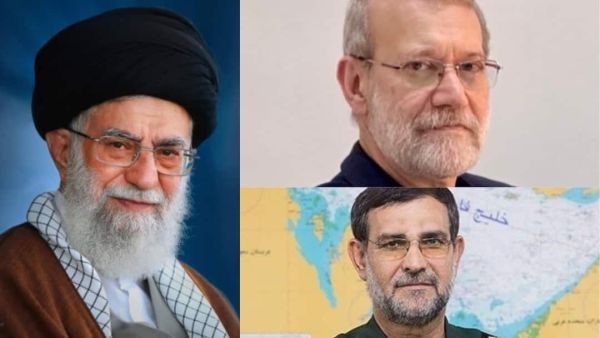
US Israel Iran War 1 Month: A month after the United States and Israel launched a sweeping military campaign against Iran, the scale of destruction and political upheaval continues to reverberate across the region. What began on February 28, 2026, as a series of coordinated precision strikes has since evolved into one of the most consequential conflicts in recent West Asian history.
The opening salvo targeted critical military installations and leadership hubs in Tehran and beyond, signalling a strategic effort to dismantle Iran’s command structure. The strikes marked a turning point, not just militarily but politically, as the country grappled with unprecedented losses at the highest levels of power.
Decapitation Strike Shakes Iran’s Leadership
Among those killed in the initial wave was Ali Khamenei, who had led the Islamic Republic since 1989. His death, alongside several senior commanders of the Islamic Revolutionary Guard Corps (IRGC), created an immediate leadership vacuum.
Israel confirmed that the operation deliberately focused on top-tier figures who had long overseen Iran’s military and intelligence strategies. Within days, Iran responded with missile and drone strikes targeting Israel and US-aligned nations in the Gulf, pushing the confrontation into a broader regional conflict.
On March 8, authorities in Tehran announced that Mojtaba Khamenei would take over as Supreme Leader, a move seen as an attempt to preserve continuity amid chaos.
Top Commanders Among Those Killed
The first month of hostilities saw a sweeping loss of senior officials across Iran’s military and political apparatus. Those confirmed dead include:
- Ali Khamenei – Supreme Leader of Iran
- Ali Larijani – Secretary of the Supreme National Security Council
- Aziz Nasirzadeh – Minister of Defence
- Abdolrahim Mousavi – Chief of Staff
- Mohammad Pakpour – IRGC Ground Forces Commander
- Gholamreza Soleimani – Basij Commander
- Alireza Tangsiri – Naval Commander
- Mohammad Shirazi – Head of Military Bureau
- Akbar Ebrahimzadeh – Deputy Chief of Supreme Leader’s Office
- Gholamreza Rezaeian – Intelligence Head (FARAJA)
- Bahram Hosseini Motlagh – Head of Plans and Operations
- Hassanali Tajik – Head of Logistics
- Saleh Asadi – Senior Intelligence Officer
The cumulative impact has left Iran struggling to rebuild its command hierarchy while continuing to engage in active conflict.
Strategic Assets Targeted
Beyond leadership, the strikes extended to Iran’s economic and strategic backbone. Key facilities hit included Kharg Island, the country’s primary oil export terminal, and South Pars, a crucial component of one of the world’s largest natural gas reserves.
Additionally, multiple sites associated with Iran’s nuclear programme were struck, despite Tehran’s longstanding insistence that its nuclear ambitions are peaceful. Analysts suggest these attacks were aimed at weakening Iran’s long-term capacity to sustain both its economy and military operations.
Civilian Toll Mounts
The humanitarian impact has been severe. According to the Human Rights Activists in Iran, at least 3,329 people had been killed by March 26, including 1,492 civilians. Among them were 221 children.
Iran has accused the US and Israel of deliberately targeting civilian infrastructure. Most notably, Tehran claimed that on February 28, a girls’ school near an IRGC base in southern Iran was struck, killing 168 people, including approximately 110 children.
As the conflict enters its second month, the region remains on edge, with no clear path to de-escalation and the geopolitical consequences continuing to unfold.
-
From Puberty To Menopause: A Woman's Sexual Journey

-
Mumbai: Racing Star Trevor Patel Poised To Clinch Champion Jockey Title

-
Tiger Woods Released From Jail After Police Arrested Him Following Rollover Crash In Florida

-
Mumbai Indians vs Kolkata Knight Riders, IPL 2026, Match Preview: High-Voltage Battle Set To Thrill Fans At Wankhede Stadium

-
Apple Hands Out Rare Bonuses To iPhone Designers As OpenAI's Talent Raid Intensifies