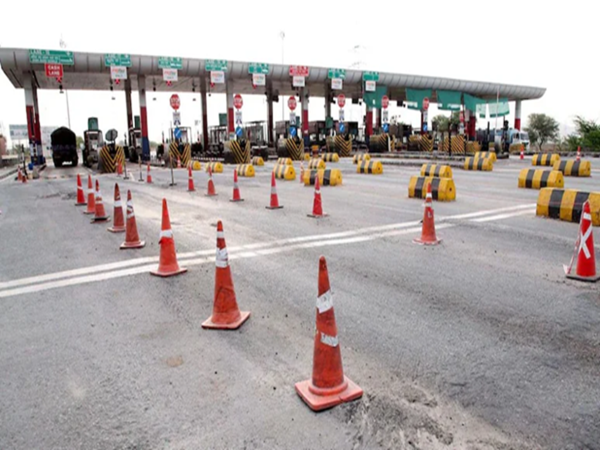
Delhi-Meerut Expressway Toll Rates: The National Highways Authority of India (NHAI) has decided to increase toll rates on the Delhi-Meerut Expressway for the year 2026-27. This hike will amount to approximately 5%, and the new rates will come into effect starting at 12:00 AM on April 1st. According to NHAI officials, cash payments at toll plazas have now been completely discontinued. Toll payments can only be made via FASTag or UPI. The Delhi-Meerut Expressway is access-controlled. Entry to the expressway is permitted from a total of seven locations: Sarai Kale Khan, Indirapuram, Dundhera, Dasna, Rasulpur Sikrod, Bhojpur, and the Kashi toll plaza.
Toll Rates on Delhi-Meerut Expressway to Rise by 5%
According to the new rates, the one-way toll for light vehicles—such as cars, jeeps, vans, or Light Motor Vehicles (LMVs)—traveling from Sarai Kale Khan to Meerut (a distance of approximately 82 kilometers) will now be ₹175, up from the previous rate of ₹170. The toll for a round trip (return journey) will now be ₹265, marking an increase of ₹10. For Light Commercial Vehicles, light goods vehicles, and mini-buses, the one-way toll has increased from ₹275 to ₹285. The toll for a return journey will rise from ₹415 to ₹425. Similarly, for light vehicles traveling from Indirapuram to Meerut, the one-way toll will now be ₹120, compared to the previous rate of ₹115. Meanwhile, the toll for a return journey on this route has been increased from ₹175 to ₹189.
Toll rates have also been increased for buses and trucks (two axles), large vehicles with three axles, vehicles with 4 to 6 axles, and very large vehicles (with 7 or more axles). The Delhi-Meerut Expressway (DME) and NH-9 witness a daily traffic volume of approximately 398,000 PCU (Passenger Car Unit) vehicles. Approximately 50,000 PCUs (Passenger Car Units) out of this total operate exclusively on the Delhi–Meerut Expressway.
The NHAI has implemented a "Closed Tolling System" across this entire route. This means that motorists are charged a toll proportionate to the actual distance they have traveled. To facilitate this, FASTag readers and cameras have been installed at all entry and exit points of the expressway to record the distance covered by each vehicle.
The Delhi–Meerut Expressway and NH-9 were developed in four phases:
The 8.7-kilometer stretch from Sarai Kale Khan to UP Gate was opened in May 2018.
The 22.2-kilometer section from Dasna to Hapur became operational in September 2019.
The remaining two sections—from UP Gate to Dasna (19.22 km) and from Dasna to Meerut (31.8 km)—were formally opened in November 2021.
The Delhi–Meerut Expressway is a six-lane facility, running alongside a four-lane NH-9. Two-wheelers and all other types of vehicles are permitted to use NH-9. The maximum speed limit on this expressway is set at 100 km/h within Uttar Pradesh, whereas the speed limit in the Delhi region has been fixed at 70 km/h.
Disclaimer: This content has been sourced and edited from NDTV India. While we have made modifications for clarity and presentation, the original content belongs to its respective authors and website. We do not claim ownership of the content.
-
Bengal SIR: Second supplementary voter list published, eight lakh more cases settled
-
'Love Is Participation in Eternity': Udayan Vajpeyi's novel reaffirms faith in good literature

-
Slapped, Hair Pulled! Ugly Fight Breaks Out Between Female Students At Galgotias University In Noida; WATCH

-
CM Yogi Adityanath Acknowledges Farmers' Role in Noida Airport Land Contribution
-
Varun Dhawan Recalls 'Scary' Underworld Threat Call, Says Family Had to Leave Home