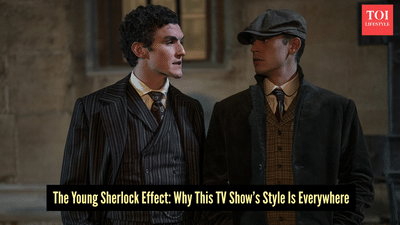
Men’s fashion is seeing a subtle shift right now, and surprisingly, the roots of this trend lie in the strict dressing codes of the late 19th century. Long before fast fashion and social media trends took over, a man’s wardrobe spoke volumes about his social standing. Think back to Victorian London, for instance, where everyday style was strictly defined by the stiff, formal frock coat.
This wasn't merely a garment; it was a wearable institution. The formal frock coat functioned as an instrument of rigid visual order, effectively locking men into the strict confines of their social strata. Navigating the sartorial landscape of the era meant achieving total conformity, as personal individuality was left with virtually no room to breathe.
Yet, this oppressive uniformity eventually gave way to a subtle rebellion when utilitarian, rural garments unexpectedly crossed over into the urban environment. The stark city streets were suddenly interrupted by the arrival of the Inverness cape and the Scottish deerstalker hat—practical pieces once entirely restricted to the rugged countryside. This wasn't an accident, nor was it a simple aesthetic pivot.
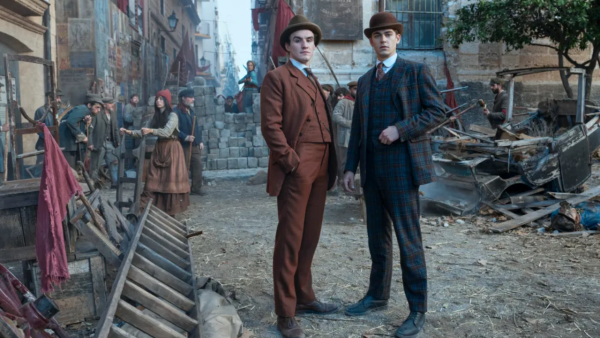
Choosing to wear these rustic garments in polite society was a subtle, brilliant rejection of Victorian conventions. It broadcast a radical new idea: that a man’s identity, his intellect, and his raw personality could dictate his appearance far more than his inherited social standing.
The Visual Legacy of Sherlock Holmes
No figure, real or fictional, embodied this quiet defiance quite like Sherlock Holmes. While the author Arthur Conan Doyle gifted the iconic detective with his formidable, machine-like intellect, it was actually the illustrator Sidney Paget who forged his enduring visual legacy.
Paget understood that a man who thought outside the boundaries of normal human logic couldn't possibly dress like a compliant Victorian banker. He gave Holmes a silhouette that was profoundly practical, heavily layered, and wonderfully unconventional. In doing so, Paget didn't just draw a character; he drafted a stylistic blueprint for menswear that has survived for over a century.
Young Sherlock and the "Undone" Aesthetic
Today, that exact legacy is being resurrected and remixed in the Prime Video series Young Sherlock. Helmed by the visually dynamic Guy Ritchie and starring Hero Fiennes Tiffin, the show makes a brilliant stylistic choice: it refuses to present Holmes as a finished, polished product. Set against the brooding, imposing gothic architecture of Oxford, the series uses clothing as a literal extension of a brilliant mind still in the messy process of forming. The wardrobe entirely rejects the rigid tailoring of the era.
Rather than presenting a perfectly polished facade, the wardrobe completely dismisses rigid perfection in favor of an intriguingly "undone" aesthetic. We witness an embrace of softer forms: outerwear that elegantly drapes rather than heavily structures the body, collars left casually unfastened, and garments stacked to create a thoroughly lived-in reality.
This relaxed approach is far from accidental; it is a highly considered choice meant to project profound intellectual substance over mere superficial display.It isn’t careless or sloppy; it’s highly considered, suggesting an intellectual depth that has no time or patience for superficial, overly manicured display.
Adapting the Look Today
What makes this rugged, slightly unkempt aesthetic resonate so powerfully right now is how easily it translates to the modern street. It demands zero theatricality. Adopting the look doesn't mean cosplaying as a 19th-century detective; it simply requires a few deliberate shifts in your daily rotation. It means swapping out stiff, board-like blazers for the tactile richness of textured wool jackets.
It’s about building visual dimension by layering waistcoats over rumpled shirts, and grounding your wardrobe in muted, earthy tones rather than loud, contrasting colors. The goal is to allow your fits to relax entirely without losing their underlying architectural form—a concept that translates effortlessly into heavy winter wardrobes globally.
Dark Academia and the Return to Craft
We’ve witnessed the immense power of screen-led fashion before—most notably when Benedict Cumberbatch’s sweeping coat in Sherlock sparked a massive surge in global demand. This time around, the momentum is running parallel to the sudden, massive obsession with "dark academia"—an aesthetic that practically marinates in nostalgia, sharp intellect, and heavy, textured garments. What's genuinely fascinating is how seamlessly this global mood clicks with a much larger cultural pivot currently unfolding in India, where there's a serious, growing return to authentic craftsmanship.
Indian menswear is experiencing a significant resurgence in heritage craftsmanship. Right now, there's a real, palpable pull toward clothes that actually feel substantial when you put them on. We're moving away from the exhausting churn of fast fashion and returning to things that are built to last: heavy weaves, raw handwoven textiles, and tailoring that values generational longevity over whatever is trending this week. You can see this cultural pivot being heavily championed by designers like Sabyasachi Mukherjee. He's been instrumental in pulling traditional heritage details into modern closets, hitting that rare sweet spot where a look feels incredibly aspirational but still totally accessible.
The Power of Authentic Dressing
When you get right down to it, the enduring grit of Holmes’s look comes from the simple fact that his clothes were never treated as mere ornaments. His layered, exact, and slightly unorthodox outfits were highly functional tools that perfectly reflected his unique way of moving through and engaging with the worldAs the broader fashion industry finally begins to pivot away from the exhaustion of overt, garish branding and disposable fast fashion, consumers are desperately seeking pieces that carry genuine meaning.
We want clothing that suggests continuity, character, and deliberate intent. Sherlock Holmes’s style endures because it serves as a timeless, grounding reminder: true, distinctive style never needs to shout to prove it’s authentic.
-
'Sadake Ban Jaye': Lyari Residents Demand Rs 500 Crore From Aditya Dhar As Dhurandhar 2 Crosses Rs 1000 Crore

-
Will Hit American Universities: Iran Warns US As War Enters Day 30

-
Chocolate Heist In Europe: 4,13,793 KitKat Bars Stolen After Leaving Italy Factory Ahead Of Easter

-
Iran-Israel War Day 30: 'No Kings' Protests Sweep US against Trump policies

-
‘No Kings’ rallies draw crowds across US, in Europe