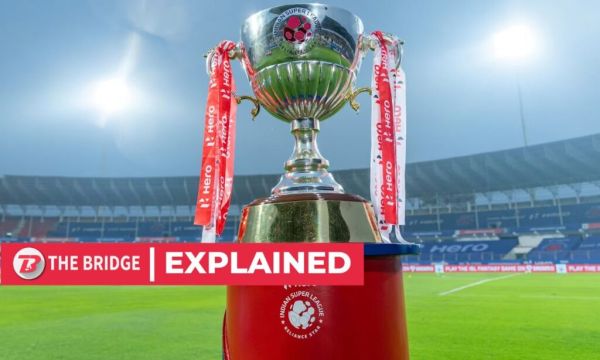
The All India Football Federation (AIFF) has opened bids for its long-term commercial rights cycle, with Genius Sports emerging as the highest bidder for the Indian Super League (ISL) and Federation Cup at approximately ₹2,129 crore over 20 years.
FanCode has submitted a competing bid worth around ₹1,190 crore, built on a different financial approach, while Capri Sports has secured the women’s package with a ₹150 crore commitment for the Indian Women’s League (IWL) and IWL 2.
On paper, it marks a dramatic jump from the current cycle. In reality, it has opened up a deeper debate about who actually benefits from the deal.
But as expected, the headline figures have not translated into confidence among ISL clubs.
A high-value deal with long-term consequences
Three bidders have emerged in the process:
- Genius Sports – highest bid for men’s football (ISL + Federation Cup)
- FanCode – alternative bid for men’s package
- Capri Sports – the highest bidder for women’s competitions
At first glance, the numbers are staggering.
Genius Sports has committed approximately ₹2,129 crore over 20 years, nearly double FanCode’s ₹1,190 crore offer. Capri Sports’ ₹150 crore bid for the women’s game, while modest in comparison, represents a rare long-term commitment in that space.
But beneath the headline figures lies a structure that has raised serious concerns among clubs on the bid.
The tender proposes a hybrid revenue system:
- 20% of the committed amount paid upfront to AIFF every year
- The remaining value depends on revenue generated across the season
- 70% of net revenue is shared, with 60% of that allocated to clubs
On paper, this appears equitable. In practice, clubs are not convinced.
The key issue lies in the phrase “net revenue”. Once production, marketing, and operational costs are deducted, the remaining pool could shrink significantly.
A scenario being discussed internally highlights the concern:
Even under optimistic projections, the eventual payout to each club would be modest and unlikely to significantly offset their yearly expenditure.
For ISL clubs operating on annual budgets that often exceed ₹25 crore, this is negligible.
An ISL club official, speaking anonymously, told Read:
“You’re looking at a ₹2,000 crore headline number, but when you break it down, there is no guaranteed flow of money to clubs. It doesn’t solve the sustainability problem.”
Interestingly, clubs have shown a preference for FanCode’s bid despite its lower valuation.
The reason is not the amount, but the structure.
FanCode’s model, with a lower upfront commitment, is seen as offering greater flexibility in cost management, potentially leading to higher distributable profits.
In contrast, Genius Sports’ higher investment raises concerns that aggressive upfront spending could limit future revenue sharing.
“With Genius, the federation is protected because of the guaranteed money. But from a club perspective, there is no visible upside. FanCode at least gives you a chance to earn, ” the source explained.
Clubs seek delay, question process
The financial concerns have been compounded by procedural issues.
ISL clubs have formally written to AIFF requesting more time to evaluate the bids, stating that key documents were shared less than 12 hours before the opening.
They have urged the federation to avoid taking a binding decision at the upcoming Executive Committee meeting on March 29 and instead allow:
- Detailed presentations from both bidders
- Internal consultations with club stakeholders
- A more structured evaluation process
“This is not a routine decision,” the clubs stated. “The selected partner will define the commercial direction of Indian football for the next two decades.”
Beyond the immediate bidding war, the episode highlights a deeper issue within Indian football.
Even with a ₹2,000 crore deal on the table, the current structure does little to address the core problem, club sustainability.
Most ISL clubs continue to operate at significant losses, relying heavily on owner funding. Without a reliable central revenue stream, that model remains unchanged.
The involvement of Genius Sports, a global data company with strong ties to betting-driven revenue, further adds complexity to how the ecosystem may evolve commercially.
The concern is not merely about legality, but about a widening regulatory gap. While sports betting remains restricted in India, there is little clarity on how domestically generated sports data can be used and monetised globally.
With companies like Genius Sports deriving a significant portion of their revenue from betting-linked data services, Indian football risks becoming a data source for international betting markets without corresponding oversight or control.
This creates a structural imbalance where value is extracted beyond the jurisdiction of Indian regulation, raising questions about governance, accountability, and long-term policy alignment.
With the AIFF Executive Committee set to meet on March 29, a final decision is expected soon.
-
IPL 2026: Big shock to Dhoni’s fans, he will be out for so many matches, not 3.

-
Flowerpot DIY for Artificial Plants: 5 DIY Ideas of Flower Pot, Decorate Bedroom with Artificial Plants. Flowerpot Do It Yourself For Artificial Plants Bedroom Home Decor

-
Is your uric acid increased? Dietician told that Amla will cure, dirt will come out through urine – News Himachali News Himachali

-
Sri Lanka was troubled by the Middle East crisis, then like Hanuman, India reached with Sanjeevani, gave 38000 metric tons of fuel.

-
Horoscope of 30 March 2026 (30 March Ka Rashifal): Luck will change with confidence and creativity, read the condition of all the zodiac signs.