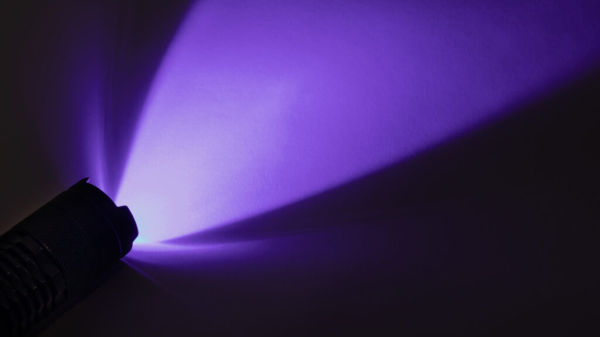
What if we could turn off the lights, flip on a flashlight, and watch the world transform in a dim purple glow? If you’re a fan of forensic crime dramas, or you’ve used ultraviolet tools at work to detect counterfeit money, then you know that a UV flashlight can open a new world of exploration. But UV light isn’t just a tool for police procedurals — you can harness its power at home.
Visible light, or light that we see with our naked eye, is only a tiny portion of the spectrum. Invisible light, like infrared and UV, remains unseen by the eye, but we often use it in our daily lives. We use X-rays to diagnose broken bones and microwaves to re-heat last night’s burritos.
UV light may not be able to warm up your snack, but a UV flashlight, or black light as it’s sometimes called, causes substances to fluoresce, making the invisible, visible. You may have one sitting in your junk drawer, an oddity that you don’t know how to use, or perhaps you’ve invested in a multi-use tool that includes a UV light. Here are three ways that you can put that UV flashlight to work around the house — just be careful: extended exposure to UV light can cause skin irritation, and you’ll want to avoid direct eye contact. A standard long-wave, portable flashlight should be safe when used properly, but be sure to read all instructions first.
Exploring nature
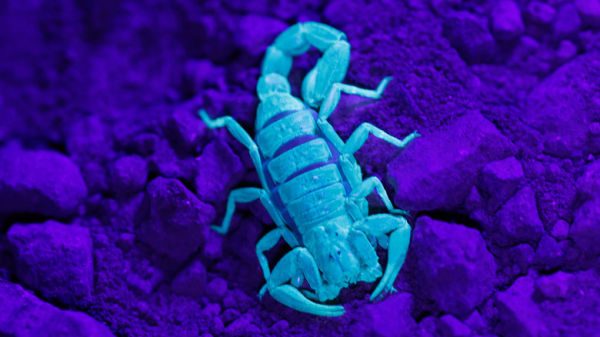
If you have an aversion to creepy crawlies, you may want to skip to the next section, but if you or your family are entomophiles (people interested in bugs and insects), grab that UV flashlight and read on! Some insects and arachnids actually glow under UV light, like scorpions and some millipedes. Fungi or mushrooms are also often fluorescent. Whether you’re hoping to see these creatures on a camping trip or looking to keep them out of certain spaces, try using UV light to spot them.
You can also use a UV light to attract other insects that won’t glow under the light. Called blacklighting, the process involves using a UV light to attract moths and other insects at night to observe or collect them. This may be a fun project to do with your kids on a warm evening if they like bugs.
Insects and arachnids aren’t the only things found in nature that will glow under UV light. Some minerals and gemstones do as well, including fluorite and opals. In Michigan, syenite rocks containing fluorescent sodalite glow under UV light. Known locally as Yooperlites, these rocks are even featured on the state’s tourism website!
Leak detection
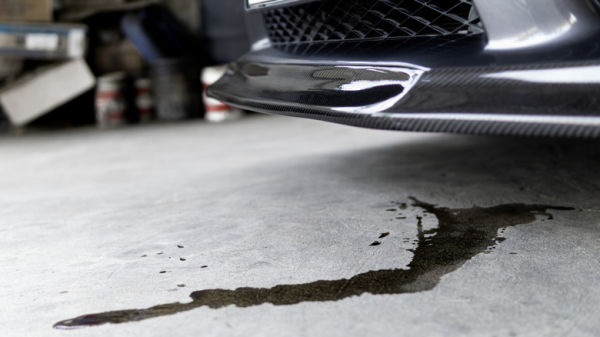
If you’re an at-home DIYer, you should definitely have a UV flashlight in your arsenal of handy tools. It can come in handy to detect automotive, HVAC, and even plumbing leaks. To detect leaks in your vehicle, you’ll need to pick up a UV leak detection kit and pinpoint where the potential leak is located. The kit will have a special dye that will illuminate when your UV flashlight hits it. You simply add the dye to the fluid that you think may be leaking, such as the engine oil or air conditioning refrigerant, run the appropriate system for a few minutes, and then use your flashlight to check for leaks.
The process is similar if you’re looking for a leak in your HVAC or plumbing systems. Inject the appropriate dye, run the system or your water for a few minutes, then use your flashlight and look for fluorescence. In all instances, you’ll want the room to be as dark as possible so you can easily spot that telltale glow.
Spotting pet stains
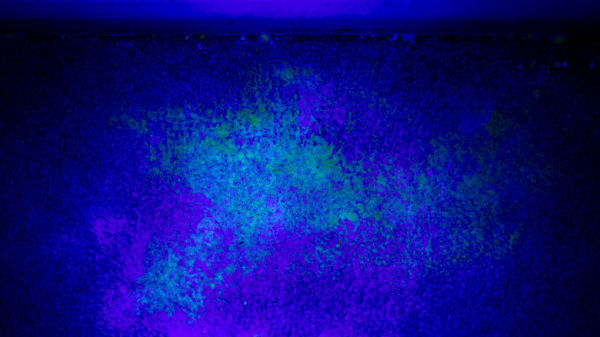
This may be one of the most common household uses for UV flashlights: seeking out that potential mess made by your cat, dog, or even your wayward hamster. Potty accidents are just part of the package deal when it comes to pet ownership. Whether you have a new puppy, an elderly pet, or strife within the household that’s leading to your cat marking its territory, accidents happen. If you’re getting a whiff of urine but can’t find it, try darkening the room and deploying that UV flashlight. Urine and other biological fluids contain phosphorus that naturally glows, but you’ll need a UV light to see it.
If the mess is recent and still damp, it may not glow, but wet messes are easier to spot with the naked eye and may not require a UV flashlight. Make sure the room is dark, and get close to suspicious surfaces, or you may miss the soiled area. While other things glow under a black light, urine should appear yellow. You may see a puddle, splashes, or drips that will disappear once you turn off the UV light, so mark the spot for clean-up first and invest in a good upholstery cleaner.