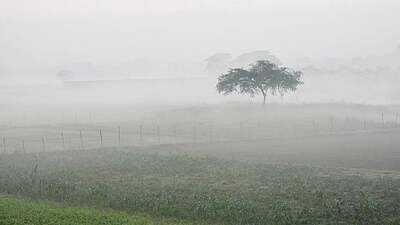
Fog in March is as unheard of as snow in summer. March is the month for palash (flame of the forest) to burst into bloom, for wheat to ripen as it soaks up the sun. This year though, March has been markedly different, even frightening.
In the first week, a dense fog descended on Delhi, Ghaziabad, Kanpur and Lucknow; a Delhi-Ranchi flight was diverted to Kolkata because of fog affecting visibility. Sweaters and woollens were brought out in some places in western Uttar Pradesh. When ground visibility became zero, it became clear that the balance of nature had been severely disrupted. Seasons were no longer following familiar patterns. To top it all, sudden rain and hailstorms destroyed standing crops.
Meteorologists described it as a climate emergency. Fog typically forms on winter nights when the earth rapidly releases heat and humidity levels are high. This year, the heatwave that began abruptly in the last week of February shattered all records. The Earth’s surface overheated. When moisture-laden easterly winds from the Bay of Bengal came into contact with this overheated surface, and the night temperature suddenly dropped by six to seven degrees, a dense blanket was formed. In scientific terms, this is called ‘radiation fog’.
The geographical features of north India and the sudden slowdown in wind speed made this situation more alarming. Stagnant air at the lower levels of the atmosphere allowed the mixture of smog and pollution — usually seen during winter — to condense.
Unseasonal fog, rising heat, deepening air pollution hit Delhi-NCRThe drastic difference in day and night temperatures after Holi is a serious indication of nature’s changing mood. According to the Meteorological Department’s data, daytime temperatures in many parts of north India have been recorded between 8 and 12ºC above normal, while nights have remained comparatively cold.
A major reason for this fluctuation is the extremely weak western disturbances. These disturbances typically bring rain and snowfall, which help regulate temperatures. Their absence results in a completely clear sky, allowing the sun’s rays to directly heat the earth during the day.
Remember, rainfall decreased by about 60 per cent in January-February this year. The lack of moisture in the soil means heat isn’t being dissipated through evaporation. At night, clear skies mean the earth’s heat is being quickly radiated back into space, leading to cooler nights. Additionally, high-pressure areas over western India are pushing winds downward. This compressed air heats up and prevents clouds from forming, creating a heatwave-like situation during the day.
****
The fog resulting from these erratic temperatures has far-reaching consequences. Agriculture suffers the most. The rabi crop, especially wheat, is currently in its final stages of ripening. Wild temperature fluctuations have affected the quality of the wheat grains. Increased humidity caused by fog, followed by intense sunlight, has led to yellow rust and various fungal diseases.
Snow in Kashmir, storms in Delhi as erratic weather sweeps across north IndiaAgricultural experts believe that if this uncertainty continues, we could face a major challenge on the food security front. Not only grains, even horticultural crops such as mango blossoms have been adversely affected. Flowers fall off in sudden humidity and cold, leading to a significant drop in production.
Apart from ecological damage, there’s a significant threat to human health. The March fog is not just water vapour, it contains tiny dust particles and trapped gases. This toxic smoke directly attacks the lungs, which can be fatal for respiratory patients and the elderly.
Traffic disruptions impact the economy. Flight diversions and train delays are not only inconvenient, they also result in fuel wastage worth billions of rupees and increased carbon emissions. This creates a vicious cycle where climate change creates fog, and the measures taken to combat that fog further pollute the environment.
The December-like scenes in March call into question our lifestyles and development models, which have been built at the expense of nature. The changing frequency of western disturbances in the Himalayan regions and the burgeoning concrete networks in the plains are both responsible for this crisis.
We need to appreciate that weather forecasts are no longer limited to rain or sunshine — they are the key to our survival. If we do not take steps towards controlling pollution locally and reducing carbon emissions globally, this disappearance of seasons will plunge our lives into much greater uncertainty.
-
Arsenal's full 12-player injury list as Mikel Arteta faces potential title race crisis

-
Of translation, transgression, and transcreation: A conversation on knowledge across languages

-
Spanish Para Badminton International 2026: Pramod Bhagat leads India's charge with one gold and two silvers

-
Thomas Skinners hits back at BBC with bombshell Question Time pay statement

-
Ram Gopal Varma questions film industry's loud silence on 'Dhurandhar 2' success