
Dubai’s real estate sector has once again demonstrated a resilience that has come to define it. Even as geopolitical tensions linked to the US–Iran conflict cast uncertainty across the region, the emirate’s prime property market has held its composure. Investors continue to take the long view, directing capital into premium developments, while developers themselves show no sign of easing the pace of new launches — reinforcing Dubai’s position as an international safe harbour for wealth.
Senior executives, analysts, and market observers note that sentiment remains decidedly upbeat, underpinned by robust fundamentals and steady institutional confidence. In March, a landmark transaction saw a luxury residence on the Jumeirah Peninsula sell for Dh422 million, while four plots in Umm Suqeim First changed hands for between Dh125 million and Dh152 million — deals concluded at a time when global markets were anything but steady.
“The year’s most significant transaction — a Dh422 million penthouse — closed squarely in the midst of volatility. If anything, it reaffirms Dubai’s standing as an investment destination defined by confidence, not caution,” experts said.
In addition to that a Dh350 million property sale at La Mer (Jumeirah One) on February 9, Dh225.9 million deal for The Alba Residences at Palm Jumeirah on February 17, Dh210 million transaction for Peninsula Dubai Residences (Jumeirah) on February 5, and Dh115 million agreement for EOME (Jumeirah) on February 19 are among the most expensive property transactions this year so far.
A recent survey further reflects market conviction: 85% of Dubai landlords have no plans to divest, signalling unwavering belief in the emirate’s long-term trajectory. The depth of the market continues to show through the numbers. According to Keturah, transaction volumes climbed 42% year-on-year basis to nearly 900 deals in the first 24 days of the month, with another full week yet to be counted. “These figures underscore resolute confidence in Dubai’s luxury real estate segment, particularly at a time marked by geopolitical tension,” said Talal M. Al Gaddah, CEO of Keturah.
The Dh20–50 million bracket recorded 79 transactions worth Dh2.36 billion, including several off plan villas in the Dh43–50 million range. In the Dh50–100 million segment, 16 transactions totalling Dh1.04 billion were registered, predominantly for off plan apartments. Momentum was equally strong across adjacent tiers: 150 transactions worth Dh1.99 billion took place in the Dh10–20 million range, while the Dh5–10 million category led in volume with 650 deals amounting to Dh4.54 billion.
“We continue to see sustained activity from high net worth individuals who are not swayed by short-term noise. Their focus is firmly on long-term value creation,” Al Gaddah added.
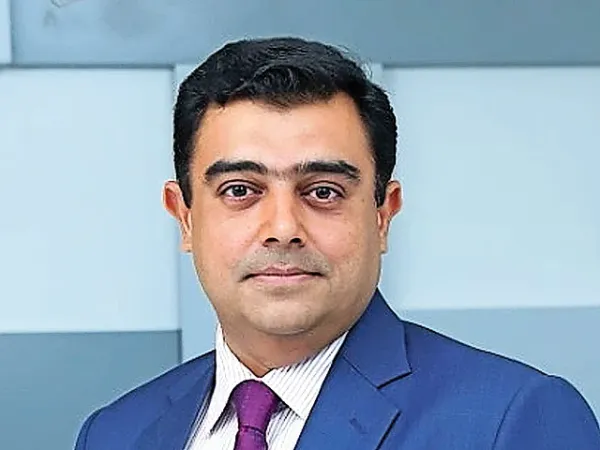
Imran Farooq, CEO of Samana Developers
New Developments Continue
Reposing trust in the real estate market, the Dubai-based Samana Developers announced its lateest development in the emerging Warsan 4 district, Samana Greenfield. The project introduces 304 residential units, six retail and commercial units to Dubai’s bustling property market.
Imran Farooq, CEO of Samana Developers, said Dubai’s real estate market continues to demonstrate exceptional resilience and growth.
“With Samana Greenfield, we are tapping into a high-potential district that offers excellent connectivity and community infrastructure. Warsan is fast becoming a sought-after destination for families and professionals seeking value without compromising on lifestyle. This project reflects our commitment to delivering assets that provide both high quality of life for residents and strong, stable returns for investors.”
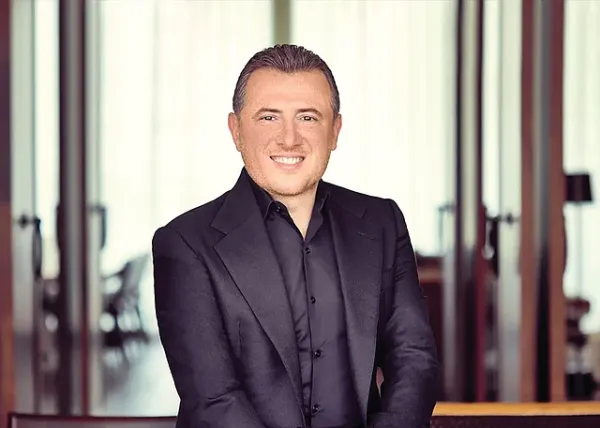
Mahdi Amjad, Founder and Executive Chairman, Omniyat
Omniyat, another property developer which has a $11.7 billion gross value of development portfolio, said construction activity continues across all active sites.
Mahdi Amjad, Founder and Executive Chairman, Omniyat, said the UAE leadership has a very strong resilience track record, absorbing the impacts of various regional or global situations, adapting the country’s policy response and resetting for recovery and renewed growth and advancement.
“Whilst the current situation may understandably introduce short term uncertainty, we are confident that the core fundamentals remain unchanged. We continue to be aligned and supportive of the national leadership. We continue to build.”
Built for Resilience
Farhad Azizi, Group CEO of Azizi Group, reposed full confidence in the UAE’s real sector stability and said the country will emerge stronger despite the ongoing Middle East tension.
“Any conflict in the region is, above all, a human concern. Our thoughts are with everyone affected, and we hope for stability and peace. From a real estate perspective, the UAE has demonstrated repeatedly that its economic architecture is built for resilience. Dubai was built in one of the most geopolitically complex regions on earth, yet it has turned that geography into a global hub for trade, aviation, tourism and finance. Resilience here is not accidental — it is structural,” Azizi told BTR.
“In many parts of the world, crises expose weaknesses. In the UAE, they often reveal the strength of systems that were built quietly years in advance. The country has effectively developed a model where even crises are managed almost like infrastructure projects — planned for, stress-tested, and executed with speed. That is why recovery here is often measured in days, not months,” he said.
Farhad Azizi, Group CEO of Azizi Group
“Our construction activities continue uninterrupted, which speaks to the strength of the systems the UAE has put in place. The UAE’s leadership treats stability as a national competitive advantage, investing heavily in infrastructure, security and rapid crisis response. Ultimately, resilience is not the absence of storms — it is the ability to absorb them and continue moving forward without hesitation,” he added.
Rana Hariz, Executive Director of Palma Development, echoed the similar views and said Dubai has drawn interest from across the world despite the tensions in the region.
“When broader geopolitical risks emerge, real estate is often one of the first sectors where you see a shift, not necessarily in fundamentals, but in how quickly people act. Some prospective buyers may hold off, wanting to see how things unfold before making a commitment,” Hariz told BTR.
Dubai, however, she said carries real momentum into this environment. Record-breaking transaction activity and a widening pool of international participants point to a market with serious depth. Any cooling is far more likely to be a pause than a correction, particularly for a city that has steadily attracted investment precisely when other regions feel uncertain.“That history speaks for itself. During previous periods of instability, Dubai has drawn interest from across the world, and we see no reason this cycle will be different.”
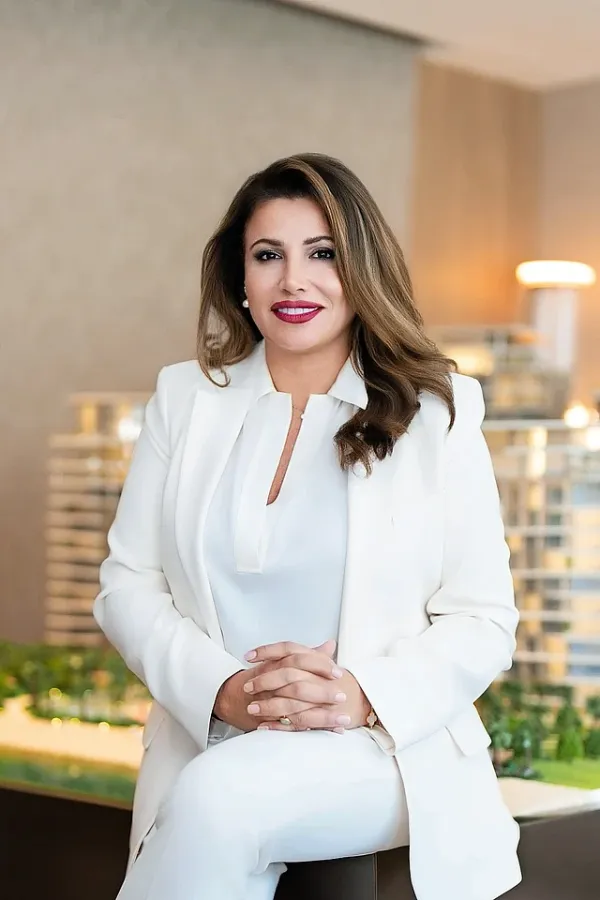
Rana Hariz, Executive Director of Palma Development
Strong Demand Persists
Hariz said there is nothing in the current data to suggest any broad pullback from Dubai's property market. The city continues to attract buyers through its stable regulatory framework, tax advantages, residency visa programmes, and global connectivity.
“Rental yields averaging 5–8%, which are well above those of most major cities, add another layer of appeal for international investors. The breadth of the buyer base, spanning Europe, Asia, the Middle East, and beyond, also provides a natural buffer against regional uncertainty.
“At Palma specifically, we have not felt any meaningful impact. Our model of focusing on one project at a time gives us tight control over financial exposure and operational risk, which, in an environment like this, is exactly the kind of discipline that reassures our partners.”
Azizi also dispelled the perception that real estate market will be affected due to the geopolitical crises in the region and said there is a strong demand for the residential units in Dubai.
“From what we see on the ground, demand for property in Dubai remains strong and our sales activity continues to move ahead robustly. The UAE has built an investment environment that has consistently maintained confidence even during periods of global disruption,” he said.
“We saw this during Covid-19 and again during the record floods of April 2024, when Dubai received in roughly three days about the amount of rainfall London typically gets in six months. Yet the city stabilised quickly and business activity resumed with remarkable speed,” he added.
Much of the outside world sees headlines; those living here see a country where institutions, infrastructure and leadership respond quickly and decisively, he said.
“Interestingly, what we are seeing from many buyers is not withdrawal but patience. Some investors are hoping that moments of uncertainty may create temporary price opportunities so they can enter the market. That in itself reflects continued confidence in Dubai — because those buyers clearly believe in the long-term trajectory of the UAE and expect prices to resume their upward momentum once stability returns.
“This is not the first time the world has watched Dubai expecting it to struggle — during Covid, historic floods, and now amid geopolitical tensions. Each time the outcome has been the same: it didn’t. The fact that millions of expatriates choose to stay here even during moments of uncertainty says more about confidence in the UAE than any statistic ever could. At Azizi, our projects remain fully on track and we continue to see strong interest from buyers and investors alike.”
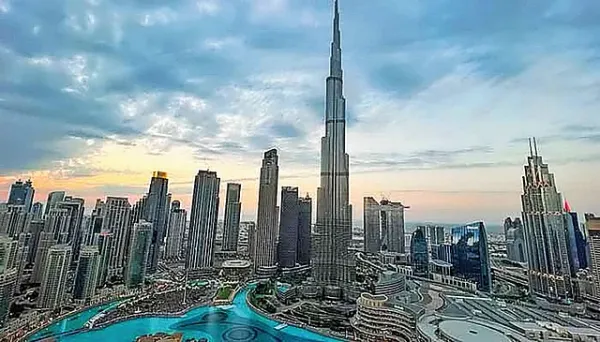
The UAE has consistently demonstrated that it recovers quickly from disruptions, largely because resilience is designed into the system.
Like any global market, Azizi said real estate can react to geopolitical developments. In periods of uncertainty, luxury purchases or speculative commercial investments may occasionally see a brief pause as investors reassess timing. However, Dubai’s market today is fundamentally different from earlier cycles.
“Through careful regulation and planning, the sector has developed genuine end-user demand supported by a strong legal framework that prioritises investor protection.”
He said Dubai’s private sector remains a vital pillar of the national economy, and developers like Azizi continue to deliver across all segments with the same discipline and long-term commitment.
“And if you look around the city, the most telling indicator is often the simplest one: the real test of a nation is the morning after. In Dubai, the morning still looks the same — coffee shops open, families out, and life continuing with calm confidence.”
If tensions were to affect the property market, Hariz of Palma Development said commercial and office space would likely be the first to slow down. During uncertain periods, companies tend to delay decisions around new leases, office relocations, and expansion plans. However, Dubai's office sector is currently operating at around 95% occupancy, leaving very limited supply available. That gives it a strong foundation, even if new demand softens temporarily.
“The luxury residential segment has proven far more resilient. Ultra-high-net-worth buyers view prime real estate as a long-term asset, and the city has established itself as one of the most attractive destinations in the world for this type of investment. Transactions exceeding Dh400 million in recent months are clear evidence of continued confidence at the top end,” she said.
“Branded residences and lifestyle-focused projects, the space Palma operates in, have been among the strongest performers. Purchasers in this category are motivated by quality, location, and enduring value, making them less sensitive to short-term geopolitical shifts,” she added.
Built-in Resilence
Azizi said the UAE has consistently demonstrated that it recovers quickly from disruptions, largely because resilience is designed into the system. Strong coordination between government entities and the private sector ensures that challenges are addressed swiftly and confidence is restored efficiently.
“Dubai has built a governance model where preparedness, infrastructure investment, and rapid crisis response allow the economy to stabilise faster than many global markets. That has been the pattern repeatedly, and there is little reason to believe it will be different this time.
“Our role as a developer is straightforward: we continue building, delivering projects, and honoring commitments to investors. Progress on the ground remains the strongest reassurance for the market.”
At the same time, he said responsibility also begins with compliance. Residents and businesses should follow official guidance, respect safety advisories, and rely on verified information so that authorities can manage situations swiftly and effectively.
“The UAE’s strengths are structural rather than circumstantial — and that is why the city continues moving forward even in moments of global uncertainty,” he said.
Hariz said Dubai's real estate sector has historically demonstrated strong resilience amid global and regional disruptions, supported by a diversified economy and a broad international investor base. The UAE government continues to play an active role in safeguarding stability and maintaining a secure, transparent environment for capital deployment.
“The fundamentals driving demand remain firmly in place: population growth, international migration, tourism expansion, and ongoing economic diversification all sustain long-term appetite for both residential and commercial property. The Dubai Real Estate Strategy 2033, which targets Dh1 trillion in transaction value, reflects the scale of ambition and institutional commitment behind the sector,” she said.
For developers, she said this is a time to lead by example. Transparent communication, uninterrupted construction progress, disciplined pricing, and a focus on high-quality projects in prime locations are the clearest ways to reinforce confidence.
“At Palma, we remain fully operational. Our delivery timelines are proceeding without disruption, and the discipline of concentrating on a single project at a time allows us to hold full financial control while offering our partners the certainty they expect, regardless of external conditions. We believe the UAE will emerge from this period stronger, and we intend to be part of that story.”
Why Is Demand UP
> Population growth
> International migration
> Tourism expansion
> Economic diversification
> A lisfestyle destination
-
CCTV Cameras: These CCTV cameras could be banned starting April 1st; know the rules before buying..

-
NIC Scientist B Vacancy 2026: Registration Begins for Over 200 Scientist-B Posts; Check Eligibility and Other Details Here...

-
UPSC CMS Recruitment 2026: Today is the last chance to register for the Combined Medical Services Examination..

-
Haryana Group D: Schedule for Biometric Verification for Haryana Group D Recruitment Released; Punctual Arrival is Mandatory..

-
RBSE Rajasthan Board Result 2026: Rajasthan Board Releases Class 12 Results; Check Your Scores in Seconds via DigiLocker and SMS