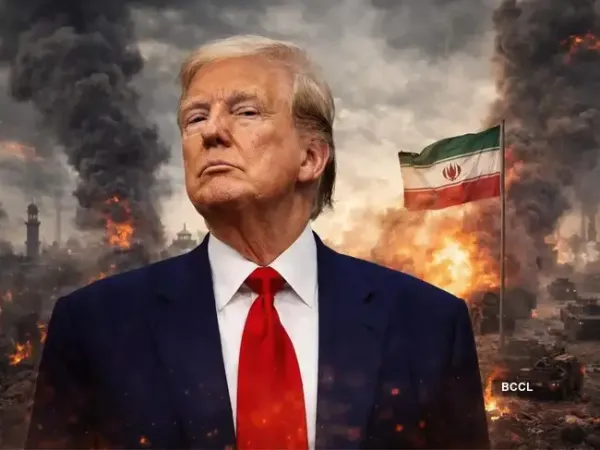
The Iran–US war entered its 32nd day on Tuesday, with tensions escalating across the Middle East as Donald Trump issued fresh warnings to Tehran over the closure of the Strait of Hormuz, while missile exchanges and regional spillover continued to intensify. Here’s what happened so far:
Trump’s warning and Netanyahu’s claim
Regional war spreads across Middle East
US troops deploy as diplomacy continues
Iran rejects talks and weighs nuclear treaty exit
Oil prices surge amid global economic concerns
Tanker attack and maritime risks intensify
Rising casualties and attacks on peacekeepers
Lebanon conflict deepens amid Israel-Hezbollah clashes
Global markets and political pressure mount
As the conflict enters its second month, uncertainty remains high, with both military escalation and fragile diplomatic efforts shaping the next phase of the crisis.
Trump’s warning and Netanyahu’s claim
- Donald Trump has renewed warnings that the United States could destroy Iran’s energy infrastructure if Tehran does not reopen the Strait of Hormuz.
- The threat comes after Iran rejected US-backed peace proposals as “unrealistic” and launched fresh missile attacks towards Israel, further escalating the conflict.
- Meanwhile, Benjamin Netanyahu said the ongoing US–Israel military campaign is “beyond the halfway point”, with the current focus on securing or removing Iran’s enriched uranium stockpile.
- In an interview with Newsmax, Netanyahu said significant progress had been made in degrading Iran’s military, nuclear and industrial infrastructure, including missile systems, weapons factories and personnel linked to its nuclear programme.
- He added that the operation aims not only to weaken Iran in the short term but to prevent it from developing nuclear weapons capability in the future.
Isfahan strike highlights escalation in Iran conflict
- The US recently struck a major ammunition depot in Isfahan using bunker-buster bombs, according to The Wall Street Journal.
- Isfahan remains a critical hub due to its links to Iran’s nuclear programme and defence industry.
Regional war spreads across Middle East
- The conflict, now in its 32nd day, has expanded beyond Iran. Israeli forces have carried out strikes in Tehran and Beirut, targeting infrastructure linked to Iran-backed Hezbollah.
- Israel also reported intercepting drones launched from Yemen, marking the entry of Houthi forces into the conflict.
- Meanwhile, Turkey said a ballistic missile from Iran briefly entered its airspace before being intercepted.
US troops deploy as diplomacy continues
- Thousands of troops from the US Army’s 82nd Airborne Division are being deployed to the region, expanding Washington’s military options, including potential ground operations inside Iran.
- Despite this, the White House says negotiations are ongoing, with a deadline set by Trump for Iran to comply with demands over Hormuz.
Iran rejects talks and weighs nuclear treaty exit
- Iran has denied direct negotiations with the US, saying proposals delivered via intermediaries are “illogical and excessive”.
- Officials also indicated that Tehran is reviewing a possible exit from the Nuclear Non-Proliferation Treaty.
- Iran maintains that its nuclear programme is peaceful, while the US insists preventing nuclear weapons development is a key objective of the war.
Oil prices surge amid global economic concerns
- The conflict has severely disrupted global energy markets.
- Iran has effectively blocked the Strait of Hormuz, through which around 20% of global oil and gas supplies typically pass.
- Oil prices have surged, with markets bracing for further escalation.
- The International Monetary Fund has warned of broader economic fallout.
Tanker attack and maritime risks intensify
- A Kuwaiti oil tanker was struck by a drone near Dubai, causing a fire that was later contained.
- There are also concerns that the Bab el-Mandeb Strait could be targeted, threatening another key global trade corridor.
Rising casualties and attacks on peacekeepers
- The war has killed thousands across the region, with heavy civilian casualties reported in Iran and Lebanon.
- At least three United Nations peacekeepers from United Nations Interim Force in Lebanon (UNIFIL) were killed in southern Lebanon within 24 hours.
- The incidents are under investigation, with responsibility still unclear.
Lebanon conflict deepens amid Israel-Hezbollah clashes
- Fighting between Israel and Hezbollah has intensified, with Israeli airstrikes hitting southern Lebanon and Beirut’s suburbs.
- Lebanese authorities report over 1,200 deaths, including civilians, medics and journalists.
- Israel says it is targeting militant infrastructure, while Lebanon denies claims that civilian facilities are being used for military purposes.
Global markets and political pressure mount
- The economic impact is becoming increasingly visible, with rising fuel prices affecting households in the US and beyond.
- Washington is also facing political pressure over the growing cost of the war, with additional funding requests under debate.
As the conflict enters its second month, uncertainty remains high, with both military escalation and fragile diplomatic efforts shaping the next phase of the crisis.