
New Delhi: During my time spent with the Nothing Phone (4a), I appreciated the changes Nothing made to its mid-range formula. The Phone (4a) feels better compared to its predecessor, the Phone (3a), and manages to branch out on its own with the company’s signature quirky design. The starting price of Rs 31,999 (under Rs 29,000 with bank offers) offers customers a sharper display, a faster processor with the Snapdragon 7s Gen 4, a useful periscope telephoto camera, and a larger battery. I tested the 12GB + 256GB white variant, and honestly, overall it hits a sweet spot for customers who want a device that is out of the ordinary and still offers competitive pricing.
From my time spent with the Nothing Phone (4a), I found it to be a device that is well balanced and covers the lifestyle and day-to-day usability. The transparent glass back is still turning heads, and the updated Glyph Bar offers a nice refresh to the original light system. The Phone (4a) is facing harsh competition with the Motorola Edge 70 and the OnePlus Nord 5, but the Phone (4a) offers something different with its clean software, impressive camera system and absolutely impressive performance. Here’s my detailed review from my time spent with the phone.
Nothing Phone (4a) design and build
I like how the Nothing Phone (4a) reflects the brand’s identity and the unique quality upgrade compared to the Nothing Phone (3a). The transparent back showcases the internals of the phone, allowing it to stand out above the ordinary mid-tier devices. The weight and thickness of the phone at 204.5 grams and 8.55 mm, respectively, offer the same experience as last year’s Nothing Phone (3a) while stepping up the repairability of the phone, which uses matte polycarbonate for the frame. Although the rear may get a bit slippery, the included, transparent case is highly encouraged.
In contrast to the previous model, the camera bump is also smaller. Along with the new telephoto lens, the phone is now able to lay completely flat. This is very convenient. The phone comes in four colours: white, pink, black, and blue. It has IP64 dust and splash resistance. I had no issues with my in-display fingerprint reader; it unlocked the phone quickly. However, I was forced to slightly reach for it because the placement was a bit low. Face unlocking was much quicker, and I preferred it for everyday use.
Nothing Phone (4a) display
I liked the 6.78-inch 1.5K AMOLED display on the Nothing Phone (4a); it has a resolution of 1224 x 2720, around 440 PPI, and has a peak brightness of 4500 nits and 4500 nits for HDR. I like the new Phone (3a) upgrade that has 1600 nits outdoors.
I liked watching HDR on YouTube and scrolling through social media. I liked the default setting “Alive” for more punchy colours, but I also appreciated the option to select more natural colours like in “Standard”. Other notable features include 2160Hz PWM dimming for low light and the protection of Corning Gorilla Glass 7i. There is a 32 MP selfie camera, and the earpiece is an extra speaker. I think the bezels on the sides are a little thicker compared to competitors. Overall, I had an immersive experience.
Nothing Phone (4a) camera
There are several upgraded features that I enjoyed on the Nothing Phone (4a). They are:
- 50MP main camera (Samsung GN9, f/1.88, OIS)
- 8MP 120° ultra-wide (IMX355, f/2.2)
- 50MP 3.5x periscope telephoto (Samsung JN5, OIS, up to 70x zoom)
- 32MP front camera (Samsung KD1, f/2.2)



-

- refocus_ok

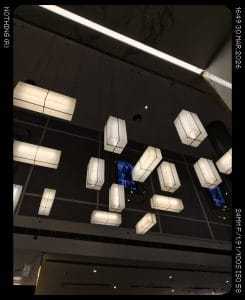

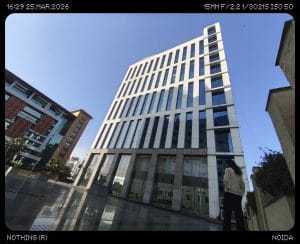

The photos taken during the day were bright, and colours were true to life. My portraits with the telephoto lens were great, and the bokeh and edge detection were impressive. I was able to take clear pictures using the zoom feature up to 30x. The night mode feature on the camera was great and helped with the low-light photos. The ultra-wide lens captured a similar range of colours which coordinated with the main lens, although it only has 8MP.
I filmed 4K@30fps videos on the main and telephoto lenses, which I thought was well done, but the stabilisation was a bit off. I did film videos using the front camera, and I found that the 4K feature was missing, which was unfortunate. My videos taken with the Glyph Bar (photo and video light) were decent, but I thought there was some poor representation of skin tones and lacked clear details in the low light. Overall, the telephoto lens adds real versatility rarely seen at this price.
Nothing Phone (4a) performance and software
Nothing Phone 4a review.
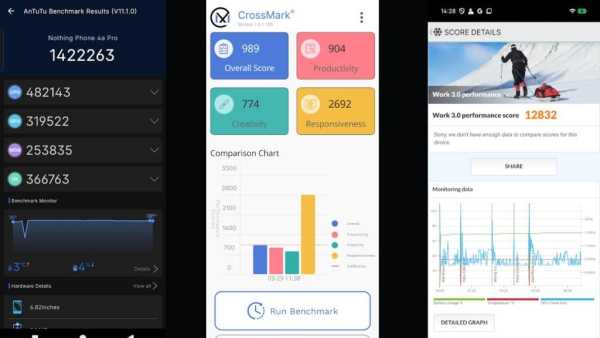
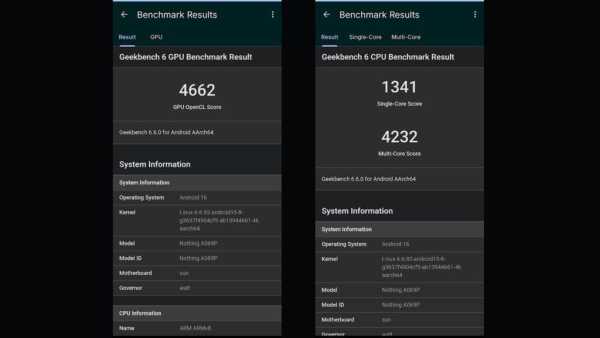
I tried the Nothing Phone (4a) with the Snapdragon 7s Gen 4 chipset (1x 2.7 GHz prime core + 3x 2.4 GHz performance + 4x 1.8 GHz efficiency cores) and 12 GB LPDDR4X RAM + UFS 3.1. It performed very well for both RAM usage and multitasking (approximately 5 GB RAM free on average) with the ability to add 8 GB RAM virtually.
Nothing Phone 4a review.
I was able to game on it decently. I played BGMI on HDR/extreme settings, and it ran very well, though the phone warmed up slightly after 30 minutes. The Phone (3a) benchmarks helped improve vapour chamber cooling. The improved cooling helped maintain gaming performance. The Nothing OS 4.1 is based on the Android 16 March 2026 security patch. They give 3 OS updates and 6 security patches.
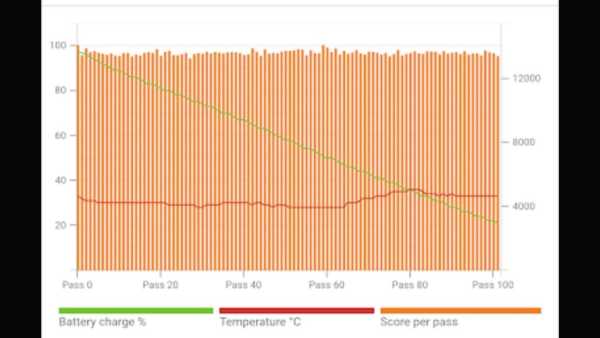
Nothing Phone 4a review.
I enjoyed the customisations on the clean Android experience. The depth wallpaper for the new lock screen, the Breathing Break widget, and the gallery AI eraser feature were nice touches. The Essential Key on the left side opens Essential Space for notes, voice recordings, and (now with cloud sync) AI-powered organisation. The Glyph Bar still has a vertical rectangle with 63 mini-LEDs. It is now up to 3500 nits bright and supports notifications, timetables, and live updates from apps like Uber and Zomato.
Nothing Phone (4a) battery life and charging
The enduring performance I’ve experienced from the 5400mAh battery has been amazing. Over the course of two days with a mix of usages, mostly over Wi-Fi with some 5G and 120Hz, I was able to get 7+ hours of screen time. Even with heavy usage, I was able to last over a full day of use. With the 50W fast charging, I was able to get the phone to 50% in about 25 minutes and a full charge in just under 60 to 70 minutes (charger sold separately). The phone does 7.5W reverse charge; however, the phone does not support any wireless charging.
Additional features
The stereo speakers allowed for some audiophile enjoyment, with the ability to decently use them as mini speakers. They do not support Dolby Atmos; however, I did find the speakers to do a decent job. The phone does support decent haptic feedback, and with Widevine L1 certification, I was able to stream and watch Netflix and Prime Video in HD (YouTube worked in HDR as well). The phone supports the 5G bands for India, Wi-Fi 6 and Bluetooth 5.4 and does support dual SIM. The Indian variation does not support NFC; however, this should not matter as the phone supports contactless payments. The SAR value does stay well within the limits (head 1.18 W/kg, body 1.09 W/kg).
Advantages and disadvantages
Advantages:
- New updated Glyph Bar with a unique bright glyph design.
- 1.5K AMOLED display with excellent outdoor visibility.
- Versatile periscope telephoto camera for the segment.
- Nothing OS.com is simple to use and provides excellent ongoing software support.
- Reliable battery life and charging.
Disadvantages:
- A charger is not provided.
- The front camera lacks 4K video recording.
- There is no NFC support.
- The key placement is a bit awkward.
- The front-facing camera is poor in low light.
Verdict
After using the Nothing Phone (4a), it is clear that Nothing has developed a more complete middle-range product. The unique Glyph Bar, more powerful processor, telephoto camera and brighter display make it more competitive at these price ranges. It can now be found on Flipkart, Vijay Sales, Croma and in stores.
The Nothing Phone (4a) is highly recommended if you value a great design, simple-to-use software, and great camera features in a middle-range phone. Although it may not be the best phone in every category, it is a great option because of the unique design and real upgrades. The competition includes the Motorola Edge 70 and the OnePlus Nord 5, but this has the best combination of features. It also has the best combination of features and design out of the competitors.
-
Results Announced for SSC Delhi Police CAPF SI Paper I 2026

-
Results Announced for SSC Delhi Police CAPF SI Paper I 2026

-
UPSC CDS II Final Results Announced for 2026: 302 Candidates Selected

-
Andhra Pradesh High Court Recruitment 2026: Apply for 300 Positions

-
NIC Scientist B Recruitment 2026: Apply for 243 Vacancies