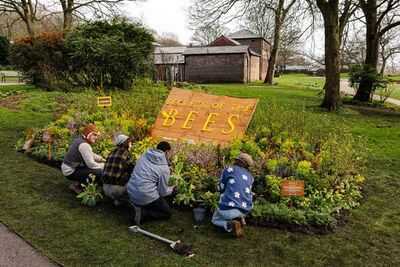
Biologist and bee expert Dr Rosa Vásquez Espinoza has shared her top tips for turning your garden into a buzzing sanctuary - including keeping weeds. She was speaking in Manchester, where she helped create a large-scalebee-friendly flowerbed at Heaton Park - one of the UK's largest public parks.
To help the bees from your own garden, the National Geographic explorer said Brits should plant wildflowers and embrace weeds, like dandelions, which are vital food sources for pollinators. She also said letting your garden grow a little wilder can have an instant impact, while choosing plants that flower from early spring to late autumn helps bees thrive year-round.
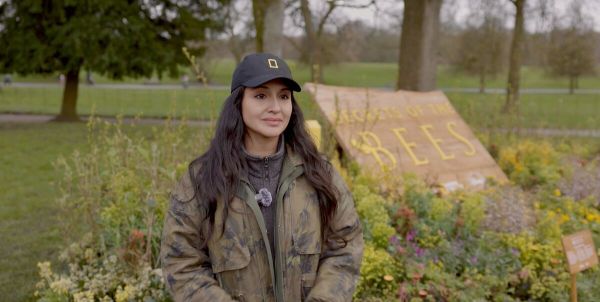
Another simple step is to leave parts of the garden uncovered rather than paved, as bees often nest in exposed soil. While shallow bowls filled with rocks and water will also give them ample opportunity to hydrate and recover.
The bee-friendly flowerbed in Heaton Park was installed to mark the launch of Secrets of the Bees, a new two-part series fronted by Bertie Gregory, premiering today (April 1) at 7pm on National Geographic WILD and streaming on Disney+ the same day.
Organisers hope it will inspire Brits to make simple changes at home - showing how even small actions can help protect the species our ecosystems depend on.
Rosa said: "Let your garden be a little wild - the more natural you can leave your outside space, the better the environment you are creating for wildlife such as bees.
"Tempting as it might be to create overly kept areas, like paved or decked areas or extremely full flower beds, bees actually benefit from having room to forage and nest. And avoiding chemicals such as fertilisers, pesticides and insecticides will stop bees from being confused, paralysed or even, in some cases, killed."
Some homeowners are already taking steps to help. A study by National Geographic of 2,000 adults with gardens found almost two thirds (61%) allow parts of their garden to grow wild to help population drive.
Despite prioritising easy to manage outdoor spaces, 73% believe their garden is pollinator friendly. The research found 65% plant flowers that bloom at different times of year, and 46% grow flowering herbs. Another 13% said they have a bee hotel in their outdoor space.
While a third (32%) admit they only do a few things to help - saying it isn't a priority - they are open to change. More than half (52%) would consider planting more nectar-rich flowers, while 36% are open to reducing pesticide use.
Rosa Vásquez Espinoza added: "Bees play a vital role in our ecosystems and food systems, pollinating many of the plants we rely on every day.
"What this research shows is that while people care about bees, there is often a gap between intention and action.
"The positive news is that even small changes - like planting nectar-rich flowers, leaving areas to grow naturally, or reducing chemical use - can make a real and immediate difference."
Show your gardens wild sideLet your garden be a little wild. Bees thrive in diversity, not in neat, overly managed spaces. Allow patches of wildflowers to grow, especially native ones. What we often remove as "weeds" are actually some of the most important early food sources for bees.
Cross season foodThink about providing food across the whole season. It's not just about having flowers in summer, bees need support from early spring through to autumn. A mix of wild, naturally occurring flowers helps create that continuous source of nectar and pollen.
Hydration stationsAlways leave out a small source of water. A shallow dish with stones or sticks gives bees somewhere safe to land and drink. It's a simple thing, but especially in warmer or dry periods, it can be critical.
Avoid chemicalsAvoid pesticides as much as possible. Even those marketed as safe can disrupt bee behaviour and harm the wider ecosystem. If we step back from using chemicals, nature often rebalances itself.
Leave it bareDon't cover every part of your garden. Many UK bee species nest in the ground. Leaving small patches of bare soil and not sealing over holes or gaps gives them somewhere to live. When we pave or artificialize everything, we remove their homes.
-
'I am Muslim, Alhamdulillah': Lamine Yamal REACTS To Offensive Chant From Crowd During Spain Vs Egypt Clash

-
From Pathum Nissanka To Mukul Choudhary - Check All Debutants In LSG VS DC IPL 2026 Clash

-
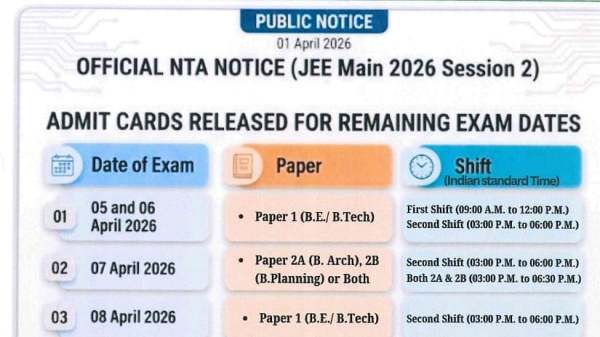
JEE Main 2026 Admit Card Released For April 5–8 Exams; Download At jeemain.nta.nic.in
-
CBSE To Launch New Curriculum For Classes 9 To 12 For Academic Session 2026-27 From April 1

-
DY Patil Worli Hosts IB Co-Creation Session On Hybrid Learning With Global Education Leaders