In Gulf cities, supply chains are easy to ignore until they come under pressure. From food and fuel to electronics and consumer goods, much of what powers daily life and business activity in cities like Dubai and Abu Dhabi is imported through highly coordinated trade and logistics networks.
But that same openness also creates vulnerability. When key shipping routes come under pressure — whether through regional tensions, bottlenecks or rerouted maritime traffic — the effects may not be immediate, but they are rarely insignificant. Freight costs begin to climb, delivery schedules become less predictable, and businesses are pushed to rethink sourcing plans in real time. For import-reliant markets like the UAE, the issue is no longer whether disruption will be felt, but how well the system is built to respond.
Over the past few years, Gulf economies have been quietly stress-testing that resilience. From pandemic-era slowdowns to more recent pressure on major maritime corridors, businesses and policymakers alike have had to think beyond efficiency. Investments in port infrastructure, supplier diversification and local food production including hydroponics and vertical farming — all reflect a broader shift in mindset.
The result is a model that remains deeply dependent on imports, but is increasingly designed to bend rather than break when the routes that sustain it come under strain.

Mark Mortimer-Davies, CEO of Choithrams
Why Resilience Now Matters As Much As Speed
From a supply-chain perspective, the Gulf’s exposure is structural, but so is its ability to adapt. “While reliance on imports remains, this has reduced over time with increased local production through hydroponics and vertical farming,” said Mark Mortimer-Davies, CEO of Choithrams. “Gulf markets are still structurally dependent on imports, making shipping routes critical, but resilience has been built through diversified sourcing, multiple logistics partners, and alternative routes.
“The UAE benefits from world-class port infrastructure, efficient customs, and strong regional distribution networks, enabling rapid adaptation to disruptions. Retailers also maintain forward inventory planning and buffer stock across key staples. Recent disruptions, including Covid-19 and Red Sea tensions, have further strengthened contingency planning. The UAE’s role as a re-export hub, supported by zones such as Jafza and Kizad, enhances flexibility and redistribution across the GCC.”
That diversification is also visible at the market level, where scale and supplier variety play a critical role in cushioning shocks. “While Gulf markets rely significantly on imported food and agricultural commodities, cities like Dubai have built highly diversified supply chains that help reduce exposure to disruptions in shipping routes or logistics corridors,” said Mohammad Al-Madani, Senior Centre Manager at Waterfront Market.
“Access to multiple sourcing markets and well-established trade routes allows traders to adjust supply channels when global logistics conditions change. At Waterfront Market, shoppers typically have access to over 95 varieties of vegetables and 65 varieties of fruits, meaning that even when sourcing conditions fluctuate, the overall range of produce remains extensive.
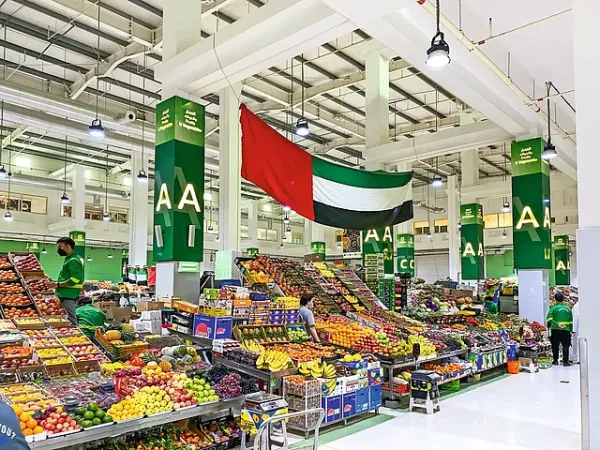
Operators within the food ecosystem are increasingly balancing global sourcing with local procurement strategies to reduce risk where possible.
“This breadth of supply also supports price transparency. With more than 150 fruits and vegetables traders operating at Waterfront Market, pricing is shaped by competitive supply and demand dynamics, helping moderate sudden price fluctuations even during periods of global logistics uncertainty.
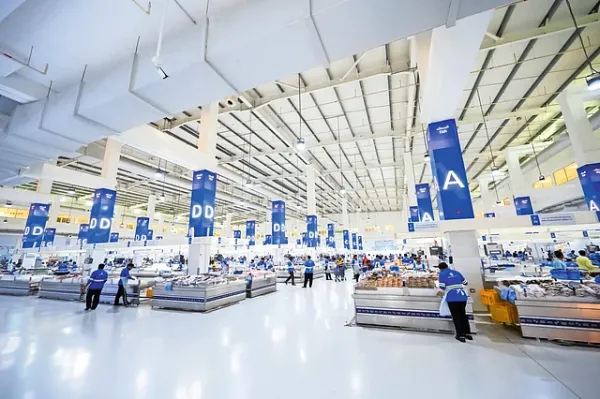
“This is further reinforced by the scale of the seafood market, where approximately 250 tonnes of fish have been traded daily this week. Operating at this volume positions Waterfront Market as a key hub within the region’s seafood supply chain, strengthening both availability and pricing stability across the category.”
At the same time, operators within the food ecosystem are increasingly balancing global sourcing with local procurement strategies to reduce risk where possible. “Cities such as Dubai and Abu Dhabi are naturally connected to global supply chains because the region imports a significant portion of its food,” said Lily Hoa Nguyen, Founder and Executive Chef of Vietnamese Foodies. “However, the UAE also benefits from one of the most advanced logistics and trade infrastructures in the world.

Lily Hoa Nguyen, Founder and Executive Chef of Vietnamese Foodies.
“While global events can create temporary pressure on shipping routes or logistics corridors, the UAE market is well positioned to adapt quickly. Suppliers and distributors here are highly experienced in managing international supply chains and often maintain multiple sourcing options.
“At Vietnamese Foodies, we aim to keep our supply chain as streamlined and local as possible where we can. We work with UAE-based suppliers for most fresh ingredients, supporting the local ecosystem while reducing transport distances. Some key herbs and spices are sourced directly from Vietnam to ensure authenticity, but overall we try to keep the supply chain as short and sustainable as possible. Since launching Vietnamese Foodies in Dubai in 2018, we have seen first-hand how well structured and resilient the UAE food market is.”
Food Security as a Shock Absorber
In recent years, the country has invested heavily in strategic reserves, diversified sourcing networks, advanced logistics, and agri-tech solutions such as vertical farming, all aimed at making the food system less vulnerable to external disruption.
Mortimer-Davies says the UAE’s approach has been built around long-term planning rather than short-term reaction. “Strategic reserves provide a buffer for essential staples, while government oversight ensures supply stability,” he says. He adds that agri-tech initiatives are beginning to play a more visible role in strengthening day-to-day resilience, particularly for fresh produce. “At Choithrams, for example, our collaboration with NRTC includes sourcing leafy greens from Bustanica, demonstrating how technology complements import supply chains,” he says.
“While imports remain essential, local production adds resilience by shortening supply chains for select categories.”
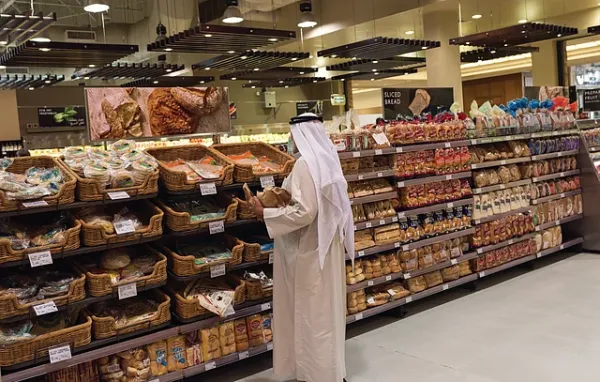
An elderly man looking at bread section in a supermarket.
That distinction matters. The UAE is unlikely to replace imports altogether, particularly in a market where demand is broad, fast-moving and highly international. But building local capacity in selected categories — especially perishables can reduce exposure where it matters most. Fresh greens, herbs and vegetables grown locally through controlled-environment agriculture are not only faster to market, but less dependent on long and often fragile shipping routes.
At the wholesale level, that resilience is also being reinforced through market structure. Al-Madani says the UAE’s food ecosystem has become more responsive because it combines international sourcing with stronger domestic participation and better visibility on supply conditions. He points to the UAE National Food Security Strategy 2051 as a key framework guiding this shift, particularly through its focus on diversified sourcing, supply chain strength and local food production.
Mohammad Al-Madani, Senior Centre Manager at Waterfront Market
“Within this ecosystem, Waterfront Market plays a central role as a wholesale marketplace and key point of entry for fresh produce, seafood and meat,” he says.
“By bringing together traders, suppliers and buyers in one location, the market creates a transparent and competitive environment where pricing is market-driven and supply is continuously balanced.”
That transparency, he notes, is part of what helps stabilise the system. In a wholesale environment, changes in availability or cost are visible quickly, allowing suppliers and buyers to adapt in real time rather than react after shortages emerge.
Al-Madani says local production is also becoming increasingly important in reducing volatility, particularly in categories where the UAE has built stronger agricultural capacity. “Fresh fruits and vegetables at Waterfront Market are sourced from more than 80 local farms alongside imports from global markets, helping maintain consistent availability even when global supply conditions fluctuate,” he says.
In crops such as tomatoes, cucumbers, zucchini and cabbages, he says, the impact is especially noticeable. “Supply stability tends to be higher and price volatility lower, reinforcing the role of domestic agriculture in supporting food security.”
For businesses operating closer to the consumer, that stability is not just a macroeconomic advantage, it affects daily operations. Nguyen says the UAE’s investment in food security and agricultural innovation is already creating practical benefits for the hospitality sector. “Initiatives such as vertical farming and controlled environment agriculture are helping expand local production while reducing reliance on traditional supply chains,” she says.
“For restaurants, this creates additional stability within the food ecosystem and opens opportunities to work with an increasing number of UAE-based farms and agri-tech producers.”
Absorbing the Cost Shock Across the Chain
When logistics costs rise — whether driven by shipping uncertainty, fuel price volatility or higher insurance premiums, the impact is rarely immediate for consumers in the UAE. Instead, it is first felt across the supply chain, where importers, distributors, retailers and restaurants work to absorb, redistribute and manage the pressure before it reaches the shelf or the menu.
At the upstream level, the strain typically begins with importers and distributors. “Rising logistics costs impact the entire value chain, primarily through margin pressure on distributors and importers due to higher freight, fuel and insurance costs,” says Mortimer-Davies. In a market as competitive as the UAE, he notes, businesses are often reluctant to pass on these increases too quickly. “Businesses typically absorb part of these increases initially, while also optimising sourcing, improving efficiencies and shifting toward local products where possible,” he says.
That response is increasingly tied to infrastructure and scale. Mortimer-Davies points to Choithrams’ investment in a large warehouse facility in Jebel Ali as a way to manage volatility more effectively. By consolidating shipments and redistributing efficiently across the UAE and regional markets, the company is able to improve both cost control and operational flexibility.
The priority, he adds, is maintaining stability where it matters most. “Given the competitive UAE retail landscape, businesses are cautious about passing costs to consumers, prioritising stable pricing and availability.”
At the wholesale level, that buffering effect becomes more visible. Al-Madani says Dubai’s food supply chain is structured in a way that allows for real-time adjustments rather than delayed reactions. “When logistics costs rise due to shipping uncertainty or fuel volatility, the impact is typically absorbed within the supply chain before reaching the consumer,” he explains.
Rather than triggering immediate price increases, traders often recalibrate sourcing strategies or adjust product mix. The result, he says, is a system that protects pricing on essential items, even if it means temporary shifts elsewhere.
“Traders adjust sourcing strategies or rebalance product mix, which may result in temporary changes in product variety while keeping pricing for core items relatively stable,” he says.
Category dynamics also play a role. Seafood, for instance, has remained relatively insulated due to strong domestic supply. “Around 70% of seafood available at Waterfront Market is sourced locally, helping reduce exposure to international logistics pressures,” Al-Madani notes.
In fresh produce, the picture is more nuanced. Fruit prices have shown minimal movement, with commonly available items such as figs, papaya, green mango and cranberry remaining stable. Vegetables, which are more import-dependent, may see slight adjustments during periods of global fluctuation. However, locally and regionally sourced staples — including tomatoes, cucumbers, green chili, zucchini and cabbage — continue to anchor both availability and pricing.
For restaurant operators, the impact is felt in day-to-day decision-making rather than sudden cost shocks. Nguyen says fluctuating logistics costs require a constant recalibration of sourcing and operations. “Restaurant operators typically work closely with suppliers and distributors to manage sourcing as efficiently as possible,” she says. “This may involve adjusting supply strategies, identifying alternative sourcing options or improving operational efficiencies.”
In a sector where margins are already tight, that flexibility becomes essential. Nguyen notes that long-term supplier relationships are often what provide the most stability when external conditions shift. “At Vietnamese Foodies, our focus has always been on maintaining quality while managing costs responsibly,” she says. “Since founding the brand in Dubai in 2018, we have built strong relationships with trusted suppliers who help us maintain stability even when global market conditions change.”
A More Diversified Food Future
Across the industry, there is growing consensus that the future of food resilience in the UAE will depend less on any single solution and more on how effectively multiple systems work together — from regional sourcing and alternative trade routes to food technology and local production.
For major retailers and distributors, that means moving away from a model built purely on efficiency and towards one designed for optionality. “All three will play an increasingly important role,” says Mortimer-Davies. “Regional sourcing is expected to grow as GCC countries expand agricultural capabilities and intra-regional trade, reducing transit times and improving flexibility.”
At the wholesale level, the same logic applies. Al-Madani says the strength of the UAE’s food ecosystem will increasingly depend on how well sourcing, logistics and innovation are integrated. “Looking ahead, strengthening the resilience of the UAE’s food ecosystem will likely depend on a combination of diversified sourcing, strong logistics infrastructure and continued investment in food innovation,” he says.
As a global trade hub, Dubai already has a structural advantage — not just because of where it is located, but because of the scale and sophistication of its trade infrastructure. “Dubai is well positioned to adapt to evolving supply chain conditions by maintaining access to multiple sourcing markets and trade routes,” Al-Madani says.
That flexibility is particularly important in fresh food, where continuity often depends on having multiple sourcing options active at the same time. At Waterfront Market, he says, traders already work across a broad network of international suppliers and local producers, helping maintain consistency even when conditions shift elsewhere.
“Diversified sourcing already plays an important role in ensuring consistent availability across fresh food categories,” he says. “At Waterfront Market, traders work with both international suppliers and local producers, helping maintain stable supply even when global sourcing conditions fluctuate.”
For restaurant operators, these shifts are becoming more tangible on the ground. Nguyen says the UAE’s evolution as a food and hospitality hub is also changing the way businesses think about sourcing resilience. “One of the trends we are already seeing is stronger regional collaboration across the GCC and neighbouring markets, which allows suppliers and distributors to source more flexibly and respond quickly if global supply chains face disruption,” she says.
She also points to the UAE’s broader logistics ecosystem as a major advantage. “The country has built a highly connected trade network through its ports, aviation links and distribution centres, which gives the market multiple options when it comes to moving goods efficiently,” Nguyen says. “This flexibility is a major advantage for hospitality businesses that rely on consistent supply.”
-
South Korean female celebrities spark concern over extreme weight loss

-
Top free Poki games of April 2026 you shouldn’t miss

-
Office Air Theory Explains Why You Look So Disheveled At The End Of The Workday

-
The Luckiest Day Of The Week For Each Zodiac Sign From April 6 – 12, 2026

-
Michelin restaurants in Thailand strained by surging oil prices, fewer tourists