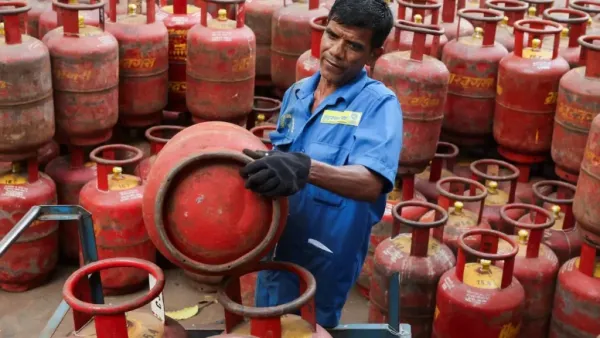
The Centre has intensified its crackdown on LPG black‑marketing by conducting more than 3,700 raids across States and Union Territories, according to official‑style government‑notices and open‑source summaries of the Ministry of Petroleum and Natural Gas’ communications. These raids are part of a broader enforcement‑push to check hoarding and illegal diversion of domestic and commercial cylinders amid tightened refinery‑output discipline and global‑energy‑supply‑tension linked to the West Asia‑ closure of the Strait of Hormuz.
Open‑source digests derived from the Press Information Bureau‑linked statement note that Public Sector Undertaking Oil Marketing Companies (IOCL, HPCL, BPCL) have been directed to strengthen “surprise inspections” at retail outlets and LPG distributorships. As of the latest update, PSU OMCs have issued around 1,000 show‑cause notices to LPG distributorships and suspended 27 distributorships, signalling that the government is treating distribution‑side lapses as serious breaches of the LPG Control Order, 2000, and the Essential Commodities Act, 1955.
How the crackdown is structured
Enforcement‑style briefs summarising the central‑release explain that the raids are being carried out in close coordination with State Food and Civil Supplies departments, who have the primary legal authority to act against hoarding and black‑marketing. The same digests note that more than 3,000 raids have been conducted in a single‑day‑burst, with over 500 LPG cylinders seized and over 1,200 retail outlets and LPG‑distributorships inspected for irregularities.
These summaries further state that the Ministry of Petroleum and Natural Gas has asked States to institutionalize daily press briefings, control‑rooms and social‑media advisories to counter rumour‑based panic buying. The government has reiterated that retail outlets for petrol, diesel and LPG are operating normally and that there is no system‑wide dry‑out at LPG distributorships, even though the supply chain has been stressed by geopolitical shocks.
Measures to ensure availability and alternatives
Open‑source energy‑briefs pointing to the same ministry‑release underline that the Centre is prioritising domestic LPG and PNG supply, along with high‑priority allocation to hospitals, schools and other essential institutions. The government has increased domestic LPG refinery‑output, expanded PNG‑network‑drive‑targets and introduced partial‑commercial‑LPG allocations (up to 70 per cent of pre‑crisis levels in some sectors) to cushion industries and food‑service units.
In addition, the Ministry of Coal has directed Coal India and Singareni Collieries to allot higher quantities of coal to States for distribution to small and medium consumers, while States have been advised to fast‑track PNG connections and promote induction and electric‑cooktop‑usage. Citizens are being urged to avoid panic purchase, rely only on official‑sources for updates, book LPG cylinders digitally and conserve energy in daily use.
Logistics, maritime safety and rationing
Energy‑and‑shipping‑digets aligned with the Centre’s notices also highlight that port operations across India remain normal, with no reported congestion, and that dedicated 24×7 control rooms are monitoring the situation for Indian vessels and seafarers in the Gulf. One LNG‑carrying vessel, LPG‑tanker Green Sanvi, has successfully transited the Strait of Hormuz with a full cargo, while multiple Indian‑flagged vessels continue to be tracked by the Directorate General of Shipping.
Within the rationing‑framework, the government has extended the National PNG Drive‑style gas‑connections‑push, with over 3.5 lakh PNG connections added and over 3.8 lakh more registered for new connections since early March. For migrant workers, the Centre has directed States to allocate 5 kg FTL cylinders, with more than 57 lakh such cylinders sold since March 23, and over 71,000‑kg FTL cylinders sold in a single recent day.
By combining large‑scale raids, digital‑booking‑incentives, alternate‑fuel‑push and public‑information‑campaigns, the government is attempting to balance energy‑security, market‑order and public‑confidence in the fuel‑and‑LPG‑system during an ongoing‑geopolitical‑crisis.
-
Households urged to add £40,000 to Cash ISA accounts in 48 hours

-
Unique Railway Station Straddling Two States in India
-
ITV Emmerdale icon set for a return two decades after soap departure

-
Anthony Joshua next fight update as Eddie Hearn explains Tyson Fury state of play

-
Drivers urged to put 6 items in car before Monday