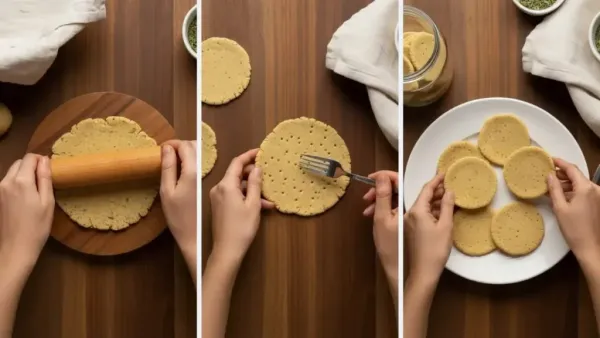
Atta Sooji Mathri: Today we are going to make a wonderful Indian snack, Mathri! It is a perfect tea time companion and is very easy to make. We will learn to make Mathri of both flour and semolina. So, let’s start without any further delay.
Mathri: A Classic Indian Snack
Mathri is one of the extremely popular salty snacks in India. They are crispy, flaky and full of flavour, making them great to have with tea or just as they are. Mathri can be made on festivals, when guests come or just when you feel like eating something delicious at home. The best thing about it is that it can be prepared and stored in an airtight container for weeks. So come, today we will learn how to make it at home.
Aata and Suji Mathri
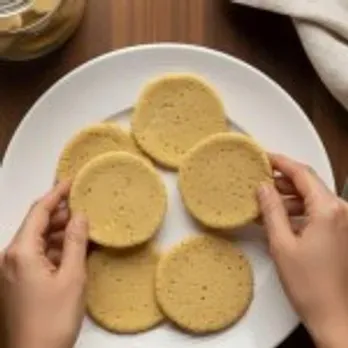
Atta Sooji Mathri is a crisp and delicious salty snack, made from a mixture of wheat flour and semolina. Dough is kneaded by adding celery, salt and mild spices and small patties are made and fried on low flame. It is crispy from outside and can be stored for a long time. It is considered a perfect snack with tea or for travelling.
For flour mathri:
- 2 cups wheat flour
- ¼ semolina (fine):
- ¼ cup ghee/oil (for moyan)
- 1 teaspoon celery
- 1 teaspoon Kasoori Methi
- Salt (as per taste)
- ½ cup water (for kneading the dough)
For semolina mathri
- 2 cups semolina
- ¼ cup flour
- ¼ cup ghee/oil
- 1 teaspoon celery
- 1 teaspoon Kasoori Methi
- Salt (as per taste)
- Water (to knead the dough)
Step 1: Mixing Dry Ingredients
-
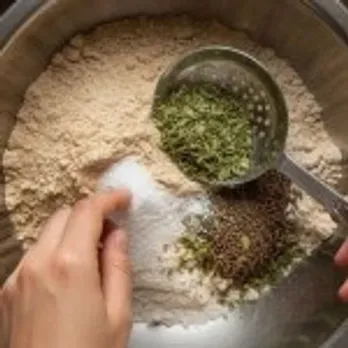
First, take a large mixing bowl. Add wheat flour (or semolina if you are making semolina mathri), fine semolina (if you are making flour mathri), salt, celery (rub it between the palms) and kasoori methi (if using). Mix all these dry ingredients well so that the flavor spreads evenly.
Step 2: Add Moen
-
Now, add melted ghee or oil (for moyan) to the dry ingredients. This is a very important step as the Moen is what makes the Mathri crispy. After adding ghee/oil, knead the dough well with your fingers. Keep kneading it until the dough looks like breadcrumbs and when you fist it, it forms a laddu. If laddu is not being cooked, you can add some more ghee/oil. This ensures that your mathri will turn out perfectly crispy.
Step 3: Kneading the Dough
-
Now, gradually adding water, knead a stiff dough. Remember, we don’t want a soft dough like roti flour, but a slightly firmer one. The hard dough helps the mathris to absorb less oil while frying and makes them more crispy. Once the dough is kneaded, cover it with a wet cloth and let it rest for 15-20 minutes. This will set the flour and the semolina will also swell, which will make the Mathri even better.
Step 4: Rolling Mathri
-
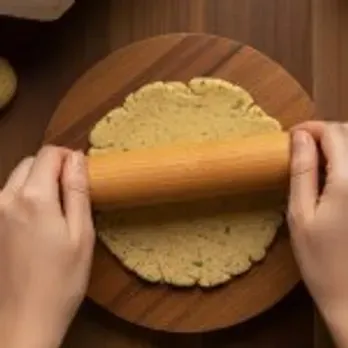
After resting, knead the dough lightly once again. Now break small balls from the dough, the size of lemon. Flatten each ball by pressing it between your palms. Now roll them with the help of a rolling pin into small and slightly thick puris. Do not roll the mathri too thinly, otherwise they may become hard when fried. We have to keep them a little thick so that they become flaky and crispy.
Step 5: Making Holes in the Mathri
-
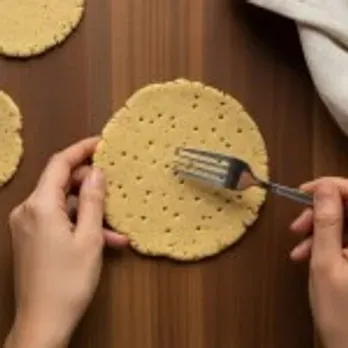
After rolling, prick each mathri 3-4 times with a fork or knife. By doing this the Mathri will not swell while frying and will remain crispy from inside. If you skip this step, the mathri will swell and become like puris, which we do not want.
Step 6: Fry Mathri
-
Now heat oil or ghee in a pan for frying. Heat the oil on medium flame. When the oil becomes hot enough (not too hot, otherwise the mathris will be cooked from outside and remain raw from inside), drop the mathris into the oil one by one. Put as much mathri at a time in the pan as can easily fit. Fry the mathri on low to medium flame until it becomes golden brown and crispy. This may take some time, but be patient. Keep turning the mathris so that they get cooked properly from both the sides.

Step 7: Remove and cool the mathri
-
When the mathris become golden brown and crisp from both sides, take them out of the oil with the help of a strainer. Place them on an absorbent paper (tissue paper) to remove excess oil. This is very important so that the mathri does not appear too smooth. Let the mathri cool completely. Do not store hot mathris in an airtight container, as this may add moisture to them and make them soft. They show their true crispiness only when cooled.
Step 8: Serving and Storing
-
Your hot, crispy mathri is ready! Serve them with tea or enjoy them whenever you feel like eating something salty. Once the mathris are completely cooled, store them in an airtight container. These will remain fresh and crispy for 2-3 weeks. Just take care to close the container tightly so that air cannot get in.
Tips and Tricks
-
Correct amount of Moyan: Moyan (ghee or oil) plays the most important role in making mathri crispy. If Moyan is less, Mathri will become hard. If it is too much, they will absorb too much oil and break. The correct method is that when you hold the dough in your fist, it should form like a laddu, but it will break if you press it too hard. This is the right balance.
-
Wheat flour plaiting: The dough for Mathri is always kneaded tightly. Soft dough absorbs more oil while frying and the mathri does not become as crispy. Add water slowly and as per requirement.
-
Resting: After kneading the dough, it is very important to let it rest for at least 15-20 minutes. This allows the flour to set and the semolina gets time to rise, which improves the texture of the mathri.
-
Rolling: Do not roll the mathri too thinly. Keep them at a slight thickness, about 2-3 mm. This makes them nicely flaky and crispy.
-
To pierce with a fork: This small step is very important. By piercing the mathri with a fork, it will not swell while frying and it will cook well from inside.
-
Simmer: Mathri should always be fried on low to medium flame. By frying on high flame, they will brown quickly from outside but will remain raw from inside. By frying on low flame, they get cooked from inside and their crispness remains intact.
-
Oil Temperature: The oil should not be too hot. When you drop the mathris into the oil, they should rise slowly. If they rise immediately, the oil is too hot. If they sit at the bottom, the oil is not hot enough.
-
Experiment with flavours: You can add different flavors to your mathri. Apart from kasuri methi, you can also add black pepper powder, red chilli powder, cumin powder, or even a little chaat masala to the flour.
-
Storage: Keep the mathri in an airtight container only after it cools down. By keeping it hot, the steam will get trapped inside and the mathri will become soft.
-
BAN vs NZ 3rd ODI Prediction, Match Preview And Playing XI

-
Emmerdale spoilers confirm Dr Todd's next move as she selects a second victim

-
National Trust announces plans to close 130 properties

-
BBC MasterChef fans say heat is 'worst ever' after major kitchen blunders

-
Miraculous Surgery Saves Baby with Heart Condition Using Cow Tissue