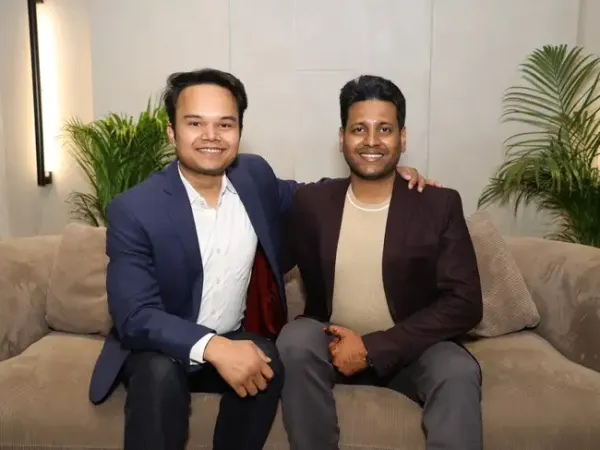
Jaipur-based direct-to-consumer (D2C) air conditioner startup Helium Smart Air has raised $2 million from early-stage investor India Quotient. Helium Smart Air was founded by IIT Kanpur alumni Ashish Sharma and Aman Munka in 2025.
Helium is developing compact, cost-effective air conditioners designed just for homes. The startup has partnered with IIT Kanpur for research to create smart cooling technology that runs efficiently at lower costs. Currently in the production stage, these ACs aim to deliver optimised energy use along with app-based controls, according to the company statement.
“Initially, we are deploying the capital towards scaling manufacturing, building inventory, and strengthening our go-to-market efforts. As we expand, a significant portion will also go into brand-building and customer acquisition, alongside investing in the team and product development to take this to a much larger set of households across India,” said Ashish Sharma, cofounder of Helium Smart Air.
Helium’s first offering is designed to cool spaces of up to 100 square feet and runs on a 2,700-watt system, with the ability to function using a 1 kW solar panel, Sharma added.
The unit is currently priced at about Rs 16,990, which is significantly lower than other established AC brands, and shipments are slated to begin later this month.
This is a broader shift where startups are increasingly challenging categories long dominated by large incumbents, Sharma said. “We chose this segment because cooling is rapidly shifting from a luxury to a basic necessity, driven by rising temperatures, increasing humidity, and shrinking living spaces in urban India.”
“In a business like this, it’s not very difficult for others to build a similar product. Hardware can be copied, and even with patents, there are always ways to work around them. What really differentiates you is the brand, the customer experience, and how much trust you build with users over time," Sharma added.
Long dominated by legacy players, India’s home appliances market is seeing a growing set of D2C entrants such as Atomberg Technologies, Karban, Nuuk, and Superfan entering traditional categories. These companies are focussing on re-engineering products for modern urban homes with better energy efficiency, compact form factors, and cleaner design.
Their edge lies in integrating technology, such as app-based controls and performance tracking, along with offering faster installation and more responsive after-sales service. This combination of product innovation and improved customer experience is helping them carve out space in a segment historically led by large incumbents.
Helium is developing compact, cost-effective air conditioners designed just for homes. The startup has partnered with IIT Kanpur for research to create smart cooling technology that runs efficiently at lower costs. Currently in the production stage, these ACs aim to deliver optimised energy use along with app-based controls, according to the company statement.
“Initially, we are deploying the capital towards scaling manufacturing, building inventory, and strengthening our go-to-market efforts. As we expand, a significant portion will also go into brand-building and customer acquisition, alongside investing in the team and product development to take this to a much larger set of households across India,” said Ashish Sharma, cofounder of Helium Smart Air.
Helium’s first offering is designed to cool spaces of up to 100 square feet and runs on a 2,700-watt system, with the ability to function using a 1 kW solar panel, Sharma added.
The unit is currently priced at about Rs 16,990, which is significantly lower than other established AC brands, and shipments are slated to begin later this month.
This is a broader shift where startups are increasingly challenging categories long dominated by large incumbents, Sharma said. “We chose this segment because cooling is rapidly shifting from a luxury to a basic necessity, driven by rising temperatures, increasing humidity, and shrinking living spaces in urban India.”
“In a business like this, it’s not very difficult for others to build a similar product. Hardware can be copied, and even with patents, there are always ways to work around them. What really differentiates you is the brand, the customer experience, and how much trust you build with users over time," Sharma added.
Long dominated by legacy players, India’s home appliances market is seeing a growing set of D2C entrants such as Atomberg Technologies, Karban, Nuuk, and Superfan entering traditional categories. These companies are focussing on re-engineering products for modern urban homes with better energy efficiency, compact form factors, and cleaner design.
Their edge lies in integrating technology, such as app-based controls and performance tracking, along with offering faster installation and more responsive after-sales service. This combination of product innovation and improved customer experience is helping them carve out space in a segment historically led by large incumbents.