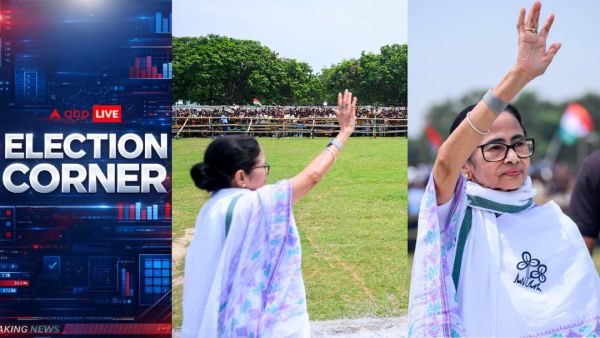
West Bengal Chief Minister Mamata Banerjee formally filed her nomination for the Bhabanipur Assembly seat on Wednesday (April 8, 2026), following a high-visibility march through Kolkata. The event was carefully choreographed to underline her connection with the constituency, which she has long treated as politically and personally significant.
Bhabanipur, known for its diverse population of Gujarati traders, Bengali families, Punjabi households, and Muslim residents, is being projected by Banerjee as a reflection of India’s plural identity. Her campaign is drawing heavily on this narrative, positioning the constituency as a symbol of coexistence in contrast to divisive politics.
After filing nomination from Bhabanipur constituency, CM Mamata Banerjee told PTI, “I extend my greetings, my thanks, my respects, my salaam, my Jai Jinendra and Sat Shri Akaal to everyone. Today, as I filed my nomination, I want to say that along with the Bhabanipur constituency, I will work for every center and every area. We will form the government.”
Mamata's Ideological Face-Off With BJP
The contest in Bhabanipur is shaping up as a direct ideological clash between Banerjee and the Bharatiya Janata Party. The BJP’s push for “paribartan” (change) gained momentum when Suvendu Adhikari filed his nomination in the presence of Union Home Minister Amit Shah.
In response, Banerjee is framing her campaign as a defence of inclusivity and social harmony. By highlighting Bhabanipur’s mixed demographic profile, she is seeking to counter the BJP’s narrative with a message centered on unity and diversity. Her nomination event itself was designed to reflect this idea, bringing together representatives from different communities.
Community Backing and Symbolism
Several local leaders and community figures are expected to support Banerjee’s candidacy, including Rubi Hakim, Bablu Singh, and Miraj Shah. Their presence is intended to reinforce the Trinamool Congress’ outreach across social and religious lines.
The symbolism is central to Banerjee’s strategy. While the BJP frames the election as a contest rooted in nationalism, her campaign portrays it as a choice between inclusion and division. This contrast is likely to define the tone of the campaign in the days ahead.
Voter Roll Row Adds Tension
The election has also been marked by controversy over the Special Intensive Revision of electoral rolls. Reports indicate that nearly 47,000 Muslim names have been removed from the Bhabanipur voter list, with another 14,000 still under review. The issue has added a layer of political tension, with opposition voices questioning the impact on representation.
For Banerjee, Bhabanipur carries deep personal significance. Her residence in Kalighat falls within the constituency, and it has been part of the Kolkata South Lok Sabha seat she has represented since 1991. As the campaign unfolds, the seat is set to become a focal point in West Bengal’s political landscape, reflecting broader debates on identity, governance, and electoral fairness.
-
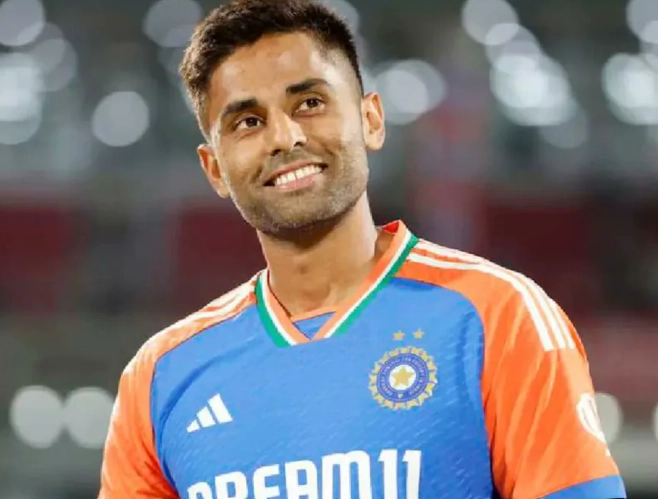
Suryakumar Yadav Becomes 3rd Cricketer To Hit 150 Sixes For Mumbai Indians
-
IPL 2026 [WATCH]: Tilak Varma’s spectacular catch on the boundary line removes Vaibhav Suryavanshi during RR vs MI clash

-
Understanding the Qualities of a Good Bride According to Hindu Traditions
-
Asian Markets Surge Following Ceasefire and Oil Price Drop

-
Sacking of Waitrose worker is a 'charter for all thieves to conduct a supermarket sweep'