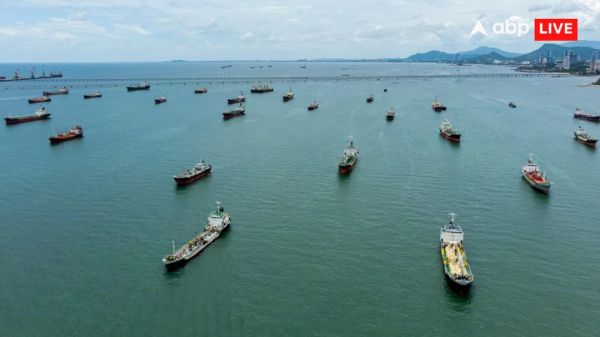
Iran is facing unexpected challenges in reopening the Strait of Hormuz as it is unable to locate and remove all the mines it deployed in the waterway, complicating both maritime traffic and ongoing diplomatic efforts, The New York Times reported, citing US officials.
The strategic waterway has been at the center of heightened tensions following conflict involving Iran, the United States, and Israel. Mining operations carried out by Iran significantly reduced the movement of oil tankers and commercial vessels, disrupting global energy supply chains and pushing prices higher.
While Tehran allowed limited passage through designated routes, access has remained restricted, with warnings issued about the dangers posed by underwater explosives.
Mine Deployment And Tracking Issues
The NYT report said that Iran used small boats to lay mines under the strait last month after the US and Israel launched an offensive against Tehran. US officials said that this tactic that made tracking difficult from the outset. The mines were reportedly placed in a scattered manner, raising uncertainty about their exact locations.
Officials suggest that Iran may not have accurately recorded where all mines were laid. Additionally, some devices were deployed in ways that allowed them to drift, further complicating recovery efforts.
Removing naval mines is significantly more complex than deploying them. Even advanced militaries face limitations in mine-clearing capabilities, relying on specialised vessels and equipment.
Iran is believed to lack the capacity to rapidly locate and neutralize the mines it planted, contributing to delays in reopening the strait to normal traffic levels.
Impact on Diplomacy
The issue has emerged as a key concern amid ongoing negotiations in Islamabad, where US Vice President JD Vance is leading talks with Iranian representatives, including Foreign Minister Abbas Araghchi.
US President Donald Trump has linked a temporary ceasefire to the reopening of the strait, calling for its “COMPLETE, IMMEDIATE, and SAFE OPENING.”
Responding to the situation, Araghchi stated that the waterway would be opened “with due consideration of technical limitations,” a remark US officials interpret as a reference to the mine-related challenges.
Despite sustained US strikes targeting Iranian naval assets, Iran continues to retain a large fleet of small boats capable of deploying mines or harassing vessels. This has made it difficult for opposing forces to fully neutralize the threat.
The uncertainty surrounding the number and placement of mines has further complicated navigation and heightened risks for commercial shipping.
Even prior to the deployment of mines, threats from Iranian leadership had already unsettled global markets. The addition of underwater explosives has intensified concerns, limiting shipping activity and contributing to volatility in energy prices.
The Strait of Hormuz remains one of the world’s most critical energy corridors, making any disruption particularly consequential for global trade.
-
Artemis II's historic journey around moon ends with dramatic splashdown

-
Artemis II's historic journey around moon ends with dramatic splashdown

-
I ditched spaghetti in carbonara for healthy alternative that's much more filling

-
Bihar Judicial Services Recruitment: 173 Civil Judge Positions Available

-
NCH Vacancy 2026: Recruitment Announced at the National Institute of Homoeopathy, Delhi, for Various Posts Including Deputy Officer..