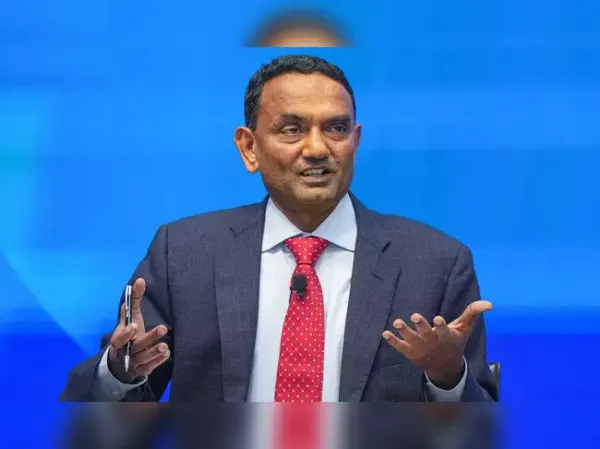
“We have been writing its obituary every 10 years but I think Indian IT services have proven to be very resilient,” Tata Consultancy Services (TCS) CEO K Krithivasan told ET in an interview. “Not because of cost arbitrage, but because of the depth of skill sets.”
Responding to recent assertions that the IT services industry will be dead by 2030, Krithivasan said that, on the contrary, enterprises will need help from firms like TCS to derive the full benefit of AI.
There is a widening gap between AI technology and enterprise adoption, which is struggling to catch up with the pace of evolution, added TCS chief operating officer Aarthi Subramanian.
Addressing concerns that advanced AI systems such as Claude Cowork and Claude Mythos could disrupt traditional IT services, Subramanian said these are developments in which TCS sees a “big opportunity,” she told ET.
GenAI has unlocked a significant opportunity in legacy modernisation, particularly for large, decades-old systems such as mainframes.
“You have a unique opportunity to reduce the tech debt with AI,” she said.
The leadership of the company — the country's largest software services firm that’s regarded as the industry bellwether — is heading into FY27 with “a lot of confidence and optimism” amid global geopolitical uncertainties, particularly the West Asia conflict, Krithivasan said.
This comes after the $30-billion IT company reported a decline in annual revenue by 2.4% for the first time since going public in 2004. The IT industry has been reeling under the impact of a slowdown in tech spending for the last three years due to macro uncertainties. The increasing capability of AI is threatening the industry with companies asking IT firms to do more for less, leading to erosion in revenue. The broader Indian IT index has fallen by close to 20% over the past year.
“Yes, nobody can dispute that there's a decline,” Krithivasan said. “But the decline happened in Q1 because of a large transformation programme that ended. Subsequent to Q1, we had three consecutive quarters of growth. So, we are going into the next year with the momentum behind us. And then we are talking about the significant order book and the mega deals. Our international revenue has been stronger again.”
TCS said last week that it clocked the highest total contract value (TCV) ever with three large deals for the March quarter and five for the year. TCV was $40.7 billion in FY26 and $12 billion in Q4.
“Customers are actually becoming more confident in investing in their projects and the decision-making cycle is improving,” Krithivasan said.
The company said it has not seen any major slowdown in deal closures despite the Gulf war.
“We have not seen any delays in decision making. In fact, some of the (mega) deals were signed in the last one month,” he said, adding that clients want to invest in AI transformation despite clouds on the horizon.
The company’s exposure to the region is limited, although certain verticals such as travel and hospitality could see an indirect impact. “As long as the situation is contained, we do not see a greater fallout,” the CEO said.
TCS is also seeing a shift in deal structures, with clients increasingly opting for bundled, large-scale transformation engagements that combine multiple services.
Subramanian said AI is becoming central to both operations and transformation work.
“We are seeing a lot of AI in IT ops, driving productivity and efficiency for customers,” she said, adding that pure-play AI transformation deals are also accelerating, with annualised AI revenue crossing $2.3 billion.
While AI-led productivity gains may lead to some revenue “deflation” in existing contracts, TCS said this is a normal part of the business cycle.
“On the existing projects, there will be some deflation… because of the productivity we are giving,” Krithivasan said. “You try to always replace it with new projects.”
Subramanian added that productivity improvements from coding assistants are at 15-30%, up from 10-15% previously.
TCS said its layoffs cycle is complete and the company hired about 44,000 trainees in FY26, the most by any non-state organisation in India. It has already made 25,000 offers for the next cycle. However, the company did not give any target for FY27 hiring. TCS had announced a 2% reduction in its workforce last year.
The company ended the quarter with 584,519 employees, down 23,460 from a year ago, although it added 2,356 employees sequentially with lateral and fresher hiring.
Krithivasan refuted a recent report about a significant percentage of its senior management quitting as part of the restructuring exercise.
TCS has shed its reputation of being conservative on large acquisitions with its largest purchase in over a decade — a deal to take over US-based Salesforce consulting firm Coastal Cloud for $700 million in December. Before that it acquired ListEngage in October for $73 million.
Krithivasan said the company will seek more acquisitions but not just for the sake of adding to the top line. “We will look for the right capability and competency that we are acquiring and we will use it as a lever for scale and speed,” he said.
Responding to recent assertions that the IT services industry will be dead by 2030, Krithivasan said that, on the contrary, enterprises will need help from firms like TCS to derive the full benefit of AI.
There is a widening gap between AI technology and enterprise adoption, which is struggling to catch up with the pace of evolution, added TCS chief operating officer Aarthi Subramanian.
Addressing concerns that advanced AI systems such as Claude Cowork and Claude Mythos could disrupt traditional IT services, Subramanian said these are developments in which TCS sees a “big opportunity,” she told ET.
GenAI has unlocked a significant opportunity in legacy modernisation, particularly for large, decades-old systems such as mainframes.
“You have a unique opportunity to reduce the tech debt with AI,” she said.
The leadership of the company — the country's largest software services firm that’s regarded as the industry bellwether — is heading into FY27 with “a lot of confidence and optimism” amid global geopolitical uncertainties, particularly the West Asia conflict, Krithivasan said.
This comes after the $30-billion IT company reported a decline in annual revenue by 2.4% for the first time since going public in 2004. The IT industry has been reeling under the impact of a slowdown in tech spending for the last three years due to macro uncertainties. The increasing capability of AI is threatening the industry with companies asking IT firms to do more for less, leading to erosion in revenue. The broader Indian IT index has fallen by close to 20% over the past year.
“Yes, nobody can dispute that there's a decline,” Krithivasan said. “But the decline happened in Q1 because of a large transformation programme that ended. Subsequent to Q1, we had three consecutive quarters of growth. So, we are going into the next year with the momentum behind us. And then we are talking about the significant order book and the mega deals. Our international revenue has been stronger again.”
TCS said last week that it clocked the highest total contract value (TCV) ever with three large deals for the March quarter and five for the year. TCV was $40.7 billion in FY26 and $12 billion in Q4.
“Customers are actually becoming more confident in investing in their projects and the decision-making cycle is improving,” Krithivasan said.
The company said it has not seen any major slowdown in deal closures despite the Gulf war.
“We have not seen any delays in decision making. In fact, some of the (mega) deals were signed in the last one month,” he said, adding that clients want to invest in AI transformation despite clouds on the horizon.
The company’s exposure to the region is limited, although certain verticals such as travel and hospitality could see an indirect impact. “As long as the situation is contained, we do not see a greater fallout,” the CEO said.
TCS is also seeing a shift in deal structures, with clients increasingly opting for bundled, large-scale transformation engagements that combine multiple services.
Subramanian said AI is becoming central to both operations and transformation work.
“We are seeing a lot of AI in IT ops, driving productivity and efficiency for customers,” she said, adding that pure-play AI transformation deals are also accelerating, with annualised AI revenue crossing $2.3 billion.
While AI-led productivity gains may lead to some revenue “deflation” in existing contracts, TCS said this is a normal part of the business cycle.
“On the existing projects, there will be some deflation… because of the productivity we are giving,” Krithivasan said. “You try to always replace it with new projects.”
Subramanian added that productivity improvements from coding assistants are at 15-30%, up from 10-15% previously.
TCS said its layoffs cycle is complete and the company hired about 44,000 trainees in FY26, the most by any non-state organisation in India. It has already made 25,000 offers for the next cycle. However, the company did not give any target for FY27 hiring. TCS had announced a 2% reduction in its workforce last year.
The company ended the quarter with 584,519 employees, down 23,460 from a year ago, although it added 2,356 employees sequentially with lateral and fresher hiring.
Krithivasan refuted a recent report about a significant percentage of its senior management quitting as part of the restructuring exercise.
TCS has shed its reputation of being conservative on large acquisitions with its largest purchase in over a decade — a deal to take over US-based Salesforce consulting firm Coastal Cloud for $700 million in December. Before that it acquired ListEngage in October for $73 million.
Krithivasan said the company will seek more acquisitions but not just for the sake of adding to the top line. “We will look for the right capability and competency that we are acquiring and we will use it as a lever for scale and speed,” he said.