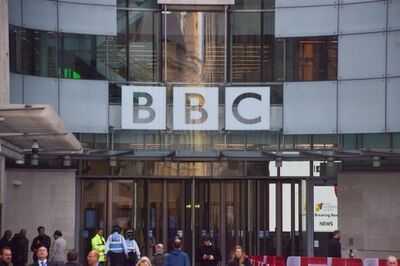
Fewer people are watching the BBC than at any point in its modern history, and the decline no longer feels cyclical - it feels terminal. They've announced today that they intend to make significant cuts to their workforce, but that isn't going to save them! The corporation doesn't look like a national institution adapting to the future; it looks like one drifting, complacent, and faintly bewildered that the audience has quietly walked out.
Yes, the obvious culprit is the migration from terrestrial TV to streaming. That shift has gutted legacy broadcasters everywhere. But the BBC's problem isn't just technological - it's creative and cultural. BBC iPlayer exists, but it isn't a destination. It's a repository for content that too often feels safe, stale, or cynically assembled to tick boxes rather than grip viewers.
You cannot demand a compulsory licence fee while serving up a schedule where the flagship offering is yet another celebrity dance format padded with names most people barely recognise.
However, the deeper issue is trust. The BBC used to trade on it effortlessly; now it leaks away with every awkward headline and every reminder of the gulf between its public mission and its internal reality. High-profile scandals - some tawdry, some serious - have chipped at the corporation's credibility.
None individually fatal, perhaps, but collectively corrosive. The impression left behind is of an organisation insufficiently accountable and too comfortable protecting its own. Huw Edwards and Scott Mills being just two of the big names who have left the Beeb in disgrace.
Then there's the money. The licence fee increasingly feels like a relic from a more captive age, not a fair exchange in a competitive market. When roughly one in eight households simply refuse to pay, that's not absent-mindedness - that's dissent. People aren't forgetting, they're opting out.
What makes this decline striking is how unnecessary it feels. The BBC still has the resources, the reach, and the legacy to produce world-class television. It has done it before, repeatedly. But instead of doubling down on bold, distinctive programming that justifies its existence, it too often settles for mediocrity wrapped in self-importance.
Once, the BBC was a cultural export, a quiet instrument of national confidence. Now it risks becoming a case study in institutional drift - an organisation clinging to past prestige while the audience moves on. The question is no longer whether it can dominate again. It's whether it can convince people it's still worth paying for at all.
-
Israel, US goals 'identical'; prepared for any scenario: Netanyahu

-
Thane Zilla Parishad Selects 59 Meritorious Students For ISRO Visit Under 'Mission Bharari' To Boost Scientific Curiosity

-
Traffic To Be Affected In Mumbai As Diversions, Road Closures & No-Parking Zones Announced In Kurla, Ghatkopar & Mahim | Check Alternate Routes

-
Shocking Human Trafficking Incident in Uttar Pradesh

-
Influencer Clavicular Recovering After Overdose During Livestream