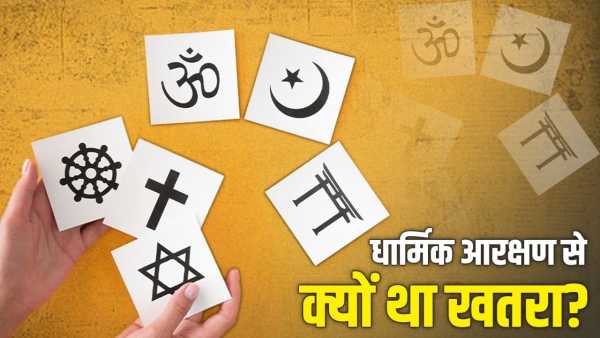
The framers of the Constitution had described religion-based reservation as a threat to the country.
Sardar Patel had said in the Constituent Assembly that if representation on religious basis continued even in independent India, the unity of the nation would be in danger. During the debate on the Constitution Amendment Bill related to providing 33% reservation to women in the Lok Sabha and Legislative Assemblies today, the Samajwadi Party made it necessary to remember by separately mentioning Muslim women as to why the Constitution makers had called religion-based reservation a threat to the country.
The foreign power had vested interests behind the system of separate electorates for Muslims in the British Raj. During the freedom struggle of 1857, the British had to face a tough challenge due to Hindu-Muslim unity. In the later period, the British made many efforts to break this unity. In 1909, separate constituencies were created for Muslims. To attract Muslims towards itself, Congress also supported this decision in 1916. In history it is known as Lucknow Agreement.
The Communal Award of 1932 recommended reservation and separate electoral system. Then the Government of India Act 1935 gave it the form of law. After independence, this question also arose before the Constituent Assembly. There was a reason for this also. The Constituent Assembly had approved all the provisions of the 1935 Act. But the Constituent Assembly was alert and sensitive regarding religion-based political reservation. Due to the bitter experiences of the British Raj, the Constituent Assembly was not ready to repeat that mistake during its rule.
won't repeat that mistake again
The question of political reservation (Separate Electorates/Communal Representation) on religious basis remained the subject of very serious debate in the Constituent Assembly. The experiences of the Communal Award of 1932 and the subsequent Poona Pact had alerted the members. On 27 August 1947, Sardar Patel had proposed in the Constituent Assembly to hold elections for the Central and Provincial Assemblies through joint method. Another proposal was to maintain the reservation of Scheduled Castes but end the reservation of minorities.
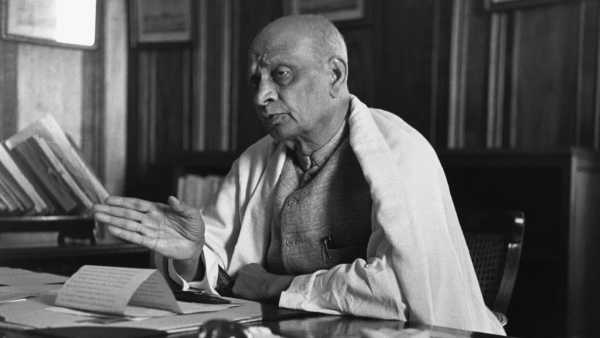
Sardar Patel.
Sardar Patel had clearly said that the separate electoral system played a big role in dividing India. Now we cannot move even a step forward in this direction. He said that if representation on religious basis continued even in independent India, the unity of the nation would be in danger.
forget the past?
Of. M. Munshi had described religion-based politics as dangerous for democracy. He warned that if we give political rights on the basis of religion, we will not be able to create a modern nation. He insisted that the basis of citizenship should not be religion but equal civil rights. Christian representative H.C. Mukherjee had also opposed separate elections. He had said that we want security for minorities, but it should not be through separation, but through equal rights.
Sardar Patel wanted that the decision on this question should be taken only with the consent of the representatives of the Muslim community. After the partition, Tajammul Hussain and Begum Ajaz Rasool were included in the advisory committee. Till some time ago, Hussain was with the Muslim League. But after partition he chose India. Another member Maulana Hafizur Rahman was in favor of continuing reservation. But Tajammul Hussain, who was formerly associated with the Muslim League, opposed her and said, “Forget the past and help create a secular rule.” Begum Ajaz Rasool spoke openly, “Pakistan has been created.” It is in the interest of the Muslims in India that they should not remain isolated. Consider staying in the mainstream. Therefore, it would be better to abandon the demand for reservation.”
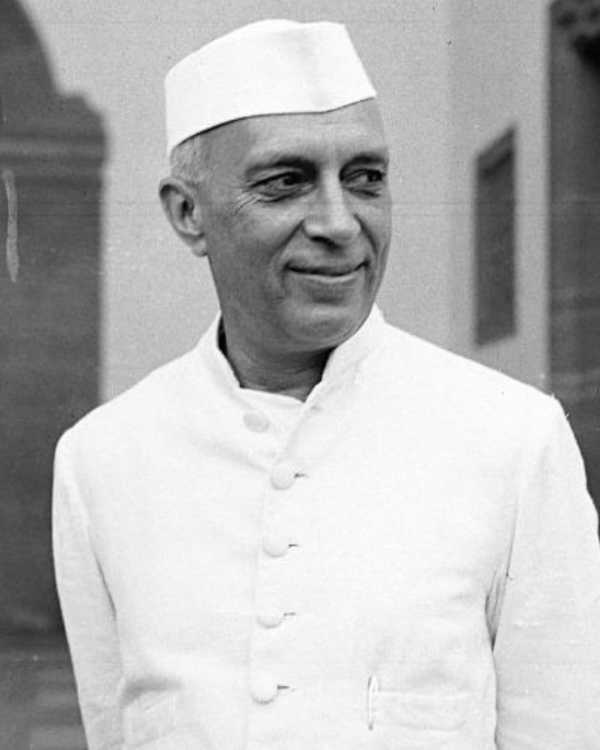
Pandit Nehru.
Nehru said, we are abandoning bad things
Jawaharlal Nehru had made it clear in the objective proposal presented on 13 December 1946 that India would be a union where all power would come from the people. On July 17, 1947, on the question related to minorities, he had said that we cannot accept political division on the basis of religion. After partition he had said that now it would be dangerous to repeat the old mistake. Pandit Nehru also participated in the discussion of the proposal presented by Patel.
Describing this proposal as historic, he said that it means that we are not only going to abandon that which is bad, but we are going to end it forever and with all our strength we are determined that we will walk on a path which is good for every class. Pandit Nehru had expressed happiness over the proposal to continue the reservation for the Scheduled Castes and end it for the rest. He had said that in accepting this, I feel as if a big problem of mine has been resolved. This is because there was a long-running struggle in my heart and mind against separate elections or any other system of separation in the political field. This work is in the interest of all, majority and minority, from the point of view of nationalism.
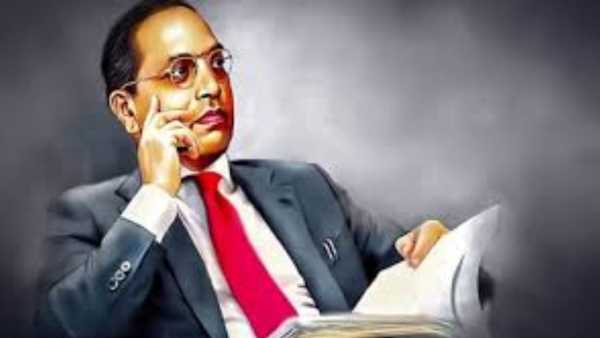
Dr. Bhimrao Ambedkar.
Ambedkar said no separation, take rights in mainstream
Dr. Ambedkar insisted that it is more important than separation that we get rights in the mainstream. He did not support reservation and separate elections on religious basis. But he was very conscious about the rights of minorities. He said that minorities should be given their rights liberally and for this one should not wait for the rights given to minorities in Pakistan.
Sardar Patel, while proposing in the Constituent Assembly to guarantee the minorities the protection of their language, script and culture, had said that no law would interfere in it. No minority will be prevented from entering educational institutions on the basis of language or religion. Any minority will have the right to run an educational institution to protect its language, religion and culture.
Sardar Patel had expressed happiness that the Muslim community has expressed consensus for the joint constituency. On the same day, HC Mukherjee of the Christian community proposed that there was no need for any reservation for minorities. The Constituent Assembly passed this resolution on 26 May 1949. There were 58 votes in favor and 3 against.

-
Receive ₹1.5 Lakh on the Birth of a Daughter: State Government Gifts Parents; Learn More About the Scheme

-
DA Hike 2026: Will the Increased Dearness Allowance Be Credited Before May? Get the Latest Update
-
8th Pay Commission: What will be the new pay scale based on salary, and how much will the amount increase? Here is the list.

-
The Clampdown on VIP FASTags: No More Free Toll Crossings by Flaunting Influence; Fines to Apply

-
The Triumph of Delhi Government Schools: Capital Records 97.23% Pass Rate in CBSE Class 10 Exams The Triumph of Delhi Government Schools: Capital Records 97.23% Pass Rate in CBSE Class 10 Exams