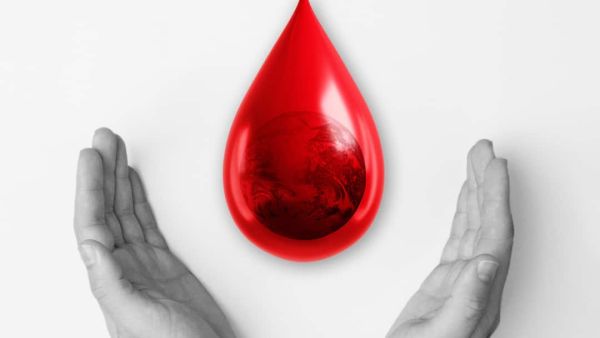
Every year on April 17, World Hemophilia Day shines a spotlight on a condition that often remains misunderstood and underdiagnosed. Haemophilia, a rare bleeding disorder, affects the body’s ability to clot blood properly, leading to prolonged bleeding even from minor injuries. While external bleeding is visible, the real danger often lies beneath the surface, internal bleeding into joints and muscles that can quietly cause long-term damage.
The day is not just about spreading awareness but also about encouraging timely medical attention, improving access to care, and strengthening global efforts to support those living with bleeding disorders.
World Hemophilia Day 2026 Theme
The theme for World Hemophilia Day 2026, 'Diagnosis: First Step to Care,' draws attention to one of the most critical challenges in managing the disorder, timely and accurate diagnosis. In practice, this theme focuses on identifying mild or overlooked cases that often go unnoticed, reducing delays in clinical evaluation, and improving access to essential factor testing.
History Of World Hemophilia Day
The journey of understanding haemophilia stretches back centuries. Early references to excessive bleeding disorders appeared as far back as the 10th century, though medical knowledge at the time was too limited to offer any effective treatment. A significant breakthrough came in 1803 when Dr. John Conrad Otto began studying families affected by what he termed 'bleeders.' His research revealed that the condition was hereditary, passed from mothers to their sons, laying the groundwork for future genetic understanding.
Scientific progress continued over the years, and by 1937, haemophilia was formally classified into two types, Type A and Type B, based on the specific clotting factor deficiency. The condition also became widely known as the 'royal disease' after it was linked to Queen Victoria, who unknowingly passed the gene through European royal bloodlines. A major milestone came in 1963 when Frank Schnabel founded the World Federation of Hemophilia in Montreal, creating a unified global platform for advocacy and research. In 1989, the organisation established World Hemophilia Day on April 17 to mark Schnabel’s birthday, turning it into an annual global observance. Over time, initiatives like the 'Light It Up Red' campaign further amplified awareness, with landmarks worldwide joining the cause.
Significance Of World Hemophilia Day
The importance of this day goes far beyond awareness campaigns. It plays a crucial role in encouraging early medical consultation, especially in cases where symptoms are subtle or misdiagnosed. Many individuals continue to live without a proper diagnosis, which increases the risk of repeated bleeding episodes and irreversible joint damage.
World Hemophilia Day helps bridge this gap by promoting awareness among both patients and primary healthcare providers. It pushes for timely screenings, reduces instances of incorrect diagnoses related to unexplained bleeding, and highlights the need for better healthcare policies for rare diseases. Most importantly, it underscores the impact of early intervention in improving quality of life for those affected.
Understanding Haemophilia
Haemophilia is a genetic disorder in which the blood does not clot as it should due to a deficiency in specific clotting factors. This leads to prolonged bleeding that can occur externally through cuts or internally within joints and muscles. While it is considered rare, its impact can be severe if not diagnosed and treated in time, making awareness and early detection essential components of care.
-
Child Mental Health: Is your child scared of the burden of studies? It is very important for parents to know these things

-
Troubled by dandruff and hair fall? You will get relief from these home remedies

-
Inside The 350-Year-Old Jaipur Palace Playing Bhoot Bangla In Bhooth Bangla

-
Reverse male pattern baldness: Home remedies for hair regrowth in balding men

-
Information about refund on cancellation of Tatkal ticket