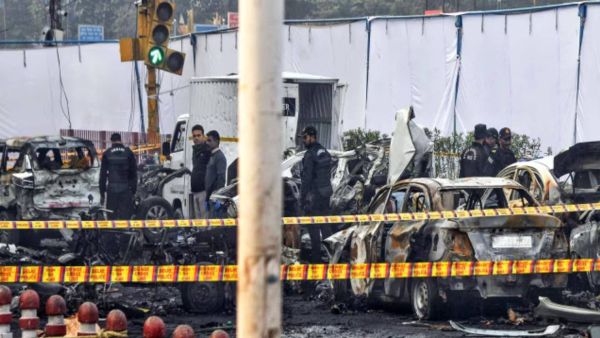
New Delhi: The accused in the 2025 Red Fort blast case were part of a larger conspiracy to revive the banned terror outfit Ansar Ghazwat-ul-Hind (AGUH), according to a chargesheet filed by the Jammu and Kashmir Police’s State Investigation Agency (SIA) in a Srinagar court.
The chargesheet, filed months after the November 10, 2025 explosion near Pratap Ghat in Srinagar, names 10 individuals - including four doctors - and details a coordinated plan aimed at spreading fear, disturbing public order, and challenging India’s sovereignty. One of the key accused, Umer Un Nabi, was killed in the explosion.
Conspiracy to Revive Terror Network
Investigators said the accused were attempting to resurrect AGUH, a banned outfit with roots in Kashmir militancy, by building a new module focused on radicalisation, recruitment, and execution of attacks across the country. The chargesheet states that the group aimed to expand its footprint beyond Jammu and Kashmir, signalling a shift towards a broader terror strategy.
Authorities further revealed that the accused deliberately invoked the name of Jaish-e-Mohammad (JeM) in their activities to exploit its notoriety and create a psychological impact, while masking their real affiliations.
Highly Educated Module with Digital Reach
The probe found that members of the module were highly educated professionals, including doctors, who used both physical networks and digital platforms to propagate extremist ideology. Online dissemination of radical content was a key component of their strategy, aimed at recruiting vulnerable individuals and building support.
Among those named in the chargesheet are Dr Yasir Al Ashraf Bhat, Maqsood Ahmad Dar, Irfan Ahmad Wagay, and several others allegedly involved in planning and logistics.
Explosives Fabricated in Residential Premises
The SIA investigation uncovered that explosives were procured and even experimentally fabricated inside residential premises. The material used included Triacetone Triperoxide (TATP), a highly volatile explosive commonly associated with global terror incidents due to its ease of preparation and destructive potential.
Officials said the use of such explosives underscored the group’s intent to carry out high-impact attacks.
Poster Campaign Part of Larger Plot
The case was initially registered under the Unlawful Activities (Prevention) Act (UAPA) after provocative posters surfaced across Srinagar in October 2025. According to investigators, the poster campaign was not an isolated act but part of a coordinated terror conspiracy designed to incite fear and signal the group’s presence.
Multiple Arrests, Wider Network Suspected
So far, 11 accused have been arrested in connection with the case. Investigators believe the module was part of a larger network with plans to destabilise security through carefully orchestrated attacks.
The chargesheet notes that efforts were made to mislead security agencies and conceal the true nature of the group’s links, pointing to a sophisticated attempt to evade detection while advancing their agenda.
Officials said further investigation is ongoing to identify additional operatives and dismantle the wider network behind the plot.
-
Child Mental Health: Is your child scared of the burden of studies? It is very important for parents to know these things

-
Troubled by dandruff and hair fall? You will get relief from these home remedies

-
Inside The 350-Year-Old Jaipur Palace Playing Bhoot Bangla In Bhooth Bangla
-
Reverse male pattern baldness: Home remedies for hair regrowth in balding men

-
Information about refund on cancellation of Tatkal ticket