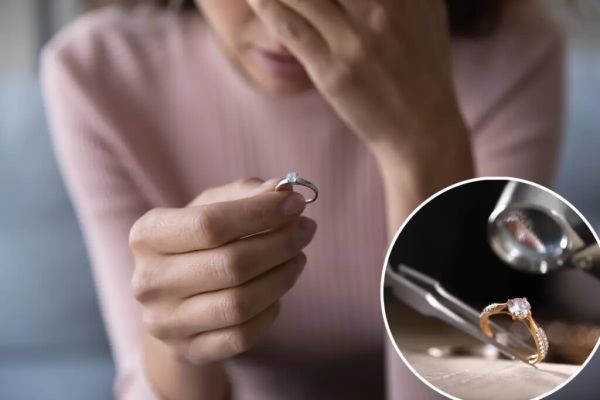
Breakups are hard — but this price tag might hurt even more.
After splitting from her fiancée, Australian teacher Mia Pimentel figured she could at least cash in on her engagement ring and move on.
Instead, she got a reality check that hit harder than heartbreak.
The couple got engaged in 2021 after five years together, exchanging rings to seal the deal.
But when the relationship fizzled two years later, they each held onto their sparkler — including Pimentel’s 1-carat diamond solitaire, originally worth about US$ 6,500.
At first, the ring sat untouched — a glittering reminder of a chapter she was ready to close.
Eventually, the Sydney resident decided to sell it, assuming it would fetch a decent chunk of change.
That assumption didn’t last long.
“But when he told me how little I’d get for it, my jaw hit the floor,” Pimentel told Yahoo Lifestyle in a recent interview.
The verdict? Her once-$6,500 ring was now worth a jaw-dropping $350 — a loss of roughly $6,150.
So what happened to the sparkle?
According to Sydney-based master jeweler Ernesto Buono, resale reality is rarely as shiny as the original purchase.
“Jewelers often pull the ring apart and redesign the ring, then they have to make their own profit. It’s a lot of labor, which is what you’re paying for,” Buono explained to the outlet.
In other words, that hefty price tag isn’t just about the diamond — it’s the design, craftsmanship and markup that don’t carry over once the ring hits the resale market.
And Pimentel’s ring had another strike against it: the stone was lab-grown.
Buono said advances in lab-grown diamonds have made them significantly cheaper to produce in recent years, driving resale values down fast.
“For example, what was once $2,000 per carat might now be around $500,” he said. “That’s bringing the overall cost down of the diamonds itself, so it doesn’t retain the value as much as natural does.”
That tracks with previous reporting by The Post.
As Mara Opperman, co-founder of Louped (formerly I Do Now I Don’t), previously told The Post, lab-grown diamonds “don’t hold resale value the way natural stones do” — a tradeoff some couples accept in exchange for size, affordability or ethics.
Opperman noted that many brides are now gravitating toward secondhand natural diamonds instead — drawn to their staying power and smaller environmental footprint.
She prefers pre-owned stones herself, saying they “come with a past, they’ve stood the test of time, and still hold up their value — both emotionally and financially.”
Unlike newly mined diamonds, she added, they don’t require “new mining or a new footprint.”
Rachelle Bergstein, author of “Brilliance and Fire: A Biography of Diamonds,” also told The Post lab-grown diamonds entered the market in the early 2000s but only became competitive with mined stones in the 2010s as technology improved.
Since then, lower prices and growing demand have helped them capture a sizable share of U.S. engagement rings — up from just a few percent a decade ago.
Still, it seems that when it comes to rings, bigger — or newer — doesn’t always mean better, especially once you try to sell.
-
Weather Update: Will it rain or will it be hot? How will the weather be in Delhi-NCR today; get to know

-
Trump Floats Joint Uranium Removal Plan; Iran Says Stockpile ‘Won’t Move Anywhere’
-
Fresh Round Of US-Iran Talks Likely To Be Held In Islamabad On Monday: Report

-
World Cup 2026: Fans to pay $150 for train ticket to stadium

-
Dog law change is now in force and 'extended to paths and roads'