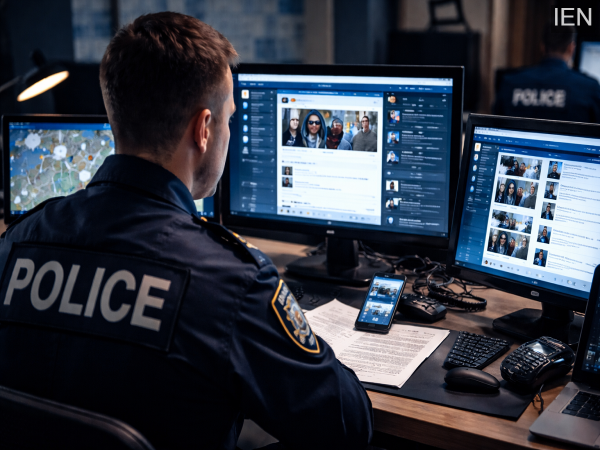
How Police Track Social Media Posts: The police, currently investigating the violence that occurred in Noida, have uncovered some startling information. The police have alleged that attempts were made to incite violence from Pakistan using social media platforms. Posts were uploaded on the social media platform 'X' (formerly Twitter) by accounts operating out of Pakistan; these posts incited public outrage and led to a breakdown in law and order. If one attempts to understand the technical aspects of this situation, a question that might arise in many minds is: how exactly do the police track social media posts? Today, we will delve into precisely how the police go about tracking social media posts.
How Are Social Media Posts Tracked?
Nowadays, police forces across various states have established specialized cells dedicated to monitoring social media activity. Furthermore, during times of major incidents or crises, the police significantly intensify their surveillance efforts on social media platforms. Additionally, the police now possess a range of tools—including AI-powered surveillance systems, IP tracking capabilities, and metadata analysis techniques—that enable them to identify users responsible for posting inflammatory content on social media. This entire process involves several distinct steps.
It Begins with Monitoring
During any major incident, the police continuously scan public posts, hashtags, social media groups, and similar content. If, during the course of an investigation, the police deem it necessary, they can obtain user-specific information from social media companies by following established legal protocols.
Metadata Analysis: Whenever a photograph or any form of content is posted on the internet, it is uploaded accompanied by metadata. This metadata typically includes details such as timestamps, device information, and geolocation tags. By analyzing this metadata, investigators can successfully pinpoint the physical location of the individual who posted the content.
IP Address Tracking: In addition to analyzing metadata, the police are also capable of tracking the IP address associated with a specific social media post. Simply put, an IP address can be understood as a digital address within the world of the internet. It facilitates the easy identification of a device.
Geofencing Data—Nowadays, numerous tools are available that allow for the extraction of location data from apps. This enables the police to determine exactly how many devices were active at a specific location at any given time. Furthermore, various digital forensic tools are also available that can extract all data from a suspect's device. With the aid of these tools, deleted messages, posts, and similar items can also be recovered.
-
World Heritage Day 2026: UP Tourism Invites Citizens To Celebrate Heritage Week With Creative Campaigns

-
'I Never Heard Him Complain Or...': Preity Zinta Shares Emotional Note On Prabhsimran Singh Following MI vs PBKS IPL 2026 Match In Mumbai

-
India’s Harmanpreet Kaur Fights In Vain As South Africa’s Skipper Laura Wolvaardt Guides Hosts To 1-0 Series Lead

-
Wipro Hits Pause On Fresher Hiring From Campuses Due To AI Reshaping Operations
-
VITEEE 2026 Slot Booking LIVE At viteee.vit.ac.in; Last Date April 19, Exams From April 28 To May 3