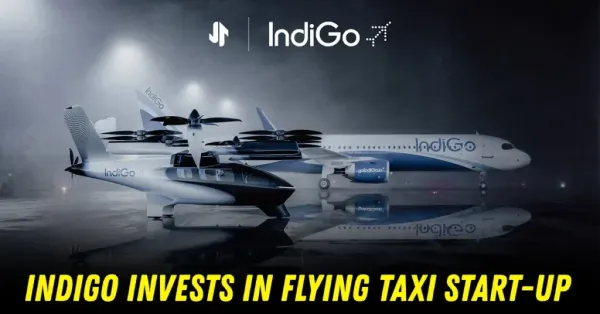
IndiGo has put Rs 10 crore into Bengaluru-based Sarla Aviation through IndiGo Ventures, with the investment showing up in January filings. It is actual money from the country’s biggest airline into a local company that is still years away from commercial service but is trying to build a real flying taxi business from here, not import one later.
InterGlobe Enterprises had earlier announced a non-binding partnership with Archer Aviation in November 2023 to bring flying taxis to Delhi, Mumbai and Bengaluru by 2026. That plan has since fallen through because the timelines did not work out.
Instead of walking away from the category, IndiGo has now shifted to a domestic bet. It is no longer just about being associated with urban air mobility. It is about backing one candidate and trying to stay close to the technology as it develops.
This is not a service anyone can book yet. Sarla was founded in 2023 and is developing an electric vertical take-off and landing aircraft called Shunya. The aircraft is designed for six passengers, excluding the pilot, with a payload of up to 680 kg.
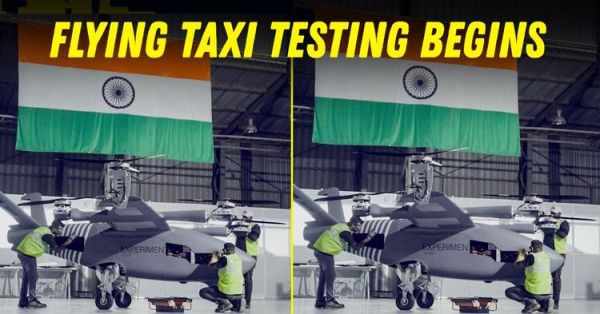
The company’s current plan is to launch in Bengaluru by 2028 and use existing helipads at hotels, hospitals and tech parks instead of waiting for a huge greenfield infrastructure build. That last point matters because it shows Sarla is trying to work around one of the biggest early barriers in this business: where these aircraft will actually land.
There is also enough funding behind the company to take it seriously, but not enough to assume the hard part is over. Sarla has raised about $13.4 million across five rounds so far. Its January 2025 round brought in $10 million led by Accel, with names such as Binny Bansal, Nikhil Kamath and Sriharsha Majety also participating. IndiGo’s investment was reportedly made at the same valuation as that Accel round. In plain terms, this was not a distressed rescue or a symbolic cheque. It was a strategic entry into an already funded company.
That funding context is worth dwelling on for a moment. A Rs 10 crore cheque is not large enough to control the company, but it is large enough to matter in a start-up that is still building hardware, software, certification capability and operating partnerships at the same time. This is also a capital-heavy business by nature.
Even before the first commercial flight, money has to go into prototypes, flight testing, safety systems, ground operations, maintenance planning and regulatory work. It brings not just cash, but a serious potential user that already understands scheduling, turnaround pressure, passenger operations and the cost of downtime.
The appeal is obvious. In a city clogged by road traffic, a short-hop air taxi service between airports, business districts, hospitals and high-value urban nodes sounds useful. Sarla’s aircraft is being built for urban duty, not long intercity travel, and that keeps the proposition narrower and more realistic. IndiGo also gets a front-row seat to a category that could one day feed premium airport traffic, medical mobility and time-sensitive urban movement. Sarla, on the other hand, gets credibility that few early-stage aviation start-ups can buy on their own.
Bengaluru is also not a random first city for such an experiment. The airport handled 43.82 million passengers in calendar 2025, up 8 percent from 40.73 million in 2024. International passenger traffic grew 28.7 percent, and the airport recorded a single-day high of 1,37,317 passengers. Those numbers do not prove flying taxis will work, but they do show why airport access and premium time-saving links are being discussed seriously in this market. A city with that scale of air traffic creates a more believable use case than a smaller aviation market would.
But this is still a high-risk, long-cycle business. Certification, safety validation, infrastructure approvals and operating economics will decide whether this becomes a transport service or remains an expensive demonstration. Sarla has already started building ecosystem links, with partnerships around vertiport infrastructure and medical transport. The next half a decade will decide what this promising sector evolves into.
-
Kannur Dental College denies caste angle in BDS student death, family unhappy with probe
-
Heinrich Klaasen Defends His Batting Approach Amid Strike Rate Criticism

-
Hockey Punjab and Odisha Shine at National Championship 2026

-
A Woman's Life Transformed After Betrayal: A Remarkable Lottery Win

-
Controversial Family Dispute in Shahjahanpur Sparks Community Debate