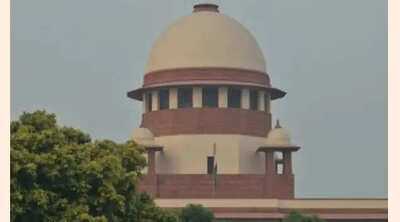
New Delhi: The Supreme Court has emphasized that expressways should not turn into dangerous zones due to administrative negligence or infrastructural shortcomings. In response, the court has laid down comprehensive guidelines aimed at improving road safety, which includes a prohibition on the parking of heavy vehicles on these routes.
A bench comprising Justices JK Maheshwari and AS Chandurkar highlighted that while national highways make up only two percent of India's total road network, they are responsible for nearly 30 percent of road fatalities.
The justices directed the Ministry of Road and Transport, the National Highways Authority of India (NHAI), and various States and Union Territories to enhance road safety measures. They noted that the loss of even one life due to preventable hazards like illegal parking or dangerous blackspots signifies a failure of the state's protective role.
The court stated, "The loss of even a single life to avoidable hazards like illegal parking or blackspots represents a failure of the State's protective umbrella. The 'Right to Life' enshrined under Article 21 of the Constitution of India is not merely a guarantee against unlawful taking of life but a positive mandate upon the State to ensure a safe environment where human life is preserved and valued," in its order dated April 13.
This directive was issued in a suo motu case following tragic incidents that resulted in 34 fatalities during road accidents on November 2 and 3, 2025, in Phalodi, Rajasthan, and Rangareddy, Telangana, attributed to systemic negligence and severe infrastructure failures.
The bench reiterated that ensuring commuter safety is a fundamental aspect of the right to live with dignity, as mandated by Article 21 of the Constitution. Therefore, it is crucial to address the underlying causes of these issues, leading to the issuance of these interim directions under Article 142 of the Constitution.
The court emphasized that no financial or administrative constraints should overshadow the sanctity of human life, and the strict timelines outlined reflect the urgency of this constitutional obligation.
It mandated that no heavy or commercial vehicle should park or stop on any national highway carriageway or paved shoulder, except in designated areas.
Enforcement of this directive will be facilitated through the Advanced Traffic Management System (ATMS), which will provide real-time alerts to State Police, utilize GPS timestamped photographic evidence, and enable integrated eChallan generation.
The court instructed that these directives must be adhered to by officials from the National Highway Authority of India, state police, and state transport departments. District magistrates are required to establish standard operating procedures for regular inspections and patrolling by all relevant authorities, with compliance expected within 60 days of this order.
One significant directive includes an immediate ban on the construction or operation of any new dhaba, eatery, or commercial establishment within the Right of Way (ROW) of any national highway.
District magistrates are tasked with enforcing the demolition or removal of all unauthorized structures, both new and existing, within 60 days, following the CNH Act procedures and SOP dated August 7, 2025.
Furthermore, no department, authority, or local body is permitted to grant or renew any licenses, NOCs, or trade approvals for sites within highway safety zones without prior clearance from NHAI/PWD. All existing licenses for such sites must be reviewed within 30 days.
The bench also directed that in every district where a national highway runs through, the district magistrate must form a district highway safety task force within 15 days, comprising officials from the district administration, police, NHAI (or the relevant land-owning agency), PWD, and local bodies.
Additionally, the court mandated surveillance and patrolling of national highways, the operationalization of the Advanced Traffic Management System (ATMS) with cameras, speed detectors, emergency response facilities, and wayside amenities, as well as the construction of truck lay-bye facilities, addressing accident blackspots, and improving lighting and institutional coordination.
The Ministry of Road and Transport (MoRTH) is required to submit a compliance report after gathering data from various states and agencies within 75 days of this order's publication.
The court clarified that authorities should take necessary steps to coordinate with all stakeholders to implement the directives issued. It also stated that if any compliance issues arise, the parties are free to approach the court, which has scheduled a follow-up on the matter in two months.
On December 15 of the previous year, the Supreme Court considered the need for pan-India guidelines to mitigate road accidents on expressways and national highways.
-
Govt to set up 79 new dialysis centers in Telangana: Health minister

-
Rinku Singh stars as Kolkata Knight Riders seal first win, beat Rajasthan Royals

-
Delhi’s Tri Nagar remains volatile amid claims of pig worship

-
Hyderabad police bust Rs 150 crore cyber fraud, 32 bank officers held

-
Has Ali Khamenei Yet To Be Buried? Report Cites Security Fears And Unrest Concerns