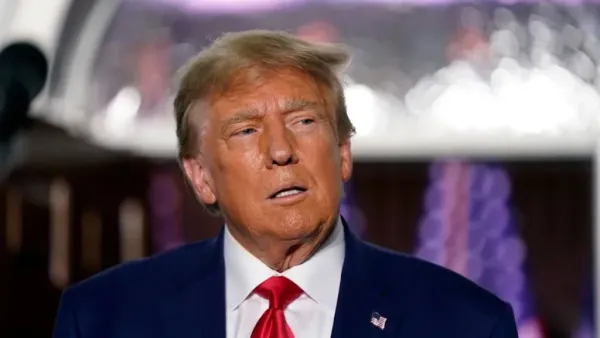
US President Donald Trump posted one of the most stark and explicit military threats of the entire Iran war on Truth Social on Sunday, warning that the United States will destroy every single power plant and every single bridge in Iran if Tehran rejects the deal currently on the table — language that represents a significant escalation in tone from Washington just hours after the Strait of Hormuz chaos of Friday evening and Saturday’s diplomatic reversals.
Trump’s post read: “We’re offering a very fair and reasonable DEAL, and I hope they take it because, if they don’t, the United States is going to knock out every single Power Plant, and every single Bridge, in Iran. NO MORE MR. NICE GUY! They’ll come down fast, they’ll come down easy and, if they don’t take the DEAL, it will be my Honor to do what has to be done, which should have been done to Iran, by other Presidents, for the last 47 years. IT’S TIME FOR THE IRAN KILLING MACHINE TO END! President DONALD J. TRUMP”
What Trump Is Threatening and Why It Matters
The specific targets Trump has named — power plants and bridges — represent Iran’s critical civilian infrastructure. Destroying Iran’s power generation capacity would plunge the country into darkness, collapse hospital systems, disable water treatment facilities and make daily life across the entire nation functionally impossible. Destroying its bridge network would sever internal supply chains, cut off population centres from each other, and make reconstruction and recovery from the existing war damage significantly harder.
These are not military targets in the conventional sense. They are the infrastructure that sustains civilian life. Trump’s explicit naming of them as targets is the most direct threat to Iranian civilian infrastructure that any US president has made publicly in the course of this conflict — and it comes at a moment when the ceasefire is expiring in approximately two to three days, the Hormuz opening lasted less than 24 hours before being reversed, and the IRGC has declared the Strait will remain under strict control until the US naval siege ends.
The Timing and What Triggered It
Trump’s post lands in the context of a rapidly deteriorating diplomatic picture on Sunday. The sequence of Friday evening — Araghchi opens Hormuz, Trump says thank you, oil crashes 11%, markets surge — unravelled on Saturday when Iran’s military command announced a reclosure citing the continuation of the US naval blockade. The Foreign Ministry’s Baqaei then clarified that the Strait was not technically closed but enemy ships — US and Israeli — would be blocked. The IRGC then stated the Strait would remain under strict control until the US siege ends. And Iran’s Foreign Ministry confirmed that 60% enriched uranium will not be transferred outside the country “in any way.”
Each of those Iranian statements on Saturday pushed back against the deal framework that Trump had publicly characterised as mostly negotiated and very close to completion. The Sunday Truth Social post is Washington’s response to that pushback — delivered not through diplomatic channels but through a public social media post directed as much at domestic American audiences and global markets as it is at Tehran.
The 47-Year Reference
Trump’s phrase “what should have been done to Iran by other Presidents for the last 47 years” is a reference to the period since the 1979 Iranian Revolution and the hostage crisis that defined the early relationship between Washington and the Islamic Republic. It frames the current conflict not as a response to a specific Iranian provocation but as the culmination of four and a half decades of accumulated grievance — a framing that suggests Trump views a comprehensive resolution, rather than a temporary deal, as the objective.
“It’s time for the Iran Killing Machine to end” goes further still — characterising not just Iran’s nuclear programme or its Hormuz strategy but the Iranian state’s entire posture as something that must be permanently terminated. This is maximalist language that goes beyond what any previous US administration has publicly stated as a war objective.
What This Means for the Diplomatic Track
Pakistan Army Chief Asim Munir is in Tehran attempting to facilitate a second round of talks before the ceasefire expires on approximately April 21-22. Trump’s Truth Social post makes that mediation considerably harder. Iran cannot publicly accept a deal in the hours after the US president has threatened to destroy its civilian infrastructure and called its government a “killing machine” without appearing to have capitulated under existential pressure — a position that hardliners in Tehran will use to argue against any deal regardless of its terms.
At the same time, the explicit threat to power plants and bridges is the kind of ultimatum that, if Iran believes it is credible and imminent, could accelerate a deal rather than prevent one. Trump’s entire Iran war strategy has been built on the credibility of escalating threats — and the fact that the strikes on February 28 actually happened, killing Khamenei and destroying significant military infrastructure, gives this threat a credibility that previous presidential ultimatums toward Iran did not carry.
The Oil Market and India Implications
Trump’s post will partially reverse the oil price optimism that has been building since Friday evening. Brent crude and WTI, which had crashed over 10% on the Hormuz opening, had already begun recovering on Saturday’s reclosure news. A Trump threat to destroy Iranian power plants and bridges — language that markets will read as signalling a possible resumption of major US strikes — will push oil higher when Asian markets open on Monday morning.
For India, the implications are direct. The crude import relief that Friday’s Hormuz opening had begun to price in — a stronger rupee, lower oil marketing company costs, reduced inflation pressure — faces reversal if the diplomatic track collapses entirely and active hostilities resume before or after the ceasefire expires.
Gift Nifty’s Monday open indication, which had been signalling a strong gap-up on Friday evening’s Hormuz news, will need to be reassessed against the backdrop of Trump’s Sunday ultimatum and whatever Iran’s response to it is in the coming hours.
The ceasefire expires in two to three days. Trump has now told Iran exactly what happens if the deal is not taken. The next move belongs to Tehran.
Disclaimer: This article is for informational purposes only and does not constitute investment advice. Geopolitical situations are subject to rapid change. Readers are advised to follow official government communications for the most current verified information on this developing situation.
-
Not only mango, its kernel is also amazing! You will be surprised to know 5 big benefits

-
Breakfast Recipe: Make Paneer Corn Salad in 10 minutes to stay fresh throughout the day, note down the recipe

-
Bitter cucumber will no longer spoil the taste of salad! Know this secret method before going to the market
-
Things to say in relationships: Know what not to say

-
SSC GD Constable Exam: City slip released, download it like this, exam from 27th April, know when admit card will be released