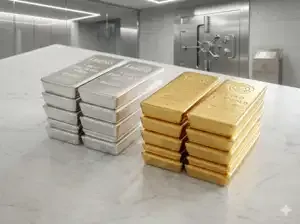
Why are gold and silver prices down today, and will precious metals continue to fall or rise again? Precious metals moved lower at the start of the week after geopolitical tensions in the Middle East pushed oil prices higher and strengthened the US dollar. Investors reacted to inflation concerns and rising bond yields. Gold, silver, platinum, and palladium all declined during the trading session. Market participants now focus on inflation trends, central bank actions, and global conflict risks. The latest developments around the Strait of Hormuz and the seizure of an Iranian cargo ship changed sentiment. Analysts now assess whether the current decline will continue or reverse in the coming weeks.
Why are gold and silver prices down today, and will precious metals continue to fall or rise again?
Gold and silver prices moved lower as the US dollar strengthened and bond yields increased after oil prices surged due to renewed Middle East tensions. Higher oil prices raised inflation expectations and increased the chances of tighter monetary policy. This reduced demand for non-yielding metals. In the near term, prices may remain under pressure if inflation and yields stay high, but long-term support from central bank buying, currency diversification, and geopolitical uncertainty could help precious metals stabilise and recover.
Market reaction after renewed geopolitical tensions
Gold prices hit the lowest level in one week during early trading. Spot gold fell 0.7% to $4,792.89 per ounce by 0930 GMT. Earlier in the session, prices touched the lowest level since April 13. US gold futures for June delivery fell 1.4% to $4,812.60. Silver also declined. Spot silver lost 1.8% and traded at $79.39 per ounce. Platinum fell 1.4% to $2,073.75 per ounce. Palladium dropped 1.1% to $1,542.25 per ounce.
The decline happened after major geopolitical developments in the Middle East. The United States seized an Iranian cargo ship that attempted to break through a blockade. Iran warned it would respond. This raised fears of renewed hostilities and supply disruption in the Gulf region. Shipping activity slowed in the Gulf, and investors became cautious.
Why are gold and silver prices down today?
Gold and silver fell mainly due to a stronger US dollar and rising inflation concerns. Oil prices jumped more than 6% after tensions near the Strait of Hormuz increased. Higher oil prices often lead to higher inflation expectations.
When inflation expectations rise, investors expect central banks to keep interest rates higher for longer. This increases bond yields. The benchmark 10-year US Treasury yield moved higher during the session.
Gold and silver do not pay interest. When bond yields rise, investors prefer interest-bearing assets. This raises the opportunity cost of holding precious metals. The US dollar index also strengthened. A strong dollar makes gold and silver more expensive for buyers using other currencies. This reduces global demand. Market analysts said the dollar became the preferred safe-haven asset during the current conflict. As a result, gold temporarily lost some of its safe-haven demand.
Will precious metals continue to fall or rise again?
Market experts believe gold may remain below the $5,000 level unless tensions ease in a sustained way. Analysts say gold may continue to move sideways in the near term if the conflict continues and inflation risks remain high.
However, analysts also say gold still has long-term support factors. Central bank buying continues across many countries. Governments still hold gold as a reserve asset. Demand linked to currency diversification and long-term inflation protection continues.
Currency debasement concerns remain part of the global financial system. These trends may help precious metals recover later. This means short-term pressure and long-term support exist at the same time.
Analysts insights and market outlook
Market analysts explained that oil’s price surge changed the inflation outlook. Rising energy costs feed into transportation and production costs across the economy. This pushes inflation higher.
Higher inflation expectations lead investors to expect tighter monetary policy. The US Federal Reserve may keep interest rates elevated for longer if inflation stays high. This reduces the appeal of non-yielding assets.
However, analysts also note structural demand for gold. Central banks continue to diversify reserves. Some countries aim to reduce dependence on the US dollar. These trends may support gold demand over time. Experts also point out that geopolitical uncertainty often returns quickly. If tensions escalate further, gold may regain its safe-haven appeal.
What should investors do now?
Investors are watching several indicators closely. Oil prices are a key driver of inflation expectations. Bond yields and the US dollar also influence precious metals. Investors often balance short-term volatility with long-term trends. Precious metals often move in cycles influenced by interest rates, inflation, and geopolitical risks.
Diversification remains a common strategy. Some investors maintain exposure to gold and silver for long-term protection against currency risk and economic instability. Others monitor central bank policies and inflation data before making decisions. Market participants continue to watch developments in the Middle East, global oil supply, and Federal Reserve policy signals.
FAQs
Q1. Why did oil prices affect gold and silver prices?
Oil price increases raise inflation expectations and bond yields. Higher yields increase the opportunity cost of holding metals. A stronger dollar also reduces global demand for gold and silver during risk events.
Q2. Can precious metals recover later this year?
Precious metals may recover if inflation stabilises, the dollar weakens, or geopolitical tensions increase. Central bank demand and long-term reserve diversification can support future price recovery in global markets.
Why are gold and silver prices down today, and will precious metals continue to fall or rise again?
Gold and silver prices moved lower as the US dollar strengthened and bond yields increased after oil prices surged due to renewed Middle East tensions. Higher oil prices raised inflation expectations and increased the chances of tighter monetary policy. This reduced demand for non-yielding metals. In the near term, prices may remain under pressure if inflation and yields stay high, but long-term support from central bank buying, currency diversification, and geopolitical uncertainty could help precious metals stabilise and recover.Market reaction after renewed geopolitical tensions
Gold prices hit the lowest level in one week during early trading. Spot gold fell 0.7% to $4,792.89 per ounce by 0930 GMT. Earlier in the session, prices touched the lowest level since April 13. US gold futures for June delivery fell 1.4% to $4,812.60. Silver also declined. Spot silver lost 1.8% and traded at $79.39 per ounce. Platinum fell 1.4% to $2,073.75 per ounce. Palladium dropped 1.1% to $1,542.25 per ounce.The decline happened after major geopolitical developments in the Middle East. The United States seized an Iranian cargo ship that attempted to break through a blockade. Iran warned it would respond. This raised fears of renewed hostilities and supply disruption in the Gulf region. Shipping activity slowed in the Gulf, and investors became cautious.
Why are gold and silver prices down today?
Gold and silver fell mainly due to a stronger US dollar and rising inflation concerns. Oil prices jumped more than 6% after tensions near the Strait of Hormuz increased. Higher oil prices often lead to higher inflation expectations.When inflation expectations rise, investors expect central banks to keep interest rates higher for longer. This increases bond yields. The benchmark 10-year US Treasury yield moved higher during the session.
Gold and silver do not pay interest. When bond yields rise, investors prefer interest-bearing assets. This raises the opportunity cost of holding precious metals. The US dollar index also strengthened. A strong dollar makes gold and silver more expensive for buyers using other currencies. This reduces global demand. Market analysts said the dollar became the preferred safe-haven asset during the current conflict. As a result, gold temporarily lost some of its safe-haven demand.
Will precious metals continue to fall or rise again?
Market experts believe gold may remain below the $5,000 level unless tensions ease in a sustained way. Analysts say gold may continue to move sideways in the near term if the conflict continues and inflation risks remain high.However, analysts also say gold still has long-term support factors. Central bank buying continues across many countries. Governments still hold gold as a reserve asset. Demand linked to currency diversification and long-term inflation protection continues.
Currency debasement concerns remain part of the global financial system. These trends may help precious metals recover later. This means short-term pressure and long-term support exist at the same time.
Analysts insights and market outlook
Market analysts explained that oil’s price surge changed the inflation outlook. Rising energy costs feed into transportation and production costs across the economy. This pushes inflation higher.Higher inflation expectations lead investors to expect tighter monetary policy. The US Federal Reserve may keep interest rates elevated for longer if inflation stays high. This reduces the appeal of non-yielding assets.
However, analysts also note structural demand for gold. Central banks continue to diversify reserves. Some countries aim to reduce dependence on the US dollar. These trends may support gold demand over time. Experts also point out that geopolitical uncertainty often returns quickly. If tensions escalate further, gold may regain its safe-haven appeal.
What should investors do now?
Investors are watching several indicators closely. Oil prices are a key driver of inflation expectations. Bond yields and the US dollar also influence precious metals. Investors often balance short-term volatility with long-term trends. Precious metals often move in cycles influenced by interest rates, inflation, and geopolitical risks.Diversification remains a common strategy. Some investors maintain exposure to gold and silver for long-term protection against currency risk and economic instability. Others monitor central bank policies and inflation data before making decisions. Market participants continue to watch developments in the Middle East, global oil supply, and Federal Reserve policy signals.
FAQs
Q1. Why did oil prices affect gold and silver prices?
Oil price increases raise inflation expectations and bond yields. Higher yields increase the opportunity cost of holding metals. A stronger dollar also reduces global demand for gold and silver during risk events.
Q2. Can precious metals recover later this year?
Precious metals may recover if inflation stabilises, the dollar weakens, or geopolitical tensions increase. Central bank demand and long-term reserve diversification can support future price recovery in global markets.