On the 14th day of the ceasefire on Tuesday, April 21, uncertainty surrounds a planned second round of negotiations between the United States and Iran in Islamabad, with Tehran yet to confirm its participation ahead of the Wednesday, April 22 deadline.
Pakistani officials said diplomatic contacts with Washington and Tehran intensified over the past 24 hours to keep talks on schedule. A Pakistani official told Reuters there were “positive signals” from Iran, with efforts under way to secure its delegation’s arrival.
Mediation push from Islamabad
Associated Press reported stepped-up engagement by Pakistan, while The Washington Post said Islamabad urged US President Donald Trump to avoid strong public rhetoric that could derail diplomacy.

Trump escalates rhetoric
Trump warned of “great destruction” if talks fail, while asserting the US was “winning the war by a lot”. In posts on Truth Social, he criticised coverage by The New York Times, The Wall Street Journal and The Washington Post, claiming they misrepresented battlefield realities.
He also said Iran was suffering heavy losses and facing severe economic pressure due to the naval blockade.
US comments complicate negotiations
CNN reported that officials within the administration believe Trump’s statements have damaged trust, with Iranian negotiators wary of engaging under public pressure and sensitive to perceptions of weakness.
Vance to join diplomatic effort
US Vice President J D Vance is expected in Islamabad for discussions aimed at reviving negotiations, though officials caution that developments remain fluid.
Iranian proposal on nuclear limits
Sources indicated Tehran proposed a 10-year suspension of uranium enrichment, followed by a controlled framework allowing limited activity below weapons-grade levels.
Tehran rejects pressure tactics
Iranian Parliament Speaker Mohammad Bagher Ghalibaf said negotiations would not proceed under threats, accusing Washington of attempting to impose terms through coercion.
Foreign Minister Abbas Araqchi told Mohammad Ishaq Dar that US actions against Iranian commercial vessels were undermining diplomatic prospects.
Internal dynamics in Tehran
Axios reported that Iran’s Supreme Leader approved negotiations, although internal pressure from the Revolutionary Guard has pushed negotiators towards a firmer stance.
Markets respond to diplomatic signals
Bloomberg reported a drop in oil prices amid indications that Iran could still participate in talks.
Strait of Hormuz traffic declines
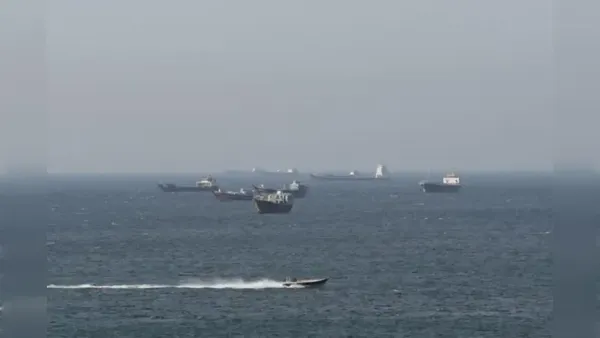
Maritime activity in the Strait of Hormuz has slowed sharply, with Iran’s Tasnim agency reporting only three vessels passed through in a 12-hour period, reflecting heightened tensions linked to the US blockade.
US seizes Iran-linked cargo ship
A US naval operation has intensified the standoff after forces seized the Iran-linked M/V Touska for allegedly breaching the blockade.
The United States Central Command said a guided-missile destroyer disabled the vessel before Marines boarded it. US media reports said the ship could be treated as “spoils of war” depending on its cargo.
Iran has condemned the seizure and warned of retaliation, while still withholding a final decision on attending the Islamabad talks.
Washington weighs diplomacy and pressure
US officials said Trump is inclined towards a negotiated resolution but is maintaining military pressure. An official told Axios the president wants a swift end to the crisis, particularly over Iran’s use of the Strait of Hormuz as leverage.
Israeli concerns over missile exclusion
Israeli officials have warned that ongoing negotiations do not address Iran’s ballistic missile programme, raising concerns about future security risks if the issue remains unresolved.
Israel advances regional defence posture
Israel is seeking to establish what it describes as an “advanced defence line” across parts of Syria and Lebanon, citing strategic terrain and
security considerations.
Lebanon toll highlights wider conflict
Lebanese authorities said Israeli strikes have killed at least 2,387 people and injured 7,602 since early March. Recovery operations continue in areas hit by heavy bombardment, with fears the toll may rise.
Climate of uncertainty persists
British media assessments describe the current phase as marked by confusion and unpredictability, driven by conflicting US messaging and entrenched mistrust between the parties.
With the ceasefire nearing its end, the outcome of the proposed Islamabad talks remains unclear, leaving the region at a critical juncture.
-
World Heritage Day 2026: What is the history of these mysterious places in India? Know why UNESCO gave special status

-
Make natural face toner from rice and get glowing skin

-
Performance of leaders will be monitored in Himachal, Congress party’s new policy, ‘work or step down’ formula will be adopted
-
MRT poster telling commuters not to groom in public sparks debate in Singapore
-
Parents Who Prioritize Play Raise Kids Who Would Rather Be Outside Than On Screens