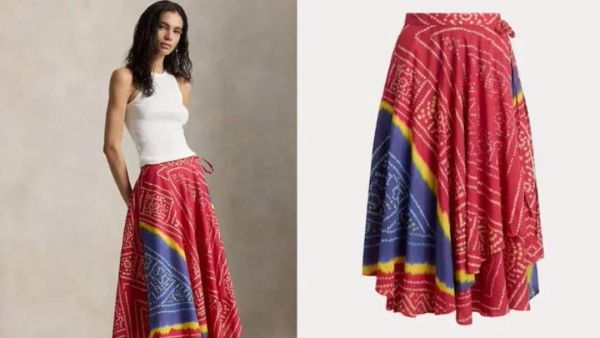
Balancing luxury and respect for culture is becoming a tight‑rope act for global fashion brands, and Ralph Lauren is once again in the spotlight, this time for a Rs 44,800 bandhani‑style skirt. Critics say the piece borrows heavily from India’s traditional Bandhani craft while offering little credit and even less explanation for the sky‑high price tag. As social media users and Indian consumers push back, the debate has reignited questions about cultural appropriation, fair pricing, and how much credit global labels should give to the communities whose designs they reinterpret.
What The Skirt Is
Ralph Lauren is selling a cotton wrap skirt on its official website that features a vivid bandhani‑style print inspired by traditional Indian tie‑dye techniques. The product description calls it a “Print Cotton Wrap Skirt” and says it is “inspired by traditional Bandhani tie‑dye techniques and motifs,” but it does not clearly mention “Indian” or “Gujarati” Bandhani in the title or metadata. The skirt is designed with a tied waist, an A‑line, calf‑length silhouette, side pockets, and an interior button closure, and is priced at Rs 44,800 (about $530).
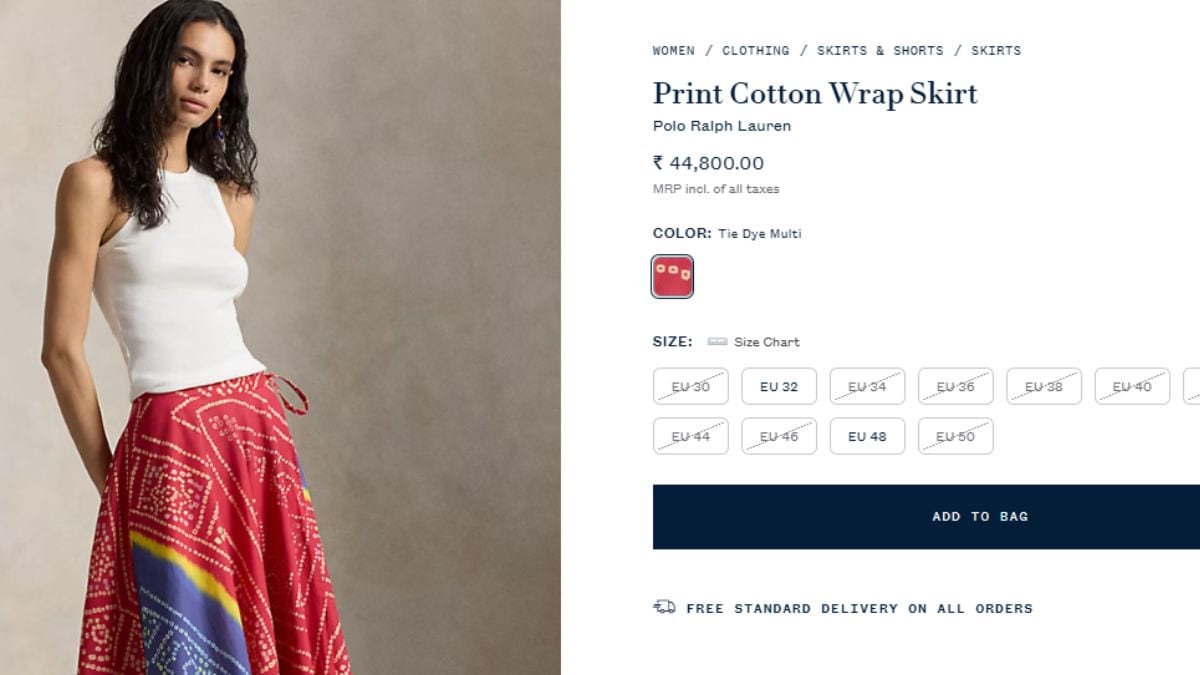
The Backlash Online
Indian netizens and digital creators have hit back, saying the brand is copying a traditional craft without naming its roots. Social‑media user Radha Patel, a digital creator, wrote, “Why, Ralph Lauren, why?”, before questioning why the description did not mention “Indian” somewhere to credit the inspiration. She also pointed out that the skirt is printed fabric rather than authentic hand‑tied Bandhani, and that traditional Bandhani cloth typically costs only Rs 200–500 per metre in India, so the final garment should not cost thousands of rupees.
View this post on Instagram
Cultural‑Credit And Pricing Concerns
Many users argue that Ralph Lauren is profiting from a South Asian textile tradition while keeping the narrative Eurocentric. One X user posted a video saying, “It’s not even real bandhani. It’s printed,” and added that global fashion houses have “no shame” as they “rip off Indian fashion designs and rename it with cheap fake material with outrageous prices.” Others note that this is not the first time Ralph Lauren has clashed with Indian audiences; the brand recently faced criticism for “vintage earrings” that closely resembled South Asian jhumkas, deepening the sense of a pattern rather than a one‑off misstep.
Why The Conversation Matters
The controversy fits into a larger global discussion about how luxury brands use traditional crafts from the Global South. Commentators in India say that while inspiration is fine, clear attribution and fair pricing, along with partnerships or uplift‑ment for local artisans, would show genuine respect instead of appropriation. For now, the Rs 44,800 bandhani‑inspired skirt has become a talking point, reminding big labels that fans of Indian textiles are watching closely, and are ready to call out missed credit when they see it.