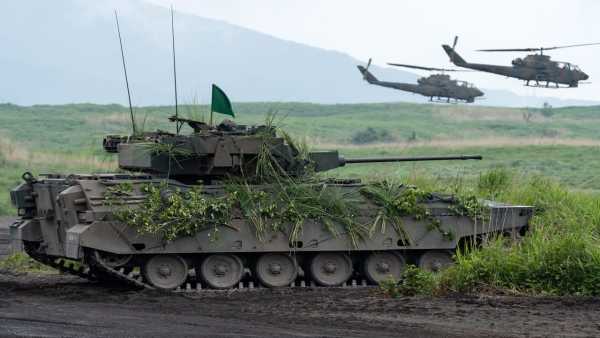
New Delhi: In a significant move, Japan on Tuesday endorsed to scrap its ban on lethal weapons exports. This marks a huge shift in its postwar pacifist policy as it seeks to boost its arms industry and deepen defence cooperation with partners, AP reported.
Prime Minister Sanae Takaichi’s Cabinet gave nod to the new guideline, removing the final set of obstacles to Japan’s postwar arms sales.
The decision to endorse lift the ban on lethal weapons exports comes as Japan bolsters its military buildup due to the increasing security challenges and evolving geopolitics in the region. Even though China has criticised the move, the step has been hailed by most of Japan’s defense partners, including Australia. The move has also drawn widespread interests from Southeast Asia and Europe.
What is the new policy aimed at
According to the detractors, the shift in policy is a violation of Japan’s pacifist constitution. They contend that such a move will increase global tensions and put the safety of the Japanese people at peril.
Speaking to reporters, Chief Cabinet Secretary Minoru Kihara pointed out that the new policy would “ensure safety for Japan and further contribute to the peace and stability in the region and the international society as the security environment around our country rapidly changes”.
He added: “The government will strategically promote defense equipment transfer to create a security environment that is desirable for Japan and to build up the industrial base that can support fighting resilience.”
Under its post–World War II pacifist constitution, most arms exports had been banned by Japan. But, due to the growing global and regional tensions, the rules had been eased in recent years, even though exports remained restricted to five categories: rescue, transport, alert, surveillance and minesweeping.
What do the new guidelines say
As per the new guideline, those limitations have been scrapped. The new rule permits the export of equipment such as fighter jets, missiles and destroyers. This is a huge change from existing exports such as flak jackets, gas masks and civilian-use vehicles Japan has delivered to Ukraine and intelligence radar sold to the Philippines.
For now, the exports will be limited to 17 countries that have signed defence equipment and technology transfer pacts with Japan. Each transfer will need a nod from the National Security Council, and the government will oversee how the weapons are managed later.
In principle, Japan will still refrain from exporting lethal weapons to countries that are at war.
Japan adopted a constitution that restricts its military to self-defence due to its wartime past and devastating defeat. It had long put strict controls and caps on arms exports, while relying heavily on the US military presence in the region and imports of costly American arsenals.
Japan’s domestic defense industry had been meeting the needs of only the Self-Defense Force and Defense Ministry. It didn’t rake in profits or have a corporate image.
That image will change now, as the government has increased funding for startups and academic researches. The defence industry has been listed as one of 17 strategic growth sectors under the Takaichi government. An increasing number of major companies and startups are evincing interest — essentially in dual-use technologies and drones.
-
JAC Board 12th Result 2026: The Jharkhand Board Senior Secondary Result could be released at any moment; keep your Roll Number..

-
CG Board: Chhattisgarh Board Matric and Intermediate Results Could Be Released at Any Moment; Details Shared on DigiLocker..

-
UP Board Results 2026: UP Board High School and Intermediate results could be released at any moment..

-
Jharkhand Board Result: Class 10th and 12th results may be released at any moment; the link will become active here at jacresults.com.

-
Great News for Employees: These Countries Pay Salaries Twice a Month—Discover the World’s ‘Smart’ Payroll Systems