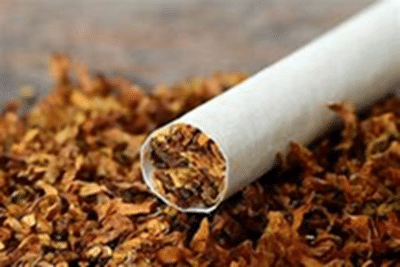
Tobacco Financial Burden: A new study has revealed that more than 20 million families could improve their financial situation by reducing tobacco spending. Poor families are spending a significant portion of their income on tobacco.

Your luck can change once you quit tobacco!
Tobacco Poverty Trap: New research may surprise tobacco users. According to a new study, if people stopped spending on tobacco and invested the remaining money in other essential needs, more than 20.4 million families could improve their financial situation.
This represents approximately 10.6 percent of all households. This means they can improve their financial situation simply by changing their spending habits.
What does the study say?
The study, published in BMJ Global Health, was conducted by researchers from the National Institute of Cancer Prevention and Research (ICMR-NICPR) in Noida and the Tata Institute of Social Sciences (TISS) in Mumbai. It is the first attempt to understand tobacco use and its economic impact on a large scale across the country.
The study also revealed that the poorest households spend approximately 6.4 percent of their total monthly income on tobacco. Despite their low income, this expenditure significantly impacts their daily expenses and disrupts their household budget.
Tobacco has become a trap for poverty.
According to research, tobacco is not only harmful to health but also a burden on the pocket. Statistically, approximately 20 million families could improve their financial situation simply by quitting tobacco. This is a significant number.
This change could prove particularly helpful for rural families, who spend up to 7 percent of their income on tobacco, a habit that keeps them trapped in poverty.
Tobacco use in India
Tobacco is a very common use in India. Around 267 million people use it, representing nearly a quarter of the adult population. This is why tobacco is considered a major cause of death in the country, claiming over 1 million lives each year.
Serious impact on health
Tobacco causes many serious diseases. It increases the risk of mouth, throat, and lung cancer, as well as heart disease and stroke. Long-term use can lead to serious illness.
-
HPS Ramanthapur defends fee revision, calls 140 pc hike claim ‘misleading’
-
Last PLGA commander Hemla Vijja to surrender before Telangana Police

-
Jailer 2 shoot wraps up, Rajinikanth set to return with bigger action spectacle

-
Is this goodbye? David Dhawan drops hints on directorial retirement

-
Trump Says No Ceasefire Extension With Iran, US Military ‘Ready To Go’