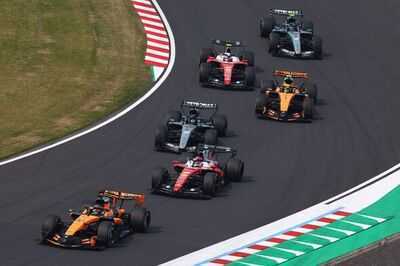
The Formula One season is currently in the midst of its enforced spring break, after the ongoing conflict in the Middle East saw both the Bahrain and Saudi Arabian races cancelled. It's given constructors some extra time to work on their cars following the introduction of new engine regulations at the beginning of the season.
It's just as well, too, given that the FIA have announced a set of rule changes that are set to be introduced with immediate effect, starting with next month's Miami Grand Prix. Overall, 12 changes have been announced and are categorised into four main areas: qualifying, races, wet conditions and starts. Express Sport have detailed the 12 rule changes and what they'll mean for the remainder of the Formula One season...
Qualifying - promoting performance:
One of the tweaks will see energy management parameters adjusted to reduce the excessive harvesting and encourage more consistent flat-out driving. It targets a maximum superclip duration reduced to approximately 2-4 seconds per lap.
On the topic of superclips, power will be increased from 250kw to 350kw, which should reduce the time spent recharging. It is also designed to reduce driver workload on energy management and will be applied in race conditions.
Elsewhere, the number of events where lower energy limits apply has been switched from eight to 12 races. It allows greater adaptation ot circuit characteristics.
Race - improved safety and consistency of performance:
There will be switches to how much maximum power is available through the Boost in race conditions. It will now be capped at 150 kW, which will limit sudden performance differentials.
MGU-K deployment will be maintained at 350 kW during key acceleration zones. They are from corner exit to braking point, including overtaking zones, However, they'll be limited to 250kW in other parts of the lap and are being introduced to reduce excessive closing speeds.
FOLLOW OUR F1 FB PAGE!Get all the latest from our Formula 1 coverage via our dedicated Facebook page
Race starts - enhanced safety mechanisms:
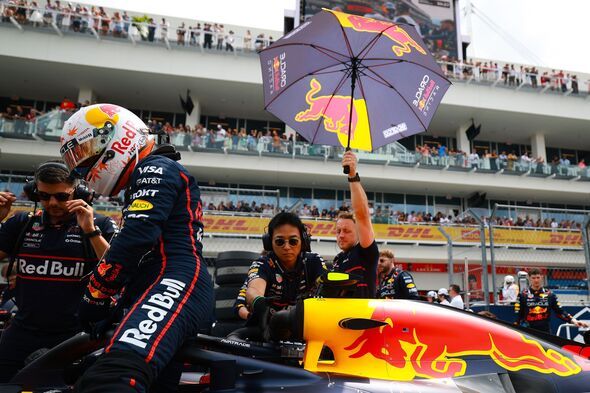
A low-power start detection system has been developed, which allows cars with abnormally low acceleration shortly after clutch release to be identified. As such, an automatic MGU-K deployment will ensure minimum levels of acceleration and mitigate start-related risks.
Elsewhere, a visual warning system is being brought in to alert drivers behind, and a reset of the energy counter at the start of the formation lap will be implemented.
Wet conditions - improving safety and visibility:
Temperatures for the tyre blanket on intermediate tyres will be increased following feedback from drivers. It should in theory improve grip and the performance of tyres.
The maximum ERS deployment is being reduced to limit torque and help drivers control their car in wet conditions. Whereas, the light systems on the rear of cars is being simplified to allow clearer cues, which should improve reaction times.
-
Nagaland State Lottery Result: April 21, 2026, 8 PM Live - Watch Streaming Of Winners List Of Dear Destiny Sambad Night Tuesday Weekly Draw

-
Willingdon Sports Club Hosts Table Tennis Tournament 2026; Over 80 Members Participate Across Categories

-
Bank Shield Cricket Tournament 2026: Union Bank Of India Beat Central Bank By 4 Wickets In Elite Group Clash

-
SportVot X FPJ: Assam Youth League U15 Sees Thrilling Matches, Eleven Stars Shine With 3-1 Win

-
Mom-To-Be Deepika Padukone Glows In First Post-Pregnancy Announcement Photo, Shoots With Punit Malhotra