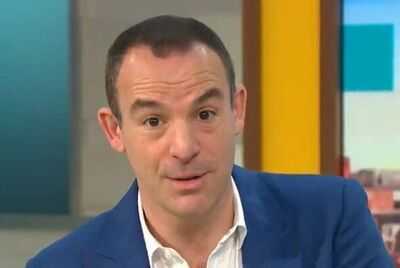
Martin Lewis has issued advice to a woman with a personal finance problem on a question that many people grapple with. The money expert has this week been examining the matter of the state pension and the regulations surrounding what you get when you retire.
In the UK, you need to have at least 10 qualifying years on your National Insurance (NI) record to receive any new State Pension. To claim the full amount, you need approximately 35 years.
A qualifying year on your NI record can be achieved by working and making National Insurance contributions, though it can also be obtained through other means.
A qualifying year may come from receiving National Insurance credits - for example, if you were unemployed, ill or acting as a parent or carer. You might also be eligible if you have lived or worked overseas, or paid reduced rate National Insurance as a married woman.
However, the area Martin has been focusing on is the alternative route to securing a qualifying year on your NI record - namely, paying voluntary National Insurance contributions, reports the Mirror.
Martin addressed the topic on his latest BBC podcast after a listener posed him a question. Holly sought his guidance on the possibility of paying to fill some gaps in her National Insurance contributions.

She explained she was contemplating paying to fill two years in order to bring her total up to 10 qualifying years. She has worked for a number of years abroad and has also spent some time studying. She asked him: "I am currently 36. Is it worth paying the two now or would it be considered a waste of money as I am likely to reach the 35 years needed for a full state pension anyway?"
Martin Lewis advice on paying for National Insurance contribution gaps
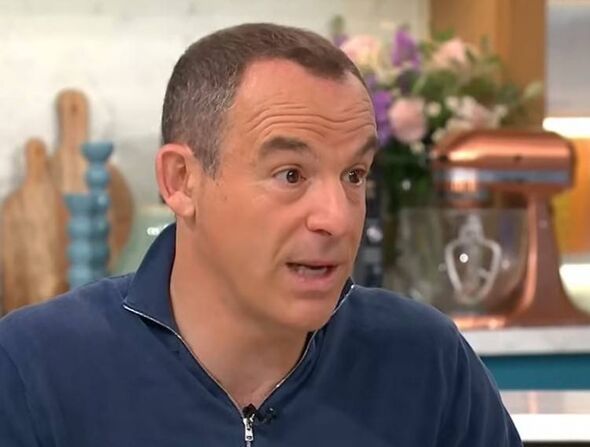
Martin began by saying: "That's a really interesting question." He then examined her various options before reaching two key conclusions - and what he told Holly serves as valuable guidance for anyone considering gaps in their state pension.
He said: "The first thing I'd do is I'd go and look at your pension projection. On your pension projection, your state pension projection, which is on gov.uk, are you predicted to be able to... get that you will have the full state pension when you retire, which is a very long time away?
"If you are, I think this is probably overkill, because it's not like once you get to the full state pension, you earn more NI years, you get even bigger than the full state pension. It doesn't work like that." That was his first point. Nevertheless, he went on to outline a scenario in which topping up the gaps could prove worthwhile.
He noted that many older individuals grumble about already having sufficient contributions for their full state pension, questioning "why do I have to keep paying National Insurance?"

He said: "It's because National Insurance is a tax in reality. It's also a tax that happens to be demarked as your contributions towards getting a state pension once you are older.
"So if you are on for the full state pension, then you probably don't need to do this."
'Exception' rule where it's good to pay for gaps at a young age
Martin added: "The only time I would make an exception on that is if you could buy these years really, really cheaply. If any of these are part years - so a part year is where you have almost got all the contributions you need to get a year but you are not quite and it's binary. I know people who have been able to buy a part year for £15.
"Normally it's going to cost you, a full year, in the 900ish pounds. But if you could buy a part year for 15, 20, hey maybe 50 quid, even at your age, just in case somethng happens in future, as you can only buy back a certain amount - 6 years - I'd be tempted to go, you know what, it's 50 quid, I'm just going to do it, just on the off-chance that I might need it at some point in the future.
"But if you are having to pay the full £950 for it, I'd probably be thinking it wasn't worth it. You are so young at 36 for doing this. There are a lot of risks that you're just going to be buying money, throwing stuff away - there are big risks for you that the state pension might become means-tested once you are older.
"We don't know that. I don't think that's going to happen imminently for people retiring now. But you are talking about retiring in 30-35 years. Who knows what will be happening in the UK to state pensions in 30-35 years.
"So there are a lot or risks in this in doing it now. If you are on to get the full state pension, I probably wouldn't be doing it - other than if you can get a year really cheaply, so it's beer money-type costs, where you may as well do it just as a safety net in case there's a year where you don't work in the future and you wouldn't be able to get it, and this would be a really cheap way to buy it."
He finished by saying that if she really did still want to do it, she should have a think and get advice from the government first before going ahead. You can listen to the whole podcast here.
What are the rules on paying for National Insurance record gaps?
Gaps can appear in your National Insurance record if you fail to pay National Insurance. According to the gov.uk website, this might occur because you were:
- living or working outside the UK
- self-employed but did not pay contributions because of small profits
- getting National Insurance credits for less than a full tax year
- employed but had low earnings
- self-employed but did not pay contributions because of small profits
- unemployed and were not claiming benefits
The Government advises checking your National Insurance record to identify any gaps, which then enables you to determine the cost of paying voluntary contributions.
The gov.uk website states: "If you have gaps in your National Insurance record, check if you're eligible for National Insurance credits before deciding to pay voluntary contributions. Contact HM Revenue and Customs (HMRC) if you think your National Insurance record is wrong."
-
Snooker wonderkid Stan Moody 'couldn't feel my legs' in Kyren Wilson collapse

-
UK brewery collapses and wound up - founded by friends in 2014

-
No procurement centre to close until district target is met: LS Speaker
-
I'm A Celeb star forced to exit show with immediate effect after incident

-
Baby girl killed in Redcar dog 'attack' named as her tragic final moments emerge